Grass paver installation in Navasota, TX gives homeowners a permeable, load-bearing surface that still reads as green lawn instead of gray concrete. These interlocking grids solve a problem solid concrete can't: carrying occasional vehicle weight without losing the yard. This guide breaks down real cost ranges, material types, and installation steps so you know what to expect before you call a contractor.
What Are Grass Pavers?
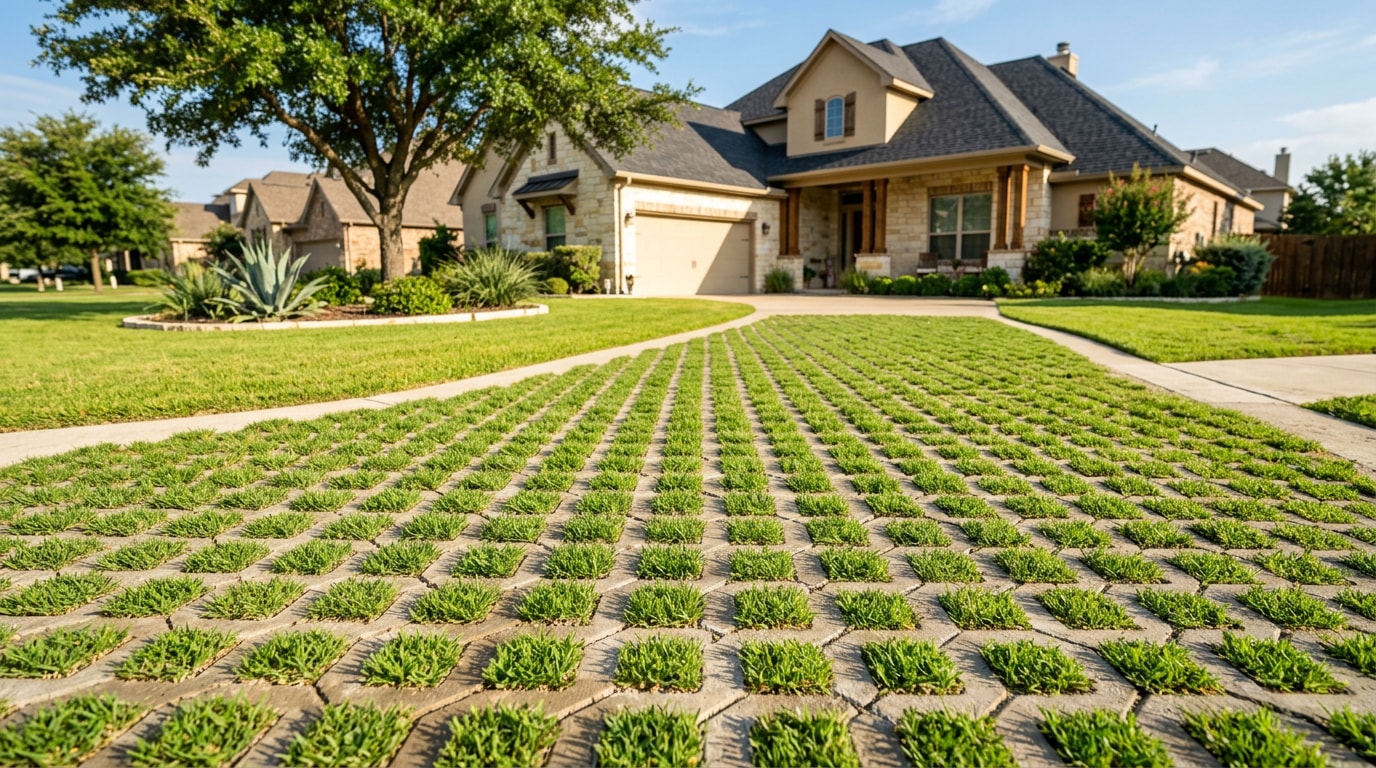
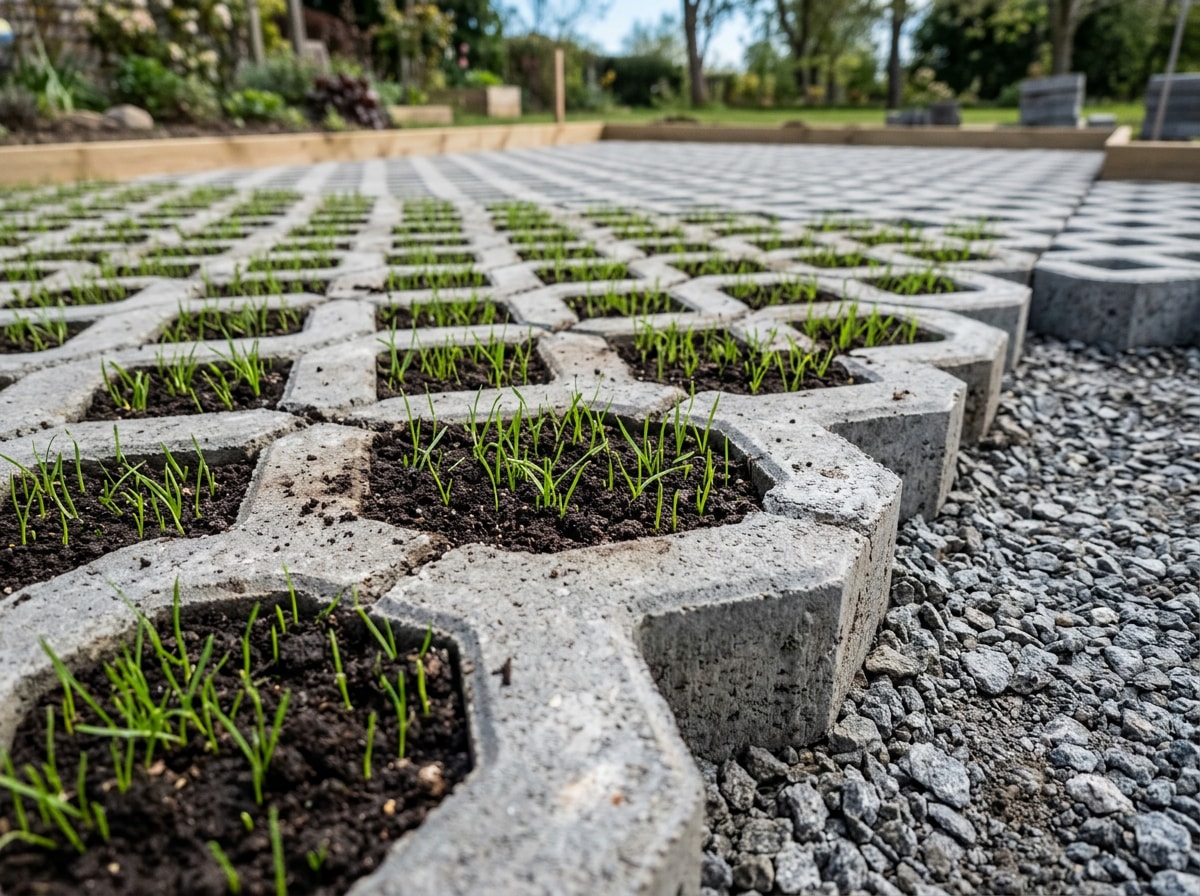
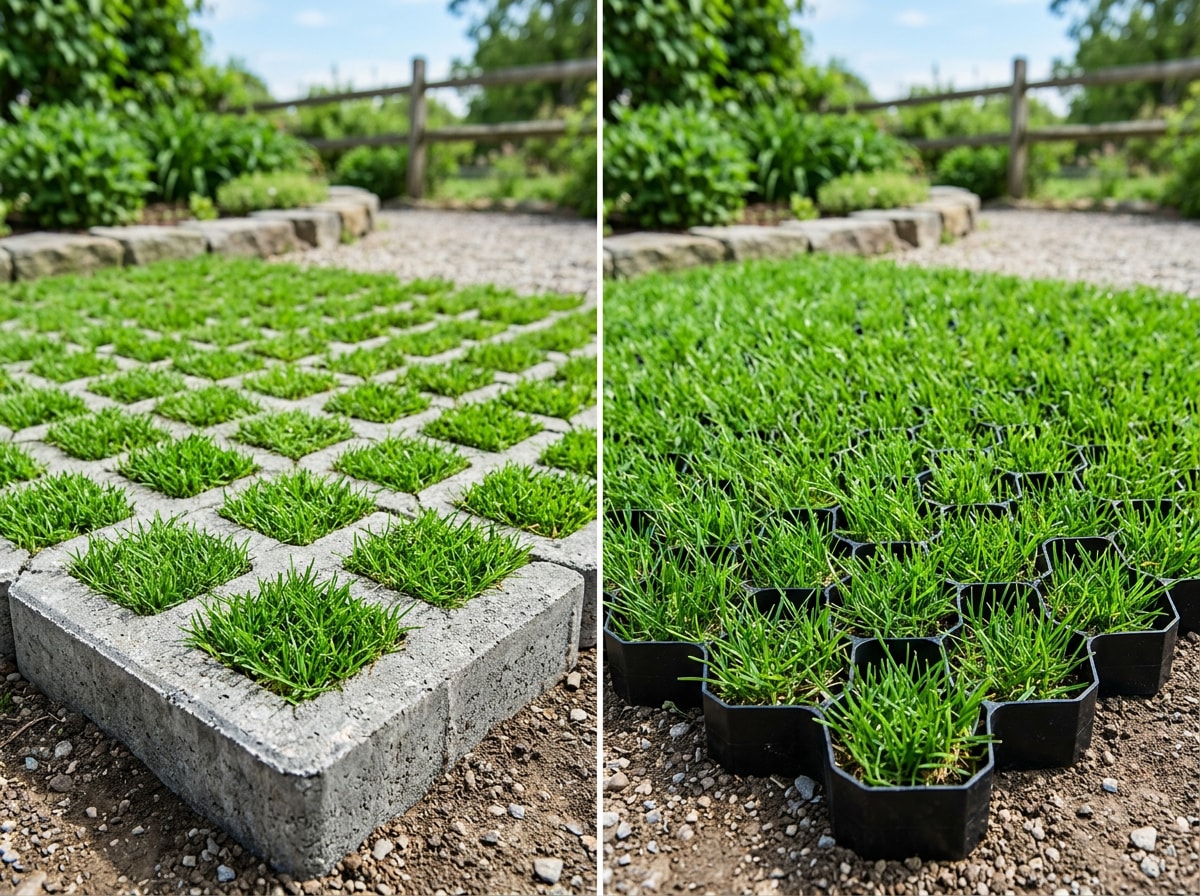
A grass paver is an interlocking, permeable grid made of concrete or recycled plastic. It's laid over a prepared base so living grass grows through the cells while the structure underneath carries foot and vehicle traffic. You'll also see the same product sold as a turf paver, permeable paver, or grass paver block.
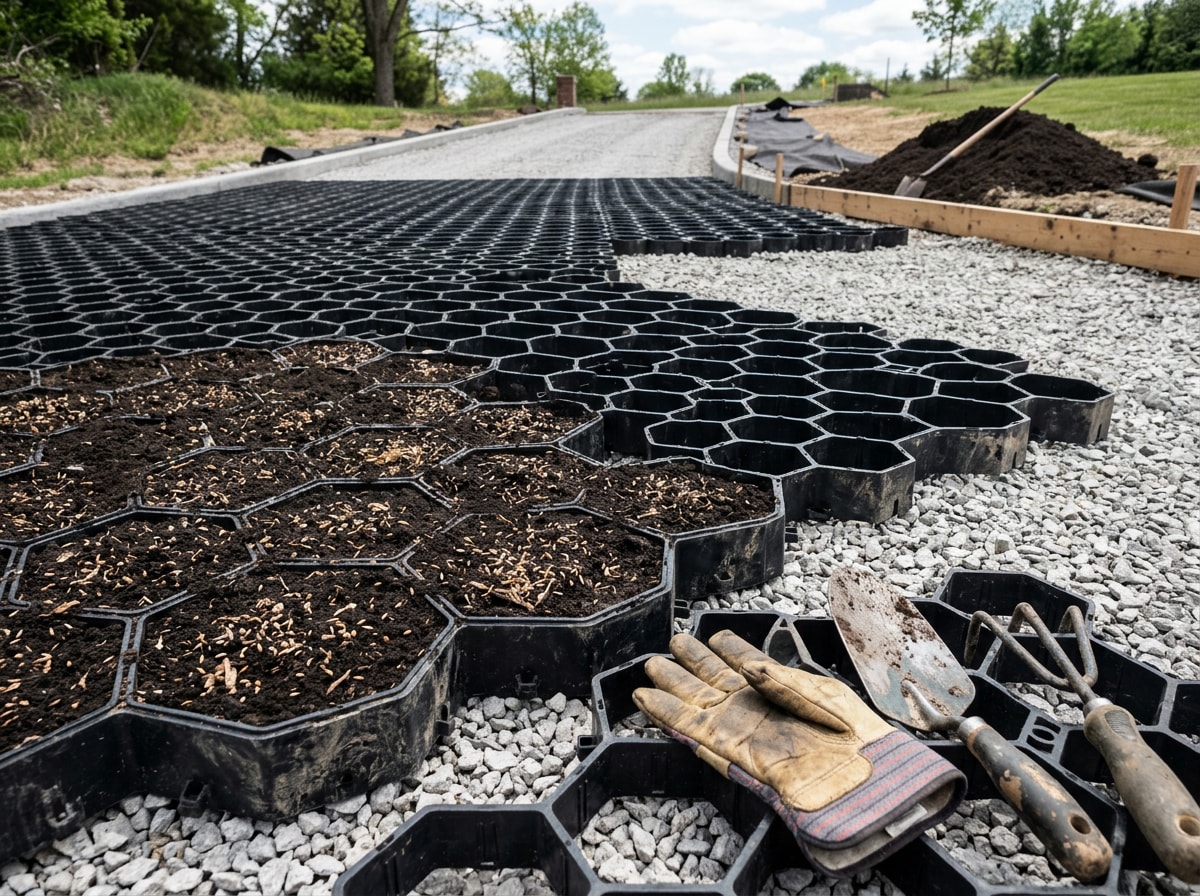
The grid sits on a compacted aggregate base and gets filled with soil and grass seed or sod. Because the grid bears the structural load, the soil beneath stays loose enough for roots to spread. That's what lets an ordinary-looking lawn panel support a parked car.
Grass Paver Cost in Navasota, TX
Expect to pay roughly $10 to $20 per square foot installed for a grass paver driveway, with concrete systems landing at the higher end and plastic grid systems typically costing less upfront. That's consistent with national driveway-paver data, where installing a driveway with grass pavers costs $10 to $20 per square foot or from $5,500 to $12,000, depending on the size and type of materials .
The material split matters too. Concrete grid pavers installation cost falls between $4 and $12 per square foot plus the cost of labor , while plastic grass pavers are the most affordable permeable paving method and cost between $5 and $10 per square foot plus labor to install .
| Paver Type | Material Cost (per sq ft) | Typical Use | Relative Lifespan |
|---|---|---|---|
| Concrete grid pavers | $4 – $12 | Driveways, parking areas, fire lanes | Longest-lasting |
| Plastic grid pavers | $5 – $10 | Walkways, overflow parking, golf cart paths | Shorter, but lighter and easier to install |
Several site-specific factors move the number within that range:
- Base depth required for the expected traffic load
- Site access for equipment
- How much the existing soil needs to be amended before installation
Clay-heavy lots around Navasota sometimes need extra base prep, which can add to the total. Because every property is different, these figures are only a starting point. Request a free estimate for a site-specific quote before you budget the project.
Types of Grass Pavers
Most grass paver products fall into one of two material categories. The right choice depends on how much weight the surface needs to handle and what you're willing to spend upfront.
Concrete Grass Pavers
Concrete grass pavers are the sturdiest option for driveways, parking areas, and other heavy-traffic locations, since the material's rigidity holds up under repeated vehicle loads. This type costs more than plastic alternatives, but it generally lasts longer and resists long-term compaction better.
Concrete grid pavers are also less likely to flex or shift over time, which matters on a surface that sees daily use rather than occasional overflow parking. For a driveway that doubles as the main entrance to a property, concrete is usually the safer long-term bet.
Grid / Plastic Grass Pavers
Plastic grass pavers are open-cell honeycomb grids, often made from recycled plastic, built to hold soil and grass fill while flexing slightly under load. They're a common choice for walkways and driveway applications that still need meaningful load capacity.
The trade-off is weight and installation ease rather than strength alone. A recycled plastic paver grid is far lighter to handle than concrete, which makes it more DIY-friendly for smaller walkway or parking-pad projects. Lighter material also ships and transports more easily, shaving a bit off total project cost.
Where Grass Pavers Work Best in Navasota, TX
Grass pavers handle any surface that needs to carry traffic occasionally but look like landscape the rest of the time. In Navasota, that typically means:
- Extra parking on a residential lawn
- A fire lane along a commercial building
- A walkway connecting a patio to the driveway
- Golf cart paths and utility access roads
- Overflow event parking for a venue or acreage property
A grass paver walkway only needs a light gravel base since foot traffic is forgiving. A grass paver driveway or parking area needs a deeper, compacted base built for vehicle weight, and skimping here is the most common installation mistake. Fire lane pavers fall into the heavier-duty category too, since they must support fire truck loads even though they're rarely used.
Our crews have built base sections for everything from residential overflow pads to fire-access lanes around Grimes County, and the lots that hold up longest are the ones where nobody tried to shortcut the aggregate depth. See our hardscape contractor services to find the right base specification for your project.
Benefits of Grass Pavers
The appeal of a grass paver goes beyond looks:
- Stormwater control. Permeable surfaces let rainwater soak into the ground instead of sheeting into storm drains.
- Cooler surface temperature. Grass pavers run cooler than asphalt and reflect less glare, which matters through Navasota's long summer heat season.
- A functional lawn. The surface still grows grass, so it doesn't read as a parking lot when it isn't being used as one.
Navasota and the surrounding Grimes County area sit on dense clay soils near the Brazos and Navasota River watersheds, and clay doesn't drain quickly on its own. A permeable grass paver system gives rainwater a path into the soil before it pools or erodes a slope, a real advantage during the heavy spring and fall rain events typical of this part of Texas. Permeable surfaces, unlike impermeable surfaces such as asphalt or concrete, allow stormwater to infiltrate through porous surfaces into the soil and groundwater , according to the EPA's guidance on permeable pavement. If drainage is already a problem spot on your lot, pairing a grass paver area with proper drainage installation solves more of the issue than the pavers alone.
For grass fill, Bermuda and Zoysia tend to outperform St. Augustine in paver cells here. Texas A&M AgriLife Extension notes that bermudagrass is grown throughout Texas and is very drought and traffic tolerant , and that St. Augustinegrass adaptation from Central to West Texas is limited due to reduced drought tolerance compared to bermudagrass and zoysiagrass . That makes Bermuda or Zoysia the more durable pick for cells that take compaction, occasional vehicle weight, and drought stress.
Drawbacks and Cons of Grass Pavers
Grass pavers aren't maintenance-free, and it's worth weighing the downsides before committing.
- Shorter lifespan than solid paving. Manufacturers and installers commonly estimate 10 to 15 years for a well-maintained grass paver surface, noticeably shorter than the 20 to 30 years typical of solid concrete or asphalt.
- Ongoing lawn care. Regular mowing, watering, and fertilizing of the turf sections is still required, even though the planted area is smaller than a full lawn.
- Weeds in the joints. Weeds find their way into the grid gaps and need attention during warmer months, a recurring task most solid paved surfaces don't require.
- Accessibility limits. The uneven, grassy surface doesn't meet accessible design standards for a code-required accessible route, and the grid gaps can make wheelchairs, walkers, and strollers difficult to maneuver.
Per the U.S. Access Board's technical guide, accessible floor and ground surfaces must be stable, firm, and slip resistant, and stable surfaces resist movement while firm surfaces resist deformation by applied forces . A grass-filled grid generally can't meet that standard, so if a code-required accessible path is part of your project, plan for a solid surface there and reserve the grass paver area for secondary parking or overflow use. Full details are in the Access Board's accessible surfaces guide.
How to Install Grass Pavers
Professional installation follows a fairly consistent sequence. Understanding it explains why base prep matters more than the paver product itself.
Prep and Clean the Area
Installers mark the layout with stakes and string, then clear the site of debris and check for buried utilities before digging. A clean, well-marked site makes every later step faster and more accurate. This stage overlaps with standard site preparation work on most projects.
Landscape Fabric (Optional)
For driveway installs, fabric usually gets skipped under the base because it can trap water against the aggregate. On patio projects, some crews place landscape fabric above the base layer to limit weed growth. Plastic sheeting should never go under grass pavers; it blocks drainage and can cook the root zone.
Water and Tamp
Once the grid is filled with soil and grass, crews mist the area thoroughly, tamp lightly to settle everything, and keep it consistently moist for about two weeks while roots establish. Polymeric sand should be skipped entirely here, since it seals gaps against both water and roots, which is exactly what a grass-filled system doesn't need. Soil or a soil-compost blend works instead.
For base depth specifics on vehicle-rated systems, the Concrete Masonry and Hardscapes Association (the trade group that absorbed ICPI's technical library) publishes construction standards for permeable interlocking systems. CMHA provides a comprehensive manual entitled Permeable Interlocking Concrete Pavements, which covers design, specifications, construction and maintenance, and summarizes PICP construction techniques for contractors and project inspectors . You can review the full technical bulletin here.
Are Grass Pavers Right for You?
The decision mostly comes down to how much ongoing lawn care you're willing to take on in exchange for a permeable, green-looking surface. Grass pavers aren't a hands-off solution; they still need mowing, watering, and weeding on a recurring basis.
The uneven, grassy texture is also worth weighing against daily use. It's not ideal underneath patio furniture or for anyone frequently crossing the area in heels, and as noted above, it won't satisfy an ADA-accessible route. For many Navasota properties, the drainage and heat benefits outweigh the extra upkeep, especially on a secondary driveway or overflow pad rather than a primary walkway.
If grass pavers aren't the right fit for every area of your property, mulch and wood ground cover are a lower-cost alternative worth comparing; our landscaping wood guide for Navasota breaks down those options. Browse our Navasota, TX service area page or visit the Landscaping BCS homepage to see our full range of hardscape work, and get a free estimate when you're ready to talk through your project.
FAQ
How much do grass pavers cost in Navasota, TX?
Plan on roughly $10 to $20 per square foot installed for a driveway-rated system, with concrete grid pavers near the top of that range and plastic grid systems near the bottom. Clay-heavy lots sometimes need extra base prep, which adds to the total.
Are grass pavers worth it?
They're worth it if you want a permeable, green-looking surface for occasional vehicle use, such as overflow parking or a fire lane, and you're willing to maintain the turf. They're less worth it if you want a low-maintenance, set-it-and-forget-it surface.
Do grass pavers require a lot of maintenance?
Yes. Grass pavers need regular mowing, watering, fertilizing, and occasional weeding, similar to a small lawn section, even though the planted area is smaller than a full yard.
Can you use grass pavers for a driveway?
Yes, with a grid-style turf paver rated for vehicle loads over a deeper base, typically 8 to 10 inches. Lighter, flagstone-style grass designs are better suited to patios and walkways.
Can you use artificial grass between pavers?
Yes. Synthetic turf can fill paver joints instead of living grass. It trades away some of the permeability benefit but eliminates mowing, watering, and weeding entirely.
How long do grass pavers last?
Most grass paver systems are estimated to last 10 to 15 years with proper installation and routine maintenance, shorter than solid concrete or asphalt surfaces.
Do you need a special base for pavers with grass in between?
Yes. A compacted aggregate base sized to the expected load is essential, rather than a standard patio-sand base. See the installation section above for the full sequence.