
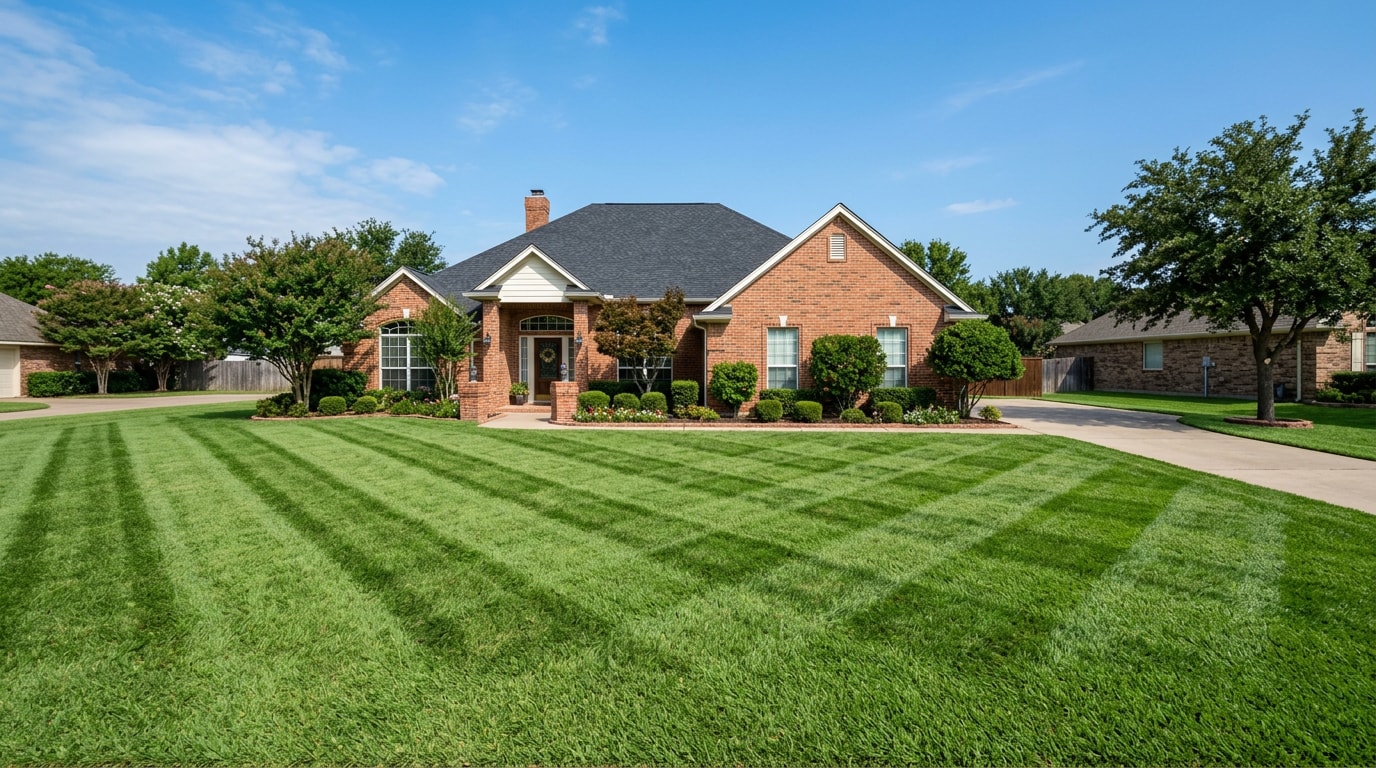
Turf maintenance in College Station, TX means working around heavy clay soil, long humid summers, and warm-season grass that goes dormant every winter. A mowing schedule that works in Dallas or Houston won't necessarily hold up here. This guide breaks down the services, grass choices, and season-by-season tasks that keep Brazos Valley lawns thick and green instead of patchy.
Across the lawns our crews maintain between College Station and Bryan, the single most common mistake we see is homeowners mowing St. Augustine too short. It opens the canopy, stresses the crown, and invites the same brown patch fungus covered later in this guide. Getting the basics right the first time saves far more money than fixing a stressed lawn later.
Visit Landscaping BCS to see our services and request a free estimate.
Turf Maintenance Services in College Station, TX
A complete turf maintenance program covers three layers: routine mowing, ongoing fertilization and weed control, and seasonal tasks like aeration or soil testing. Homeowners who only mow tend to fall behind on the treatments that actually keep grass dense enough to crowd out weeds on its own.
Lawn Mowing Frequency by Grass Type
Bermuda and St. Augustine lawns in the Brazos Valley usually need mowing every 5 to 7 days during peak summer growth, and every 2 to 3 weeks once temperatures cool. Humidity accelerates growth, so skipping a week in July often means cutting far more height than the grass can handle in one pass.
A sharp mower blade matters more than most people assume. Dull blades tear grass tips instead of cutting them cleanly, leaving a ragged, brownish look within days.
Fertilization, Weed Control, and Pest Treatments
A standard turf maintenance program layers in spring and summer fertilization, pre-emergent and post-emergent weed control, and seasonal check-ins for disease or pest pressure. Any company applying fertilizer or pesticide products should follow integrated pest management practices that limit runoff and unnecessary chemical use near waterways. Information about pests and available pest control methods is used to manage pest damage with the least possible hazard to people, property, and the environment. The EPA's lawn and garden guidance is a useful reference if you apply your own products between professional visits.
For homeowners who want this handled end to end rather than piecing it together themselves, our landscape maintenance program folds mowing, fertilization, and weed control into one recurring visit.
Best Grass Types for College Station Lawns
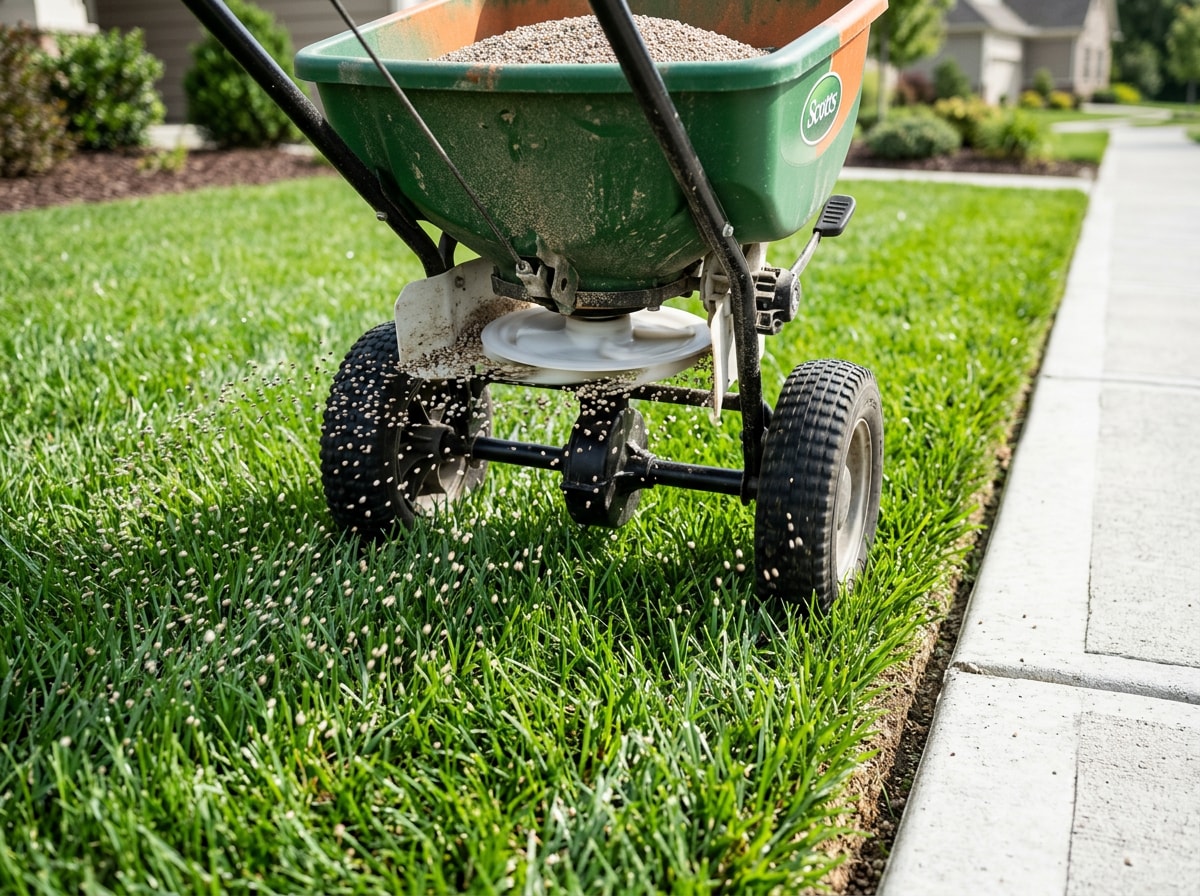
Care needs shift depending on which species is actually growing in the yard, so identifying it correctly comes before setting any schedule. St. Augustine, Bermudagrass, and Zoysia are the three warm-season grasses homeowners in this region run into most, and each handles shade, drought, and foot traffic differently.
| Grass Type | Shade Tolerance | Drought Tolerance | Foot-Traffic Tolerance | Mowing Height |
|---|---|---|---|---|
| St. Augustine grass | High | Moderate | Low-moderate | 2.5-4 inches |
| Bermudagrass | Low | High | High | 1-2 inches |
| Zoysia | Moderate | High | Moderate-high | 1.5-2.5 inches |
St. Augustine tends to dominate shaded, established neighborhoods, while Bermuda is the common pick for sunny, high-traffic yards. Zoysia splits the difference, tolerating moderate shade with better drought resilience than St. Augustine.
Cutting height by species directly affects how a lawn performs here. Bermudagrass tolerates short cuts around 1 to 2 inches, while St. Augustine needs to stay taller, since cutting it too low stresses the plant and opens the door to weeds and disease. For planting or overseeding decisions, AggieTurf is designed to be a comprehensive site for Texas turfgrasses, selection and management considerations, pest control, and other useful information through Texas A&M AgriLife's turfgrass program, which is worth checking before buying sod or seed.
Seasonal Turf Maintenance Schedule for College Station
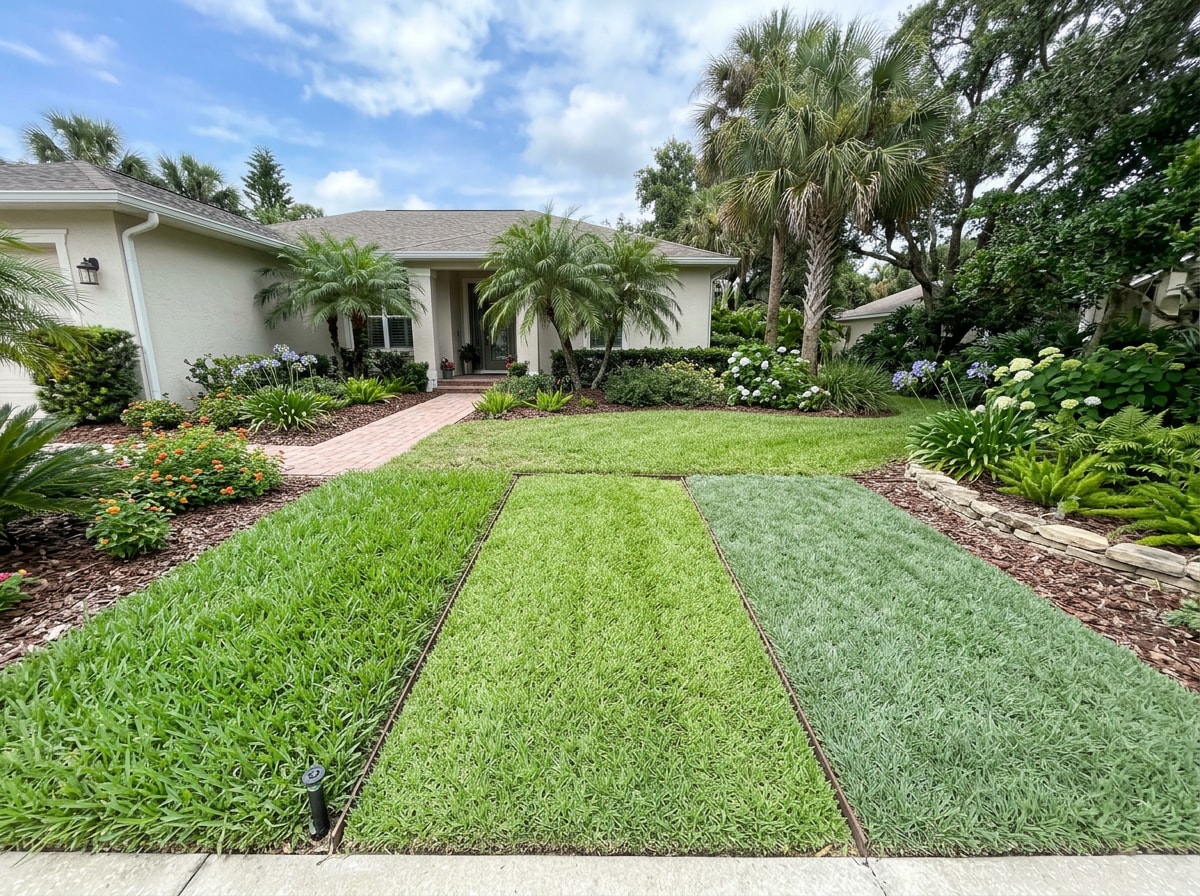
Warm-season grass doesn't grow on a flat schedule. What the lawn needs changes month to month, and timing each task correctly matters more than doing more of any one thing.
Spring Lawn Care
Spring fertilization should wait until the lawn has fully greened up, typically mid-to-late spring, to avoid feeding weeds instead of grass. Pre-emergent herbicide needs to go down earlier, once soil temperatures hold near 55°F for several consecutive days, which is the trigger point for crabgrass prevention.
Core aeration in late spring to early summer, once the lawn has broken dormancy, helps relieve the compaction common in College Station's heavy clay soils. Compacted soil blocks water and nutrients from reaching roots, so aerating right after green-up gives the lawn room to recover before summer heat arrives.
Summer Lawn Care
Watering discipline becomes the top priority once temperatures climb into the 90s. Morning watering, roughly between 6 and 10 a.m., lets grass absorb moisture before midday heat causes evaporation. Evening watering raises the risk of fungal disease by keeping blades wet overnight.
A consistent schedule, deep but infrequent rather than daily light sprinkling, builds deeper root systems that handle heat better. If your irrigation system can't support that kind of schedule, our irrigation installation team can rework zones and timers so watering matches what the lawn actually needs.
College Station also enforces its own watering rules that override generic advice. This is known as "cycle and soak." For example, instead of running the sprinkler for 30 minutes continuously, water for 10 minutes, 3 times, with each watering time separated by an hour or more.
The city also asks residents not to water outdoors with automatic in-ground or hose-end sprinkler systems between 10 a.m. and 6 p.m. Check the City of College Station's smart watering guidance before setting an irrigation schedule, since restrictions can tighten during drought stages.
Summer weed control usually targets breakthrough weeds that spring pre-emergents missed, especially nutsedge and grassy weeds that thrive in hot, humid conditions. These typically need post-emergent spot treatment rather than a blanket application.
Fall Lawn Care
A potassium-rich fall fertilizer application builds winter hardiness, helping roots and crowns survive cold snaps without major damage. Fall is also the window for a second pre-emergent application, this time targeting winter weeds like burweed and annual bluegrass before they germinate in cooler weather.
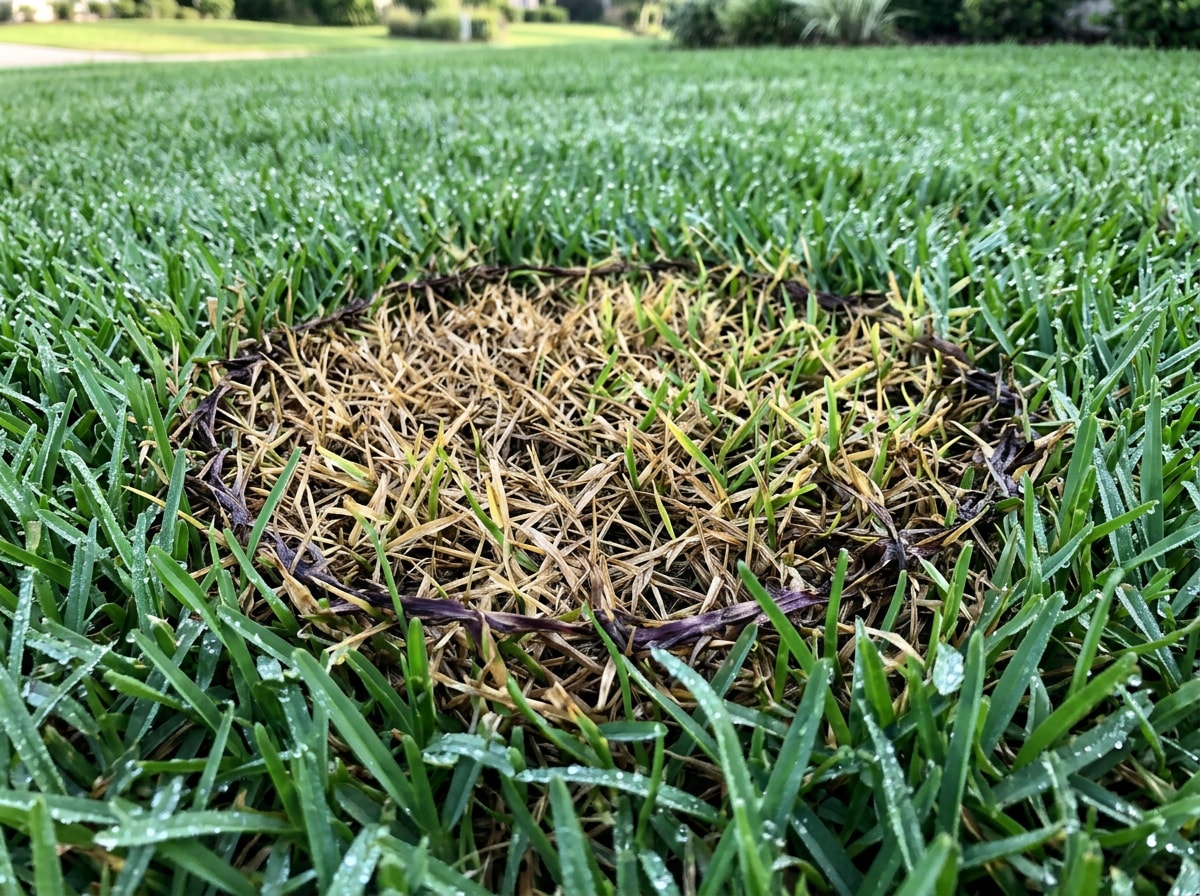
Take-All Root Rot and Brown Patch are the two fungal issues that show up most often in St. Augustine lawns during cooler, wet fall weather. Brown patch appears as roughly circular patches that are brown, tan, or yellow in color and range from 6 inches to several feet in diameter, and affected leaves typically remain upright with tan, irregular lesions bordered in dark brown. Correct identification matters since the two diseases respond to different products. The NC State Turf Files disease guide is a solid reference point if you want to confirm what you're looking at before buying a fungicide.
Fall is also when leaf drop piles up fast under College Station's oak canopy. Left on the lawn too long, wet leaves smother grass and create the exact damp conditions brown patch needs. Our landscape cleanup service handles that before it becomes a turf problem instead of a chore.
Winter Lawn Care
Grass growth slows dramatically in winter, but this lower-activity window is still worth using rather than ignoring. Winter is a practical time to run a soil test, since grass isn't actively growing and results won't be skewed by recent fertilizer applications. If the soil comes back acidic, applying lime over winter corrects it well before spring fertilization begins.
Natural Lawn vs. Artificial Turf Maintenance
Homeowners comparing natural grass to synthetic turf should know the cost and effort profiles look very different. A natural lawn typically runs several seasonal treatments per year, while synthetic turf skips fertilizer and herbicide entirely but still needs regular rinsing, debris removal, and infill grooming to stay sanitary.
Natural turf costs more annually but supports a living yard that cools the soil and filters stormwater. Artificial turf costs more upfront with lower ongoing labor. For yards where water restrictions or shade make a thick natural lawn difficult, xeriscaping with drought-tolerant plants is often a better middle ground than full synthetic turf, since it still supports soil health while cutting water use sharply.
Areas We Serve Near College Station
We maintain lawns throughout College Station, TX and the surrounding Brazos Valley, including Bryan, TX, Navasota, TX, Wixon Valley, TX, and Kurten, TX. Soil and shade conditions shift block to block in this area, which is part of why a cookie-cutter national lawn care plan rarely performs as well as a locally built one.
You can see examples of completed lawn and landscape work on our projects page, or head to our homepage for a full rundown of services.
Ready to stop guessing at mowing height and fertilizer timing? Get a free estimate and we'll build a schedule around your actual grass type and yard conditions.
FAQ
What is the best grass for lawn care in College Station, TX?
St. Augustine suits shaded yards with less foot traffic, while Bermudagrass handles sun and heavy use better. Zoysia works well for yards needing a balance of moderate shade tolerance and drought resilience, as covered in the comparison table above.
How often should I water my lawn in College Station, TX?
Water deeply but infrequently rather than daily, using a cycle-and-soak approach of several short waterings instead of one long one. City watering restrictions may limit which days and hours you're allowed to irrigate, so check current rules before setting a schedule.
How often will you mow my yard?
Mowing frequency depends on grass type, growth rate, and how short you prefer your lawn kept. Bermuda lawns in peak summer growth often need weekly mowing, while slower-growing or shaded St. Augustine yards may stretch to every 10 days.
Do I need to be home during a scheduled visit?
No. Most routine mowing, fertilization, and treatment visits don't require you to be present, as long as gates are unlocked and pets are kept inside during the service window. We'll flag anything that needs your attention directly.
How much does turf maintenance cost in College Station, TX?
Pricing depends on lot size, grass condition, and how often you want service. Bundled programs that combine mowing with fertilization and weed control are usually more cost-effective per visit than booking each service separately. Request a free estimate for an exact number based on your yard.