A grass seed calculator for College Station, TX has to do more than divide square footage by a number printed on a bag. Most national tools apply one flat seeding rate to every region, which can push Brazos Valley homeowners to buy two or three times more Bermuda seed than Texas A&M AgriLife Extension actually recommends. This guide walks through the real formula, corrects that rate, and localizes every number to College Station's clay-heavy soil and short spring planting window.
How Much Grass Seed Do You Actually Need? The Formula
Every seeding calculation starts with the same equation:
Pounds of seed = (lawn area in square feet ÷ 1,000) × seeding rate
Get the area right first. Everything downstream depends on it.
- Rectangle: length × width
- Circle: π × radius²
- Triangle: ½ × base × height
- Irregular shapes: break the yard into smaller rectangles or triangles and add the totals together
Once you have total square footage, the seeding rate is where most generic calculators fall apart for Texas lawns, because they apply a single national number instead of a species- and region-specific one.
Seeding Rates by Grass Type: Why the Bag Label Oversells It
Many consumer bags and online calculators default to a flat rate, often somewhere around 2 pounds per 1,000 square feet, regardless of grass type or climate. Texas A&M AgriLife Extension's own turfgrass establishment guidance lists lower broadcast rates for the warm-season grasses that actually thrive here, because improved Bermuda strains germinate differently than the cool-season species those national defaults were built around.
| Grass Type | Common "bag label" rate (lb/1,000 sq ft) | Texas A&M AgriLife broadcast rate (lb/1,000 sq ft) | Fits College Station? |
|---|---|---|---|
| Bermudagrass | ~2 lb | 0.5–1 lb | Yes, full sun |
| Centipedegrass | 0.5–1 lb | 0.5–1 lb | Yes, low-input areas |
| Buffalograss | 2–3 lb | 2–3 lb | Limited, needs full sun |
| Ryegrass (winter overseed) | 5–10 lb | 5–10 lb | Yes, temporary winter color only |
| Tall fescue | 6–8 lb | Not AgriLife-recommended here | No, struggles in summer heat |
| Kentucky bluegrass | 1.5–2 lb | 1.5–2 lb (cool-season) | No, not suited to Zone 8b/9a |
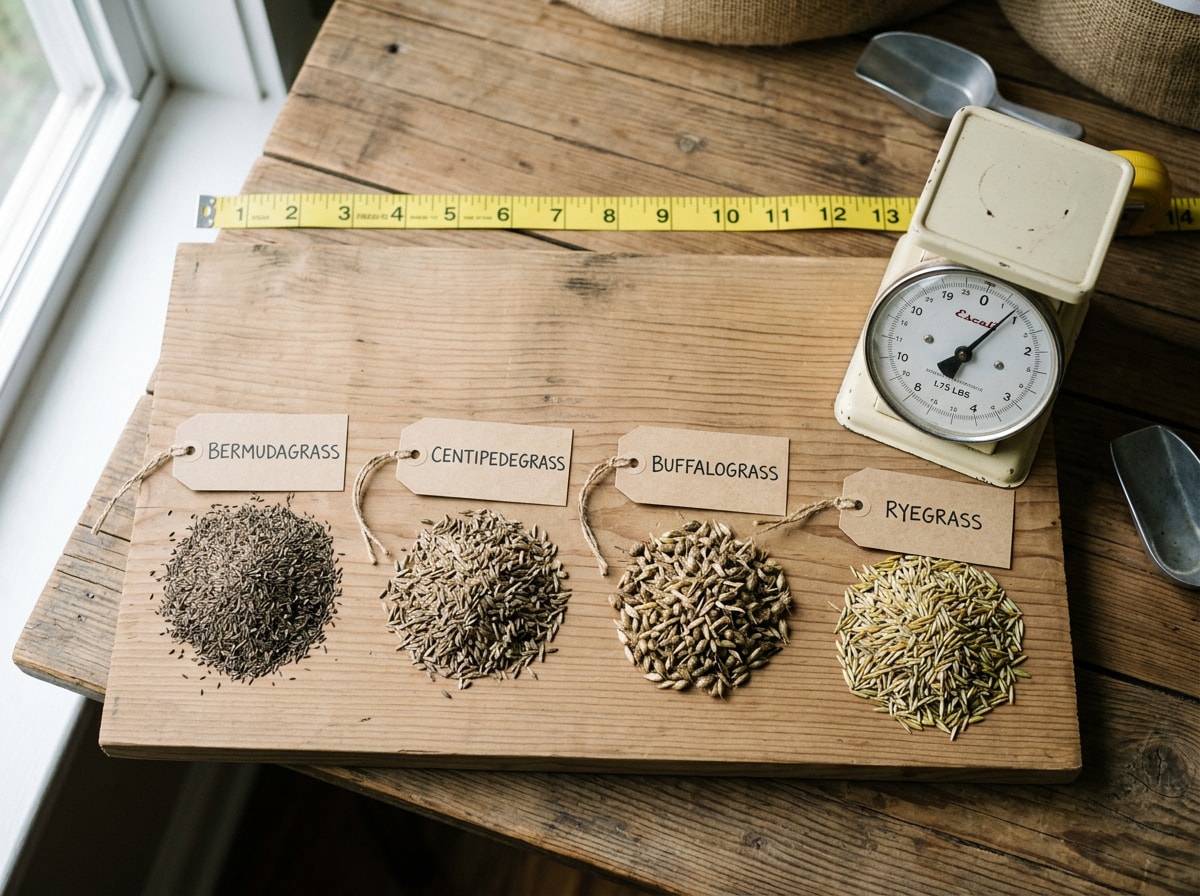
Bermudagrass seed broadcast at 1/2 to 1 pound per 1,000 square feet, with seed and sprigs best planted in spring and early summer , according to Texas A&M AgriLife's turfgrass establishment guide for Texas. That same publication lists centipedegrass at the same broadcast rate and buffalograss at 2 to 3 pounds per 1,000 square feet. For winter overseeding, ryegrass runs 5 to 10 pounds per 1,000 square feet depending on turf type.
Quick Reference: Pounds of Seed by Lawn Size
Using the Texas-specific Bermuda range above, here's what common lawn sizes actually need:
| Lawn Size | Bermudagrass Seed Needed (AgriLife rate) |
|---|---|
| 500 sq ft | 0.25–0.5 lb |
| 1,000 sq ft | 0.5–1 lb |
| 5,000 sq ft (typical suburban lawn) | 2.5–5 lb |
| 10,000 sq ft (¼ acre) | 5–10 lb |
If you're seeding centipede instead, the range is the same. For buffalograss, double the low end and roughly match the high end of these figures.
What Germination Percentage Means and How to Adjust Your Numbers
Seed labels are required by law to list germination and purity. Texas A&M AgriLife's own example is instructive: bermudagrass seed with 85 percent germination and 98 percent purity contains 83 percent "pure live seed," while seed with only 80 percent germination and 85 percent purity contains just 68 percent "pure live seed." That gap is why two bags priced the same can perform very differently in your yard.
The adjustment formula:
Adjusted rate = standard rate × (85 ÷ your seed's actual germination %)
Low-priced seed is often the most costly because it may have a low percent germination and purity , so it's worth checking the test date on the tag before you buy. The Association of Official Seed Analysts sets the testing standards that produce those germination and purity numbers in the first place, which is a useful reference if you want to understand how labs arrive at the figures on your bag.
Worked Example: Seeding a 5,000 Sq Ft Bermuda Lawn
A homeowner with a 5,000 sq ft Bermuda lawn, close to a typical College Station lot after the house, driveway, and beds are subtracted, can run both numbers side by side:
- Generic national calculator (flat ~2 lb/1,000 sq ft): roughly 10 lbs of seed
- Texas A&M AgriLife broadcast rate (0.5–1 lb/1,000 sq ft): 2.5–5 lbs of seed
That's a real cost difference, not a rounding error. Say your plan calls for 4 lbs at the standard 85% germination baseline, but the bag you bought tests at 70% germination. The adjustment is 4 × (85 ÷ 70) ≈ 4.9 lbs, so you'd round up to 5 lbs to hit the same effective coverage.
College Station Soil and Climate: What Changes the Math Locally
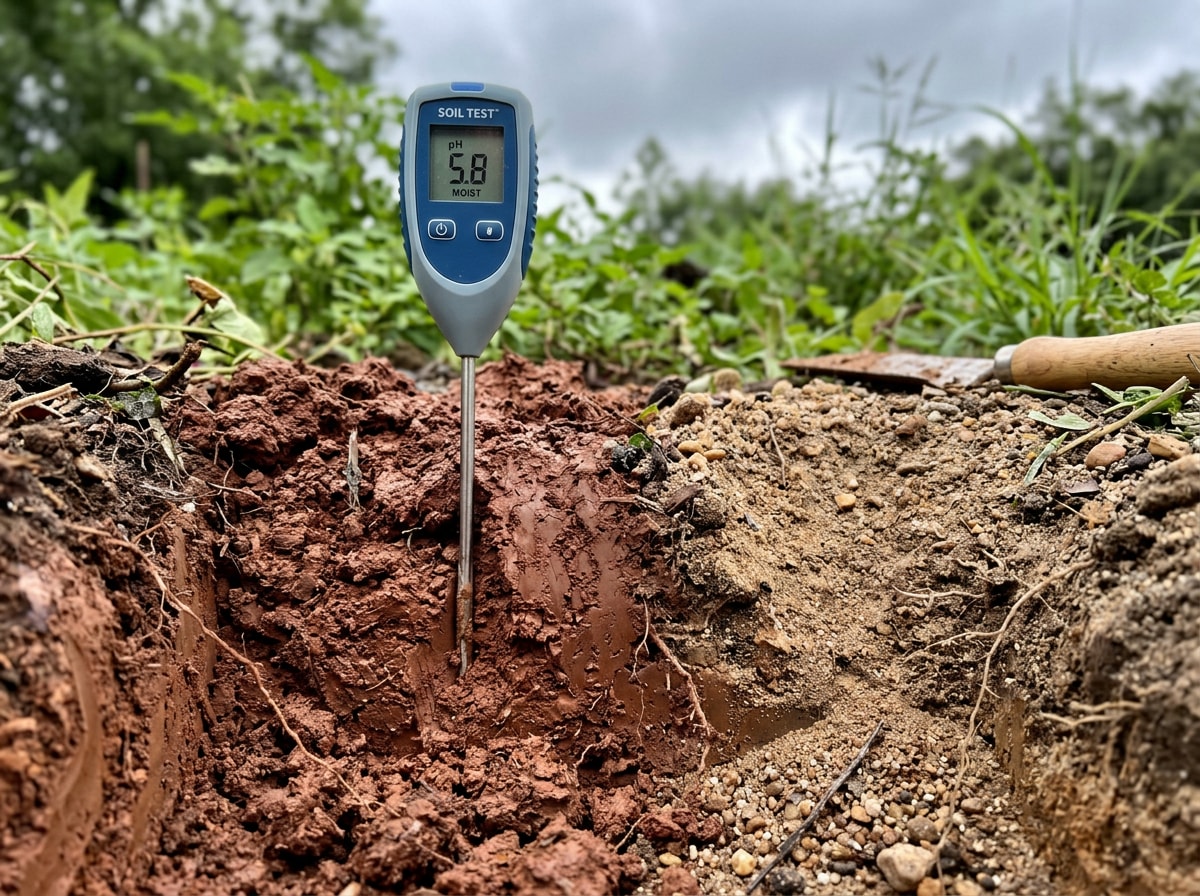
Here's a correction worth making: College Station lawns are not uniformly sandy. Soil type in Brazos County is generally high in the percentage of clay, though there are a few places in the area with sandier soil depending on location, and soils tend to have a high pH that's more alkaline , per a Texas Cooperative Extension response specific to the Brazos Valley. Clay drains more slowly than sand and compacts more easily, which affects how deep new seed should be worked in and how often you water it during germination.
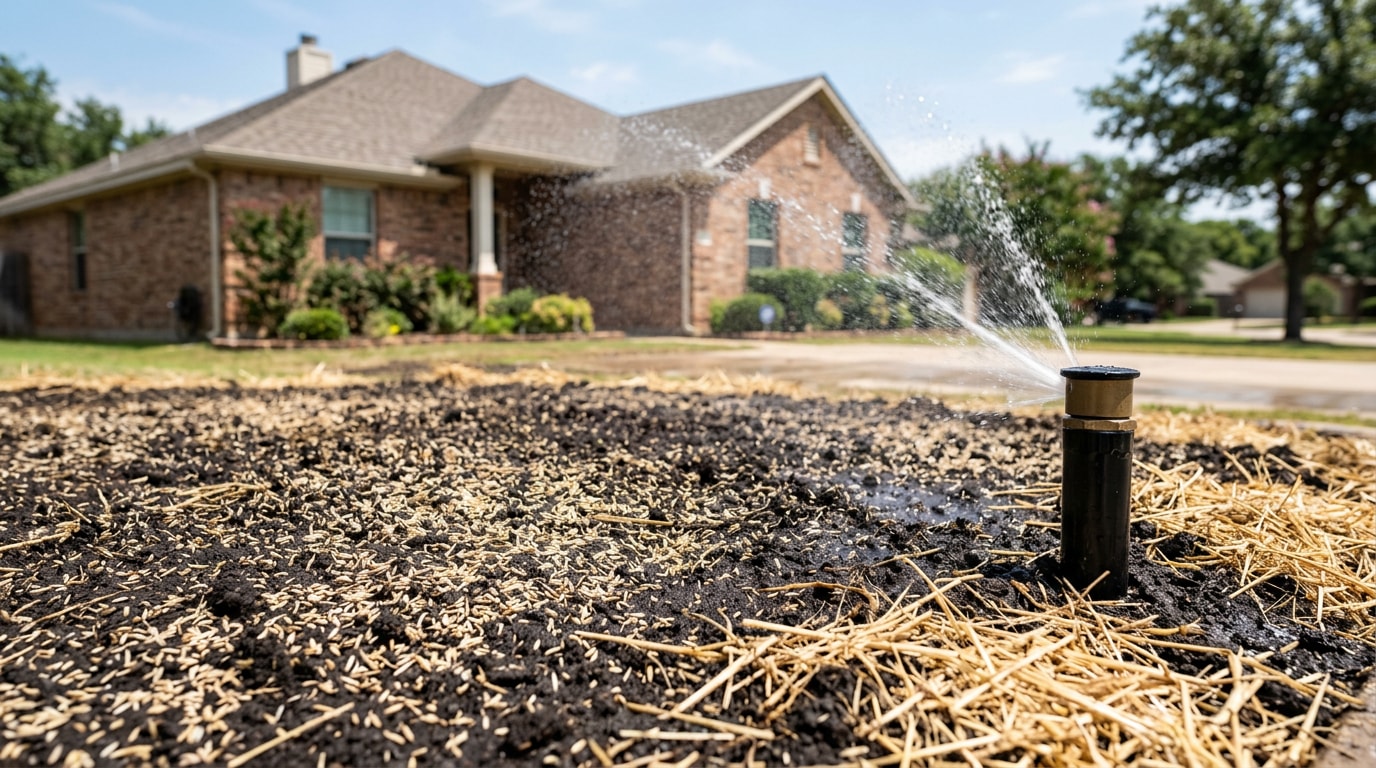
Humidity adds a second variable. New seed in a hot, wet College Station spring is more vulnerable to fungal disease than the same seed in a drier region, which is why overwatering is a more common mistake here than underwatering. If your irrigation system can't deliver light, frequent watering cycles during germination (rather than a few heavy soaks), that's worth fixing before you seed; our irrigation installation team handles exactly this kind of setup work across College Station, Bryan, and Navasota. For ongoing care once grass is established, see our College Station service area page.
Best Grass Types and Planting Windows for College Station
Bermudagrass, zoysiagrass, St. Augustinegrass, and centipedegrass are the species that hold up to Brazos Valley summers. A few practical notes before you choose:
- Bermuda needs full sun and tolerates heat and drought well, but thins out fast in shade.
- St. Augustine and zoysia generally outperform Bermuda in shadier yards.
Many improved grasses do not produce viable seed and are only available as sod, plugs, or sprigs , so the premium Bermuda and St. Augustine cultivars you see on finished lawns usually aren't an option from a seed bag at all.
- Seeding is the cheapest establishment method but the slowest; sod is instant but costs more upfront; plugs sit in between.
On timing, AgriLife lists spring and early summer as the Bermuda seeding window, which lines up with the region's climate: NOAA's 1991-2020 U.S. Climate Normals put College Station's average last spring frost in early March, but warm-season seed needs soil temperatures well above that before it germinates reliably. Seeding too early just wastes seed to cold soil; seeding too late runs it into peak summer stress. If you're overseeding for winter color instead of starting a new lawn, our turf maintenance guide for College Station covers the fall timing and mowing adjustments that keep overseeded lawns healthy through spring transition.
What Actually Drives Seeding Cost in College Station
Seed itself is often the smallest line item. The bigger cost swings come from:
- Lawn prep: grading, dethatching, or correcting drainage before seed goes down
- Grass type: Bermuda seed is inexpensive; many improved varieties require sod or plugs instead, which costs more
- DIY vs. professional installation: labor, starter fertilizer, and follow-up watering discipline all affect establishment success
- Lawn size and access: tight urban lots and large acreage price differently per square foot
Because these variables shift the total so much, the seed math above is a starting point, not a final quote. If you'd rather skip the spreadsheet, get a free estimate and we'll price your actual yard, not a national average.
FAQ
How much grass seed do I need per 1,000 square feet in College Station?
For Bermudagrass, the Texas A&M AgriLife broadcast rate is 0.5 to 1 pound per 1,000 square feet, well below the roughly 2 pounds many generic online calculators default to. Centipedegrass uses the same range; buffalograss runs 2 to 3 pounds.
How much grass seed do I need for overseeding?
Winter ryegrass overseeding runs 5 to 10 pounds per 1,000 square feet depending on turf type. This is for temporary winter color over dormant Bermuda, not a permanent lawn change, and the grass dies back during spring transition.
What does germination percentage mean on a grass seed bag?
It's the percentage of seeds expected to sprout under good conditions. Combined with purity, it produces "pure live seed," the number professionals actually use to judge seed quality rather than the sticker price.
What is the best grass for lawns in College Station, TX?
Bermudagrass for full sun, St. Augustine or zoysia for shadier yards, and centipedegrass for low-input areas. Tall fescue and Kentucky bluegrass are cool-season grasses that generally struggle through Brazos Valley summers.
When is the best time to plant grass seed in College Station?
Spring through early summer, after soil has warmed well past the area's early-March average last frost. Seeding too early wastes seed on cold soil; seeding too late pushes germination into peak heat stress.
Is it better to seed or sod a lawn in Texas?
Seed costs less and gives you more variety choice, but it's slower and more vulnerable to weeds and erosion while it establishes. Sod costs more upfront but gives an instant, erosion-resistant lawn, and it's often the only option for improved varieties that don't produce viable seed.
This guide draws on Texas A&M AgriLife Extension's published seeding rates and NOAA climate data, cross-checked against what our crews see seeding and maintaining lawns across College Station, Bryan, and the surrounding Brazos Valley. Visit the Landscaping BCS homepage for our full range of landscape services, or contact us for a free, no-obligation estimate on your yard.