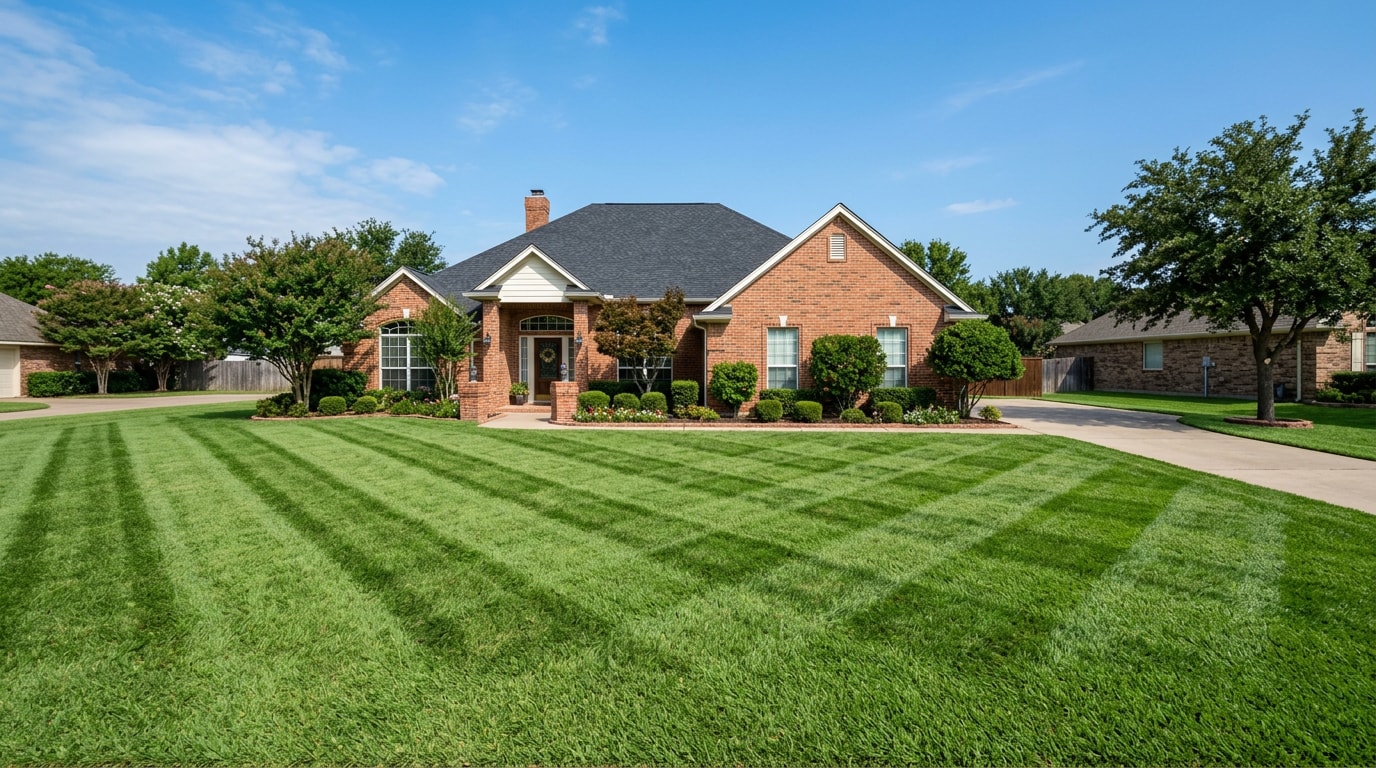
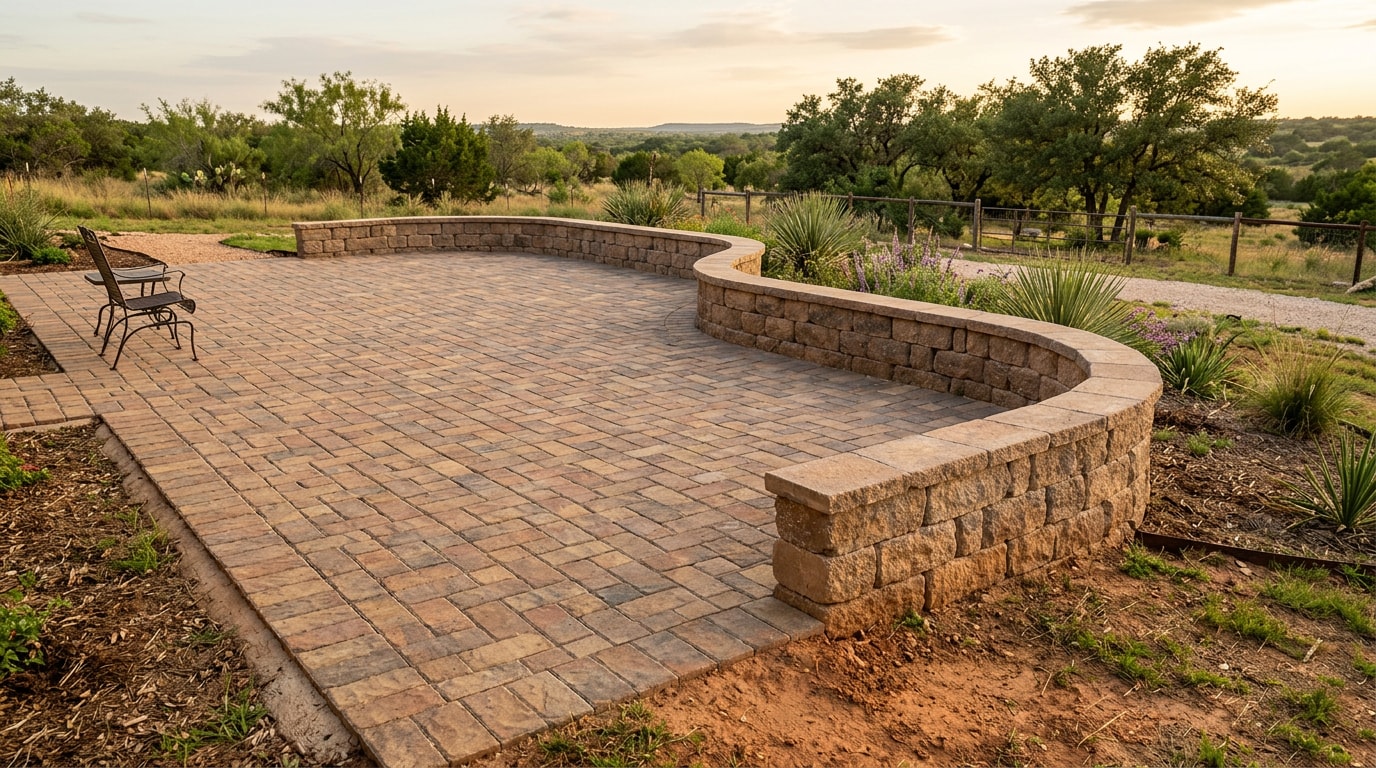
Hardscaping installation in Wixon Valley, TX usually means building a patio, retaining wall, or walkway on acreage where clay soil and uneven grade already shape every decision. This small Brazos County community has no building department of its own, so most projects are handled by contractors who split their week between College Station, Bryan, and Wixon Valley job sites. Here's what actually changes the outcome of a hardscape project here, from material choice to the permit rule most national guides get wrong.
Hardscaping Services Available Near Wixon Valley
Hardscaping covers every built, non-living feature in a yard, as opposed to softscape, which is plants, turf, and other living elements. On Brazos County properties, the most requested services are:
- Patios for entertaining space on sloped or uneven lots (patio installation)
- Walkways connecting a driveway, porch, or outbuilding (walkway installation)
- Retaining walls to manage the grade changes common on rural acreage (retaining wall installation)
- Pergolas for shade over a new patio (pergola installation)
- Concrete finishing for slabs, stamped patterns, and stained surfaces (concrete finishing)
Because Wixon Valley itself has no dedicated hardscape companies, homeowners typically work with a hardscape contractor that already serves the wider Brazos Valley region.
What's Involved in a Hardscaping Installation
Every project starts the same way regardless of whether it's a 120-square-foot patio or a full backyard renovation: a site walk, a material decision, and a build sequence that respects how the soil moves.
Site Assessment and Design
A contractor should check drainage patterns, soil profile, and existing grade before drawing anything. Many firms now produce 2D or 3D renderings so homeowners can preview the finished patio or wall layout before committing to it, which is part of what a full landscape design and installation process typically includes.
Base Preparation
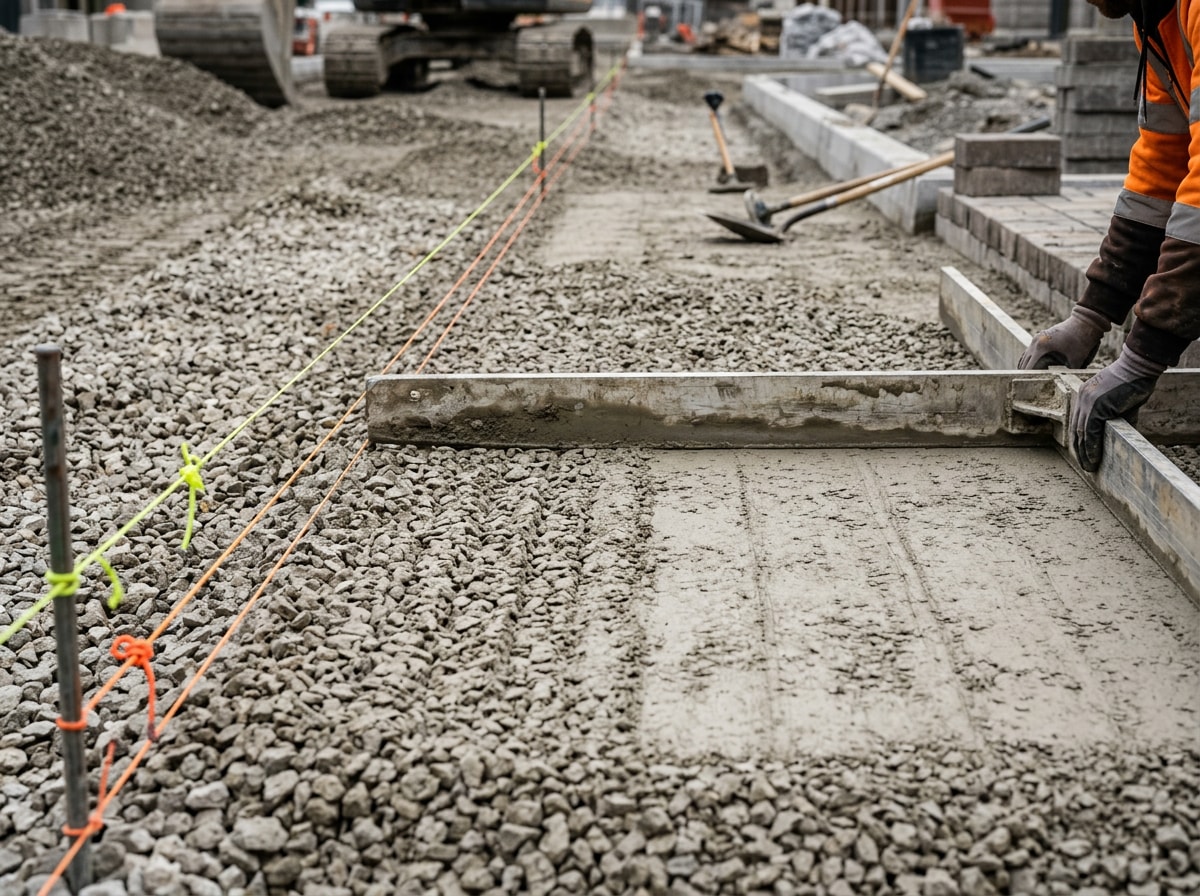
This is the step that determines whether a patio lasts five years or twenty five. Pavers and slabs need a compacted aggregate base, and the required depth depends on soil and traffic load, not a flat number. The Concrete Masonry & Hardscapes Association's construction guidance sets a baseline for this work: patios and pedestrian areas need a minimum compacted base thickness of 4 inches over well-drained soil, with driveways built thicker. Brazos County's expansive clay often pushes installers past that minimum, since the same clay that holds nutrients for turf also shifts seasonally under hard surfaces.
Build and Finish
Once the base is compacted and tested, the visible work goes fast: pavers set in pattern, concrete poured and finished, or wall block stacked and backfilled. Drainage details like slope and buried pipe get buried inside this step, which is why they're easy to skip and expensive to fix later. If a lot has standing water or poor runoff, a drainage installation or regrade should happen before the hardscape, not after.
Retaining Walls and Permits: The Rule Most Guides Get Wrong
Most generic hardscaping articles tell homeowners that retaining walls need an engineer's stamp and a permit once they pass 4 feet in height, measured from the bottom of the footing. That's a reasonable national rule of thumb, but it's not the number that applies closest to Wixon Valley.
College Station, the nearest incorporated city with a published building code and the de facto reference point for unincorporated Brazos County projects, sets its own, stricter line. The city requires a permit for any retaining wall over two feet in height, and every permitted wall must be designed by a licensed Professional Engineer, not just the taller ones. That's half the height threshold used in many Texas cities.
Two walls that look identical from the yard can land on opposite sides of that line depending on footing depth, so it's worth confirming the number with whichever jurisdiction actually has authority over the parcel before pouring a single footing. A short retaining wall holding back a flower bed is a different animal than one holding back a driveway cut.
Choosing Materials for Brazos County Soil and Climate
Material choice affects long-term performance more than almost any other decision in the project.
| Material | Best for | Watch out for |
|---|---|---|
| Concrete pavers | Patios, walkways, driveways | Needs a correctly compacted base; cheap installs skip this |
| Poured concrete | Large slabs, budget-friendly patios | Can crack on expansive clay without control joints |
| Flagstone | Natural, upscale look | Irregular shape means more labor, higher cost |
| Crushed rock / gravel | Low-cost paths, drainage beds | Migrates over time; needs edging |
| Block / segmental retaining wall | Grade changes, raised beds | Height and backfill compaction drive permit needs |
Everything on this list performs differently once it sits on top of Brazos County's clay-heavy soil for a few summers. That's the real reason local experience matters more here than on a sandy-soil job in another part of the state.
Adding Fire Features and Outdoor Living Elements
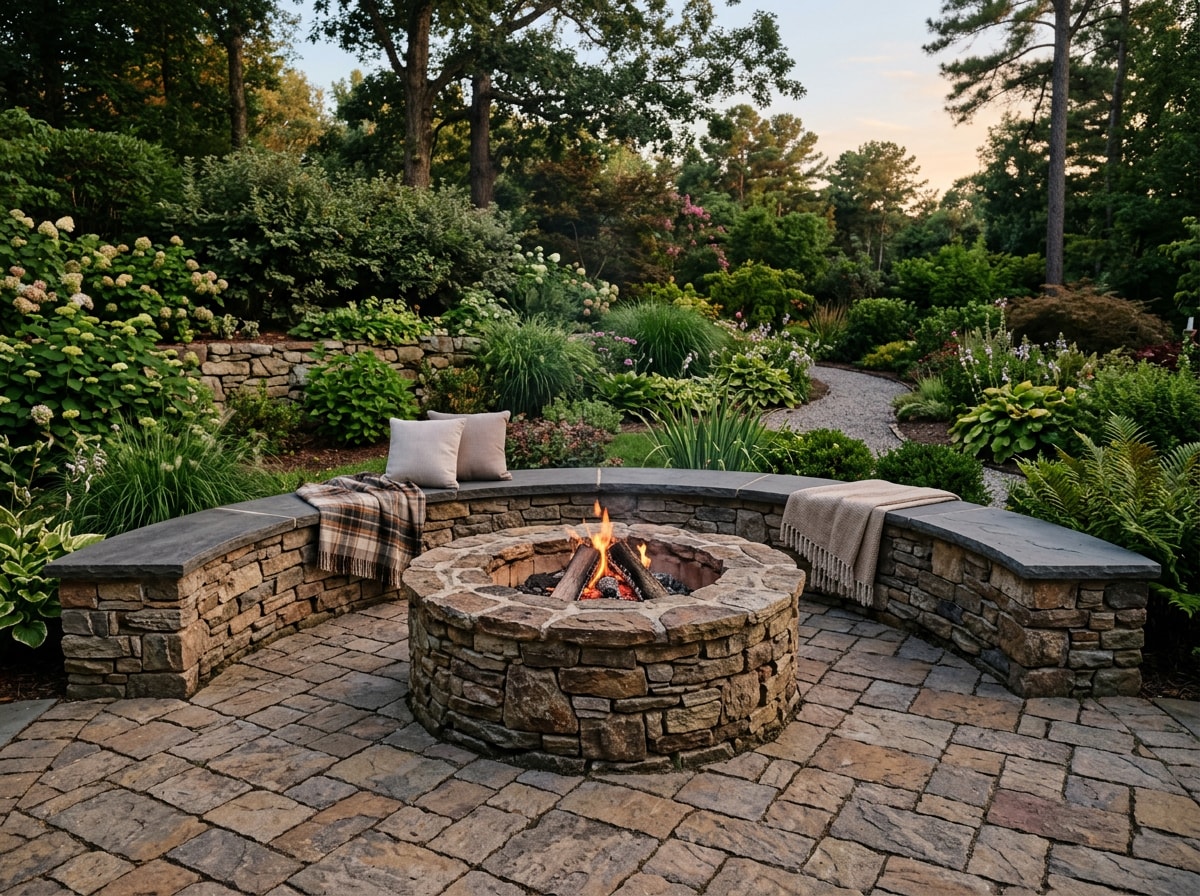
Once the core hardscape is in, most homeowners add something that extends the season. A simple fire pit installation is the most common add-on, followed by a full outdoor fireplace installation for properties that entertain year-round. Existing stone or brick features sometimes need masonry repair before new work ties into them, and a freestanding stone wall installation can frame a patio without the engineering requirements that come with a true retaining wall.
Typical Cost and Timeline
Costs vary by material, access, and how much grading or drainage work the site needs before installation starts. As a general planning range:
| Project | Typical cost range per sq ft | Typical timeline |
|---|---|---|
| Paver patio | $12–$22 | 3–7 days |
| Poured concrete patio | $8–$16 | 2–5 days |
| Flagstone patio | $18–$30 | 5–10 days |
| Segmental retaining wall | $25–$45 | 1–3 weeks |
| Walkway | $10–$20 | 2–4 days |
These ranges are planning estimates, not quotes. Soil conditions, drainage needs, and site access on Brazos County acreage can move a project outside these bands in either direction. The only reliable number comes from a site visit, which is why getting a free estimate before budgeting is worth the half hour it takes.
Why Work With a Local Brazos Valley Contractor
Crews that already work across College Station, Bryan, Navasota, and Kurten see the same clay soil and drainage patterns on every job, which matters more on hardscape work than on mowing or mulching. A base that's under-built on sandy soil might hold up fine; the same shortcut on Brazos County clay shows up as heaving pavers or a leaning wall within a couple of seasons. We cover irrigation too, and if a project involves connecting new beds or a patio drainage line to a water supply, that work falls under state licensing rules enforced by the Texas Commission on Environmental Quality, not a local permit office. Our irrigation installation crews are licensed accordingly.
Confirm coverage for a specific address through the Wixon Valley, TX service area page, or check neighboring areas like College Station, TX, Bryan, TX, and Kurten, TX. Past work is visible on the projects page, and general lawn health around a new hardscape is covered in our guide to turf maintenance in College Station.
Ready to scope a project? Contact us for a free estimate, or start at the homepage to see the full range of services.
FAQ
What is hardscaping?
Hardscaping is the built, non-living part of a landscape: patios, walkways, retaining walls, and edging. It's distinct from softscape, which covers plants, turf, and other living elements.
How much does hardscaping installation cost?
Most residential projects run $8 to $30 per square foot depending on material. Pavers and flagstone cost more than poured concrete; retaining walls price separately because of engineering and backfill labor.
Do I need a permit for a retaining wall or patio near Wixon Valley?
It depends on the wall's height and which jurisdiction has authority over the parcel. College Station, the nearest city with a published code, requires a permit and a Professional Engineer's design for any retaining wall over two feet, a lower threshold than the 4-foot rule used in many other Texas cities. A patio slab on grade usually doesn't need a permit unless it supports a roof or structure.
How long does hardscaping installation take?
A typical patio takes a few days to a week. Retaining walls take one to three weeks depending on height, length, and whether engineered plans are required. Weather and site access can shift timelines on rural Brazos County lots.
What's the best hardscape material for Texas clay soil?
There's no single best material, but base preparation matters more than material choice on expansive clay. Compacted aggregate base per CMHA's construction guidelines is the baseline; many Brazos County installs go deeper than that minimum to account for seasonal soil movement.
Can I combine hardscaping with drainage or grading work?
Yes, and on sloped or low-lying lots it's usually necessary. Grading and drainage should happen before patio or wall installation, not after, so water moves away from the new structure instead of pooling against it. See site preparation and drainage installation for how that work fits into a hardscape timeline.