Landscaping for privacy in Navasota, TX has to solve three problems at once: a neighbor's window at eye level, a two-story view into your pool, and the hum of traffic drifting off Highway 6. One fence or one row of shrubs rarely covers all three. Here's how to layer plants, fencing, and hardscape so the privacy actually holds up through a Brazos Valley summer, not just the first spring after installation.
Privacy in Three Layers
Think of a privacy screen as three stacked layers, not one tall object.
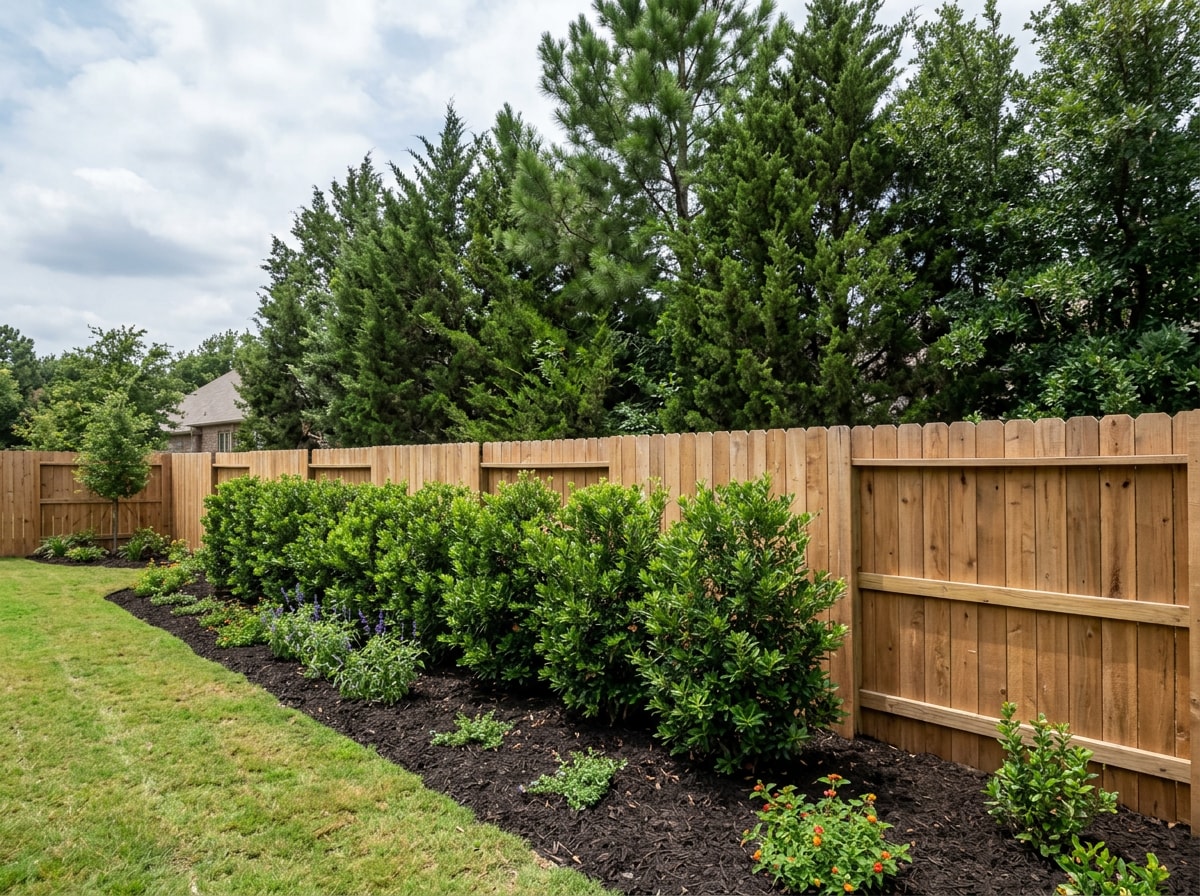
- Ground layer: a fence, wall, or dense low hedge that blocks sightlines at eye level from the street or a neighboring yard.
- Mid layer: shrubs planted a few feet behind the ground layer to add depth and close any gaps as the fence ages.
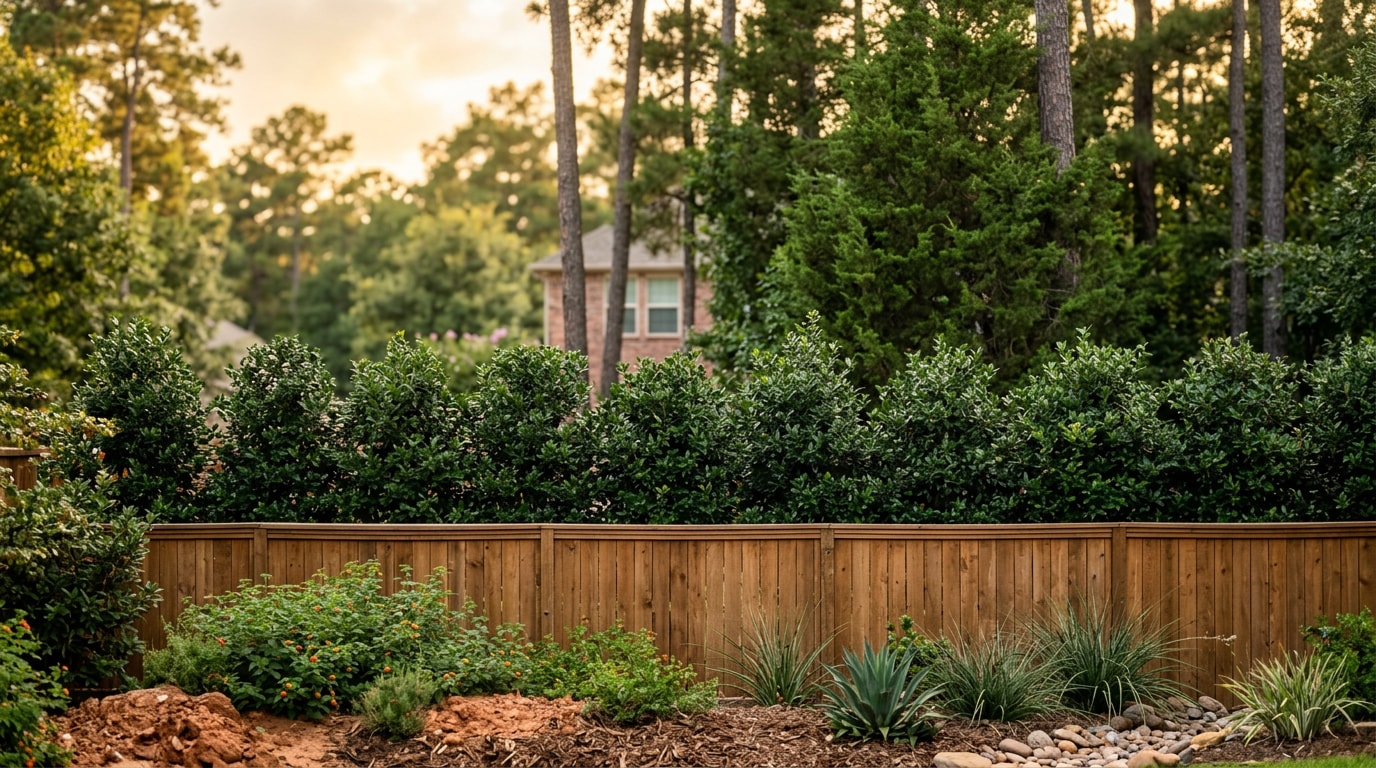
- Overhead layer: evergreen trees or a vine-covered pergola that block the one view a 6-foot fence can never reach: a second-story window.
Many Navasota subdivisions cap residential fences around 6 feet, while properties out toward Kurten or Wixon Valley often sit on larger county lots with no HOA at all. Either way, the fence-plus-tree combination matters because wood or metal stops at the top rail. A row of hollies or cedars planted behind it keeps closing that upstairs gap as the trees mature.
Get Navasota's Zone and Soil Right First
A lot of North Texas privacy-plant advice doesn't actually apply here, and the gap starts with the hardiness zone.
Older guides still list this area as zone 8b, but that's outdated. ZIP Code 77868, Navasota, is in the 2023 USDA Hardiness Zone 9a (20°F to 25°F) , one half-zone warmer than the DFW-area content that most "North Texas privacy plant" articles are written for. The USDA Plant Hardiness Zone Map is the standard tool gardeners and growers use to determine which perennial plants are most likely to thrive at a given location, based on average annual extreme minimum winter temperature . You can confirm your own property's zone on the official USDA map before ordering nursery stock.
Soil is the other variable. Navasota lots swing between heavy Brazos River bottomland clay and sandier upland patches, sometimes on the same street. Clay holds water and can suffocate roots if beds aren't graded to drain; sandy spots dry out fast and need more irrigation attention early on. If your site has standing water after rain, that's worth fixing with proper drainage installation before you plant a single shrub, since a waterlogged hedge row will never fill in evenly.
Best Shrubs and Trees for Privacy Screening
Skip the plants that are popular two zones north and focus on species that actually hold up to Brazos Valley heat, humidity, and clay.
| Plant | Mature Height | Growth Rate | Spacing | Best Use |
|---|---|---|---|---|
| Wax Myrtle | 10-15 ft | Fast | 5-6 ft | Fast mid-layer hedge, tolerates clay and sandy soil |
| Nellie R. Stevens Holly | 15-25 ft | Moderate | 6-8 ft | Dense standalone screen or trimmed border |
| Yaupon Holly | 12-20 ft | Moderate | 5-6 ft | Native, low-maintenance property-line hedge |
| Eastern Red Cedar | 20-40 ft | Moderate | 8-10 ft | Tall back-row screen, drought tolerant |
| Spartan Juniper | Up to 15 ft | Moderate | 3-4 ft | Narrow columnar accent or tight row |
| Savannah Holly | 20-30 ft | Fast | 6-8 ft | Narrow tree form for tight side yards |
| Cherry Laurel | 15-25 ft | Moderate-fast | 5-6 ft | Dense glossy-leaf hedge |
| Clumping Bamboo | 10-20 ft | Very fast | 4-5 ft | Quick screen that stays contained |
A few notes worth more than the table rows:
Mix two or three species along a long property line instead of a single-species hedge. If disease or pests hit one type, you still have a screen while it's treated or replaced.
Skip running bamboo. It's tempting for fast coverage, but running bamboo is invasive and can spread into neighboring yards and colonize natural areas, where it displaces native plants , and it's difficult to control and remove due to its extremely vigorous growth, with eradication requiring more effort and expense than merely containing it . Clumping varieties give similar density without the headache.
Be cautious with Leyland cypress. It's planted constantly in cooler climates, but Seiridium canker is reported to be a major problem on cypress, including Leyland cypress, and arborvitae , and the disease spreads fast once a tree is stressed by heat or drought, which Navasota summers provide in abundance. Eastern red cedar or a dense holly is the sturdier regional swap.
Once plants are in the ground, consistent watering through the first two summers decides whether a hedge fills in or stalls out. An irrigation installation sized for new plantings removes the guesswork, and ongoing landscape maintenance keeps the screen dense instead of leggy.
Hardscape Privacy: Fences, Walls, and Pergolas
Plants take years to do what hardscape can do immediately. For patios, pools, and outdoor kitchens that get used year-round, pairing greenery with structure closes the gap while the hedge grows in.
- A new or raised fence sets the ground-floor privacy line instantly.
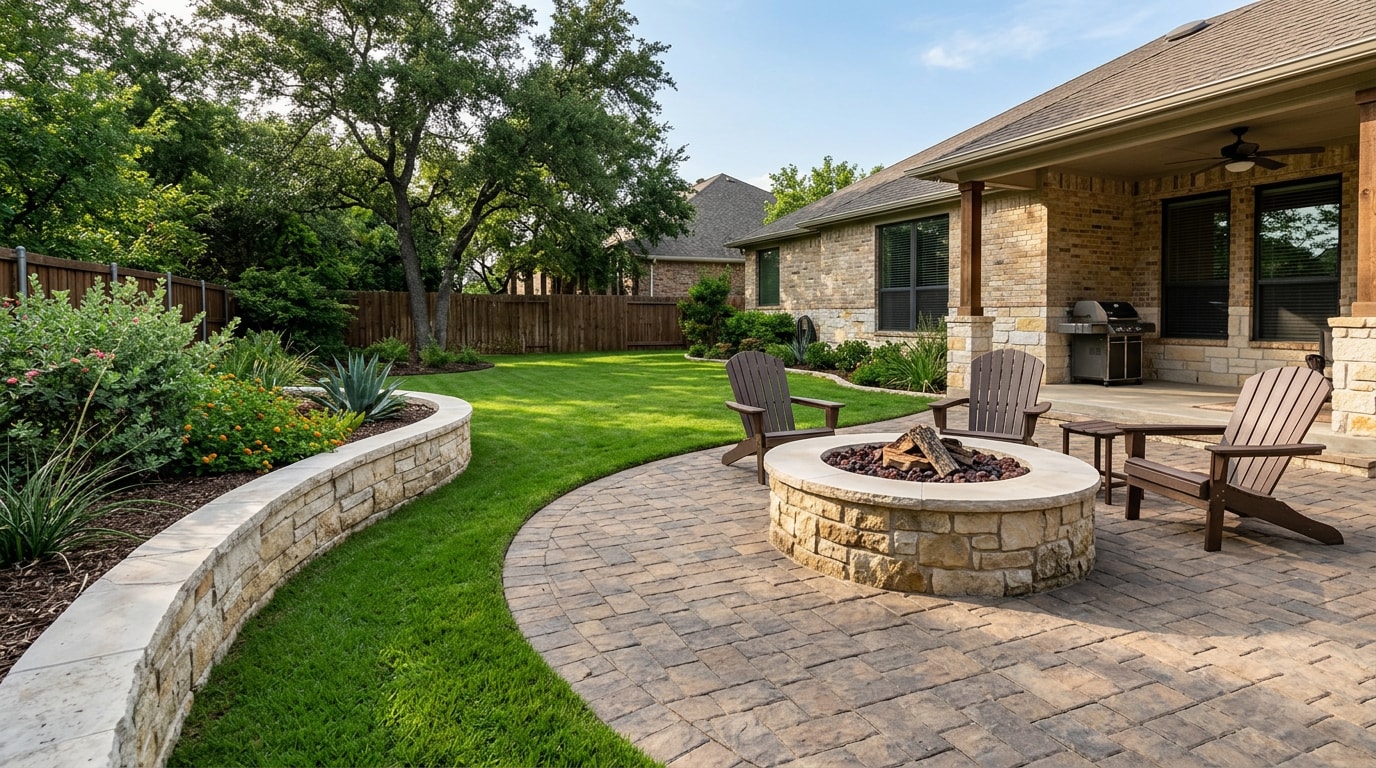
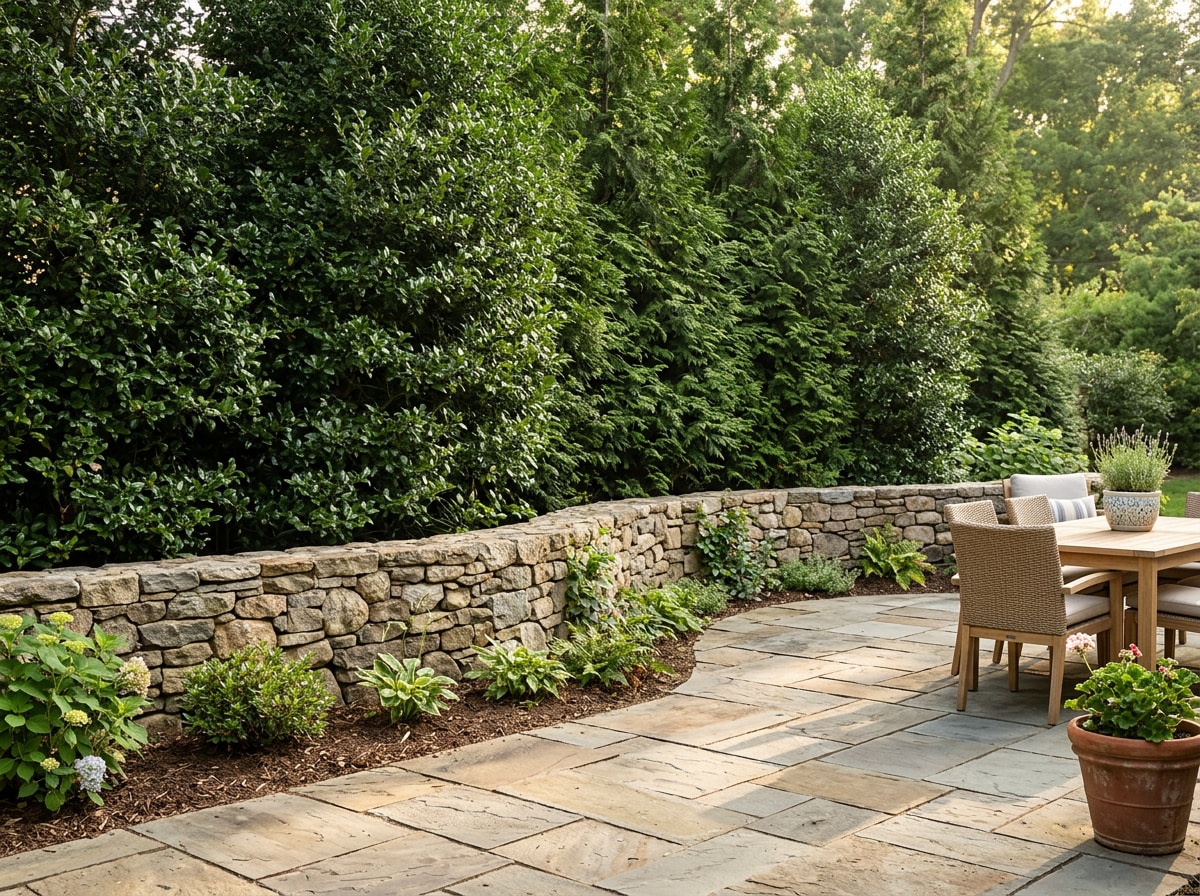
- A stone or masonry wall along a patio edge adds privacy and a finished look that a wood fence can't match. See our stone wall installation and retaining wall installation options for terraced lots.
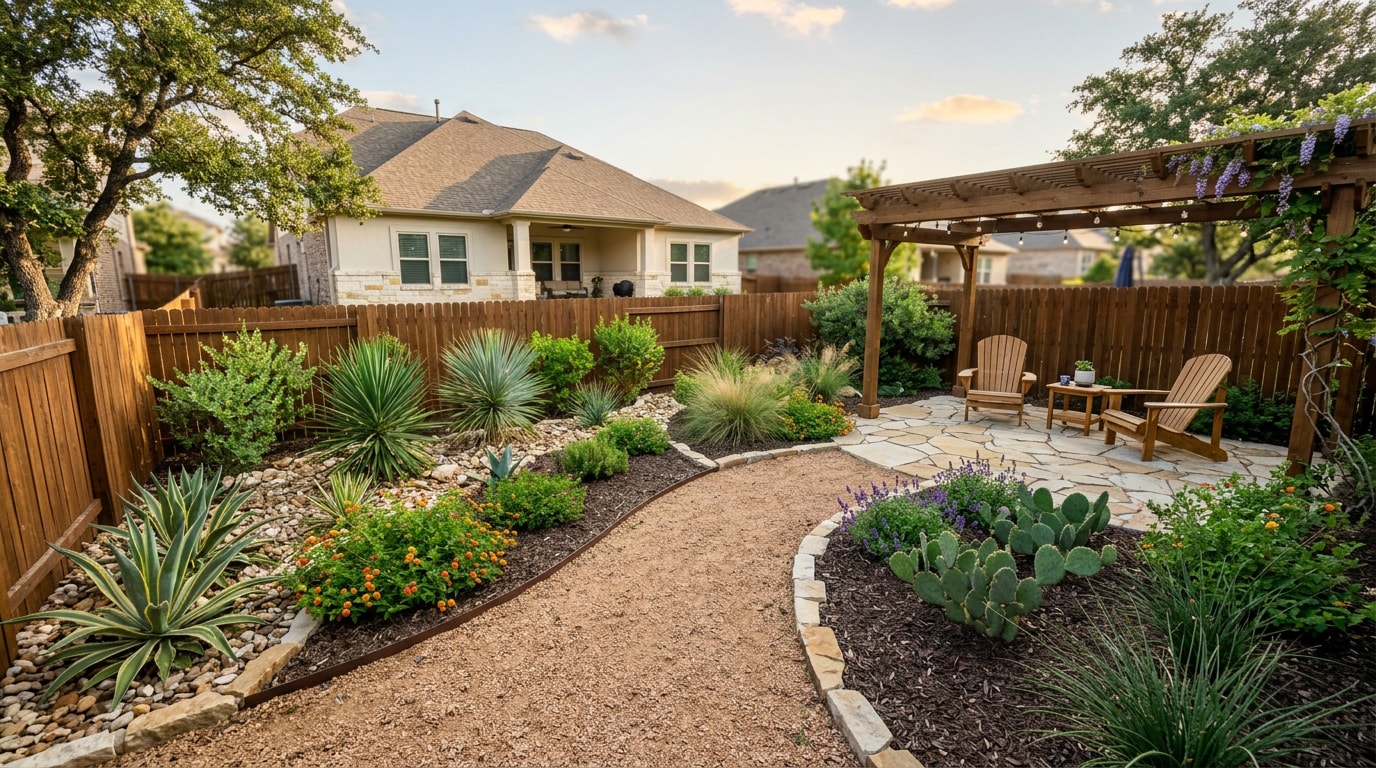
- A pergola with a climbing vine screens a second-story sightline over a seating area long before a tree would reach that height. Pair it with a new patio installation and pergola installation for an outdoor living area that feels enclosed from day one.
We've covered this pairing in more depth in our hardscape landscaping guide for Wixon Valley, which walks through patio, wall, and outdoor living combinations that apply just as well to Navasota lots.
Front Yard vs. Backyard Privacy
Backyard privacy around a pool or patio can lean dense. Tall container plants, a pergola, or temporary screen panels cover the gap while permanent hedges mature, and nobody minds a solid wall of green back there.
Front yards need a lighter touch. A tall, unbroken hedge right at the curb can read as a fortress rather than a welcome. Softer groupings, mixed plant heights, and a hedge set back from the walkway usually look better and still block the view into a front window.
Avoiding the Two Most Common Privacy Mistakes
Beyond plant selection, two setup mistakes show up constantly on Navasota properties:
- Planting shrubs right against the fence. Set the hedge 3 to 4 feet inside the fence line instead. Plants pressed against wood trap moisture and speed up rot, and you lose the ability to trim from your own side.
- Measuring the wrong sightline. A 6-foot shrub won't block a second-story window. Before buying anything, stand at the window or deck you're trying to screen and note how tall a planting actually needs to grow.
Building Your Privacy Plan
Start by naming exactly what needs blocking: a neighbor's window, road noise, or a straight shot into your pool. That answer decides whether you need a 6-foot hedge or a 20-foot tree line.
From there:
- Measure the sightline height, not just the property line length.
- Test your soil drainage after a hard rain before committing to a planting bed.
- Decide what needs to look finished this year versus what can fill in over three to five seasons.
- Budget for both plants and the hardscape that bridges the wait.
Our landscape design and installation process walks through each of these steps on-site, matching the plan to your actual lot instead of a generic North Texas list. If you'd rather start simple, our guide to backyard landscaping ideas for Kurten homeowners covers layout basics that apply to privacy planning too.
Daniel and the crew at Landscaping Ninjas have walked enough Grimes County yards to know a cookie-cutter plant list usually fails on either the clay or the heat. A short on-site visit catches both before you plant anything.
Get a Free Estimate and we'll map out which layer of privacy your yard actually needs first.
FAQ
What can I plant for privacy instead of a taller fence?
Evergreen trees and dense hedges block the upstairs sightlines a fence physically can't reach. Nellie R. Stevens Holly is a reliable, fast-filling option for Navasota yards that need coverage without raising fence height.
How long does a privacy hedge take to fill in?
Most fast-growing evergreens give usable ground-level privacy in two to three years and a fully mature screen in five to seven. Starting with larger nursery stock, or pairing the hedge with a fence or pergola, closes the visual gap sooner.
Should I plant in front of or behind my fence?
Set shrubs 3 to 4 feet inside the fence line rather than pressed against it. This spacing avoids trapping moisture that rots wood and keeps the hedge reachable for trimming from your side.
Will bamboo work for privacy here?
Only clumping bamboo is a safe choice. Running bamboo spreads by underground rhizomes into neighboring yards and foundations, and it is genuinely difficult to remove once established, so confirm the variety with the nursery before buying.
What are the best privacy trees for Navasota's climate?
Eastern red cedar, Nellie R. Stevens holly, and yaupon holly handle Grimes County clay and zone 9a summer heat better than Leyland cypress, which is prone to fungal canker once stressed by drought.
How much does privacy landscaping cost in Navasota, TX?
Cost depends heavily on plant size, hardscape materials, and how much site grading or drainage work the lot needs, so there's no single number that fits every yard. A free on-site estimate from our contact page gives you a written price based on your actual property, not a generic average.