Hardscape landscaping in Wixon Valley, TX has to solve one problem before anything else: clay soil that swells and shrinks enough to crack a slab or push a wall out of line. Get the base right and a patio, retaining wall, or fire pit here will outlast almost anything a softscape-only yard can offer. This guide covers what a hardscape project actually involves on a Wixon Valley property, what it costs in 2026, and the questions homeowners ask most before hiring a contractor.
Hardscaping Services Built for Wixon Valley's Clay Soil
Hardscaping adds the lasting, non-living structure a yard needs: patios, walkways, walls, fire features, and shade structures. A skilled hardscape contractor treats every one of these as a soil-and-drainage problem first, a design problem second. That order matters more in Wixon Valley than in sandier parts of Texas, because the clay here moves with every wet-dry cycle.
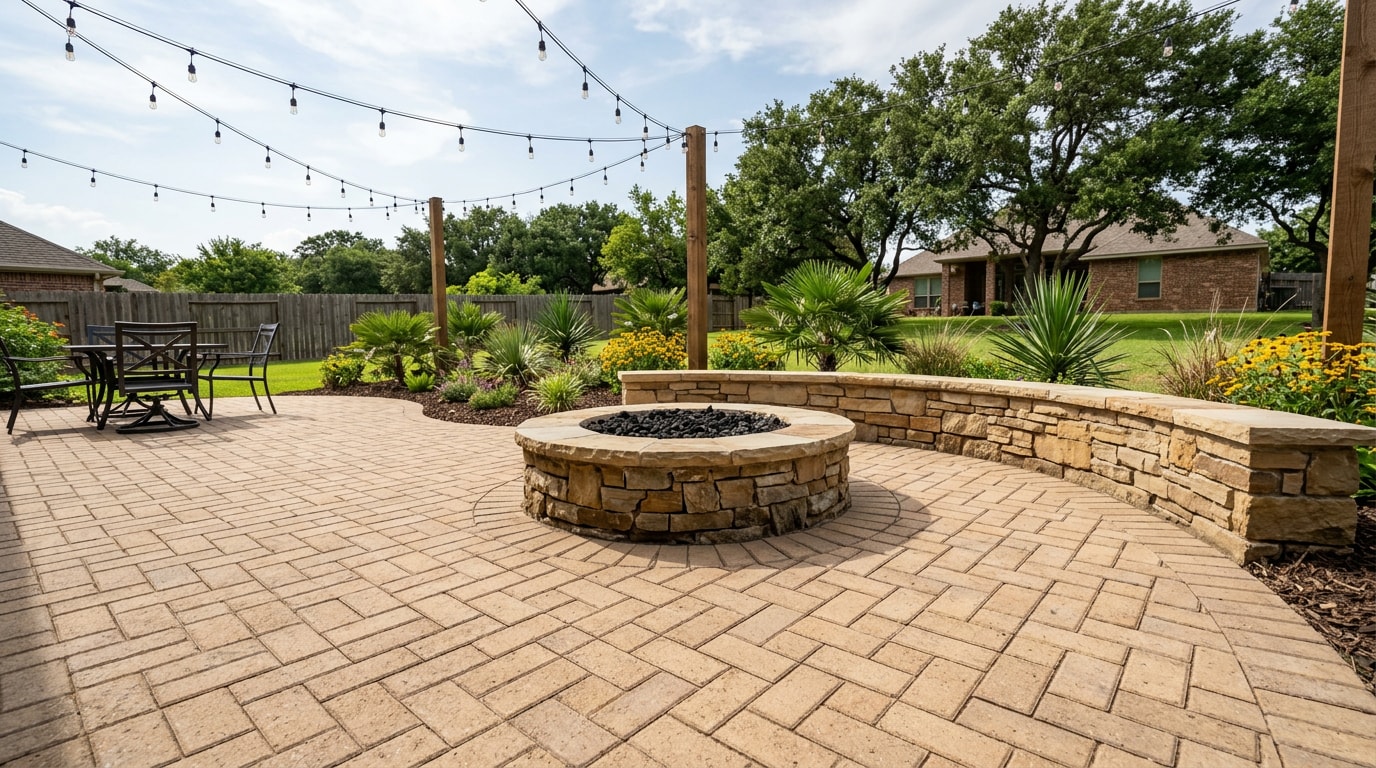
Patios & Walkways
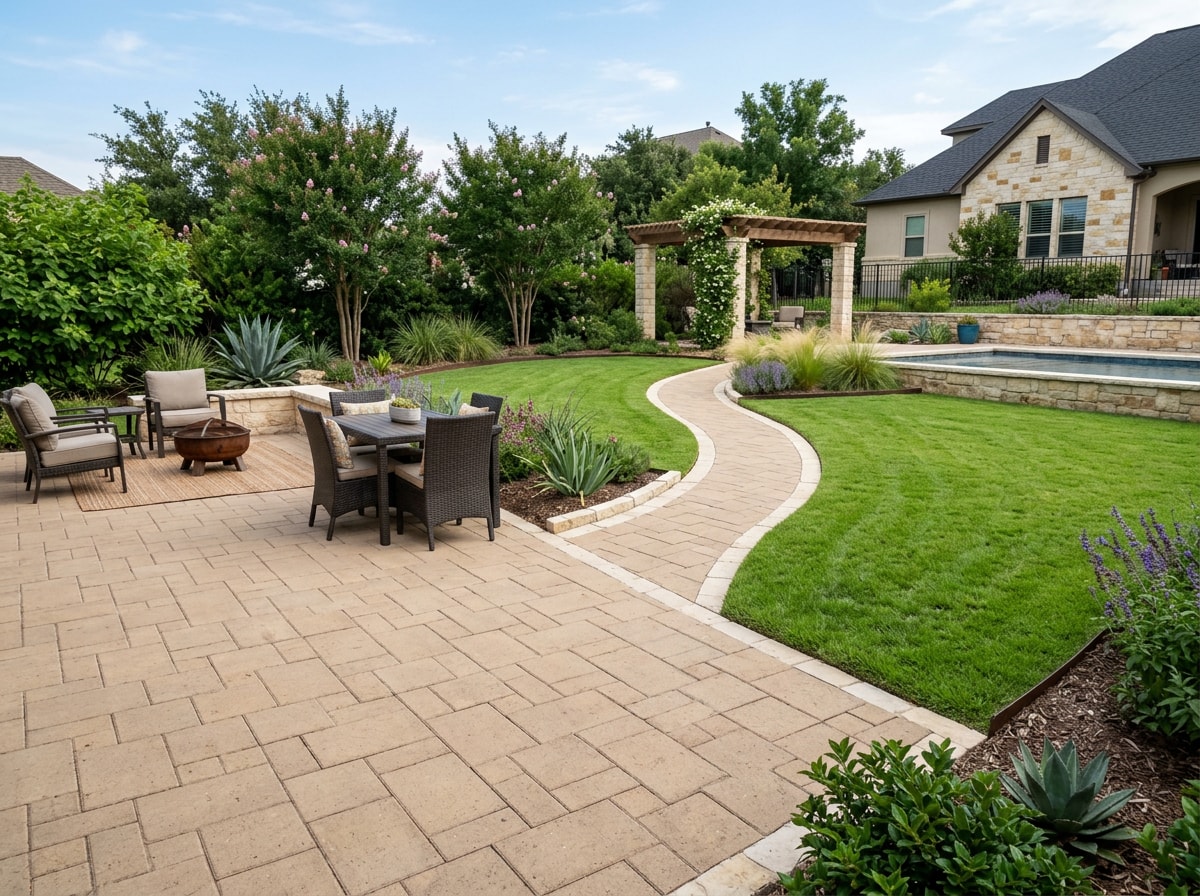
A durable paver patio or walkway starts below the surface, not with the material on top. Base depth and compaction have to account for a clay subgrade that shifts with moisture, not just the finished look. Common material choices include:
- Concrete pavers
- Poured and stamped concrete, finished through concrete finishing
- Flagstone
- Natural stone
- Crushed rock accents
Retaining Walls
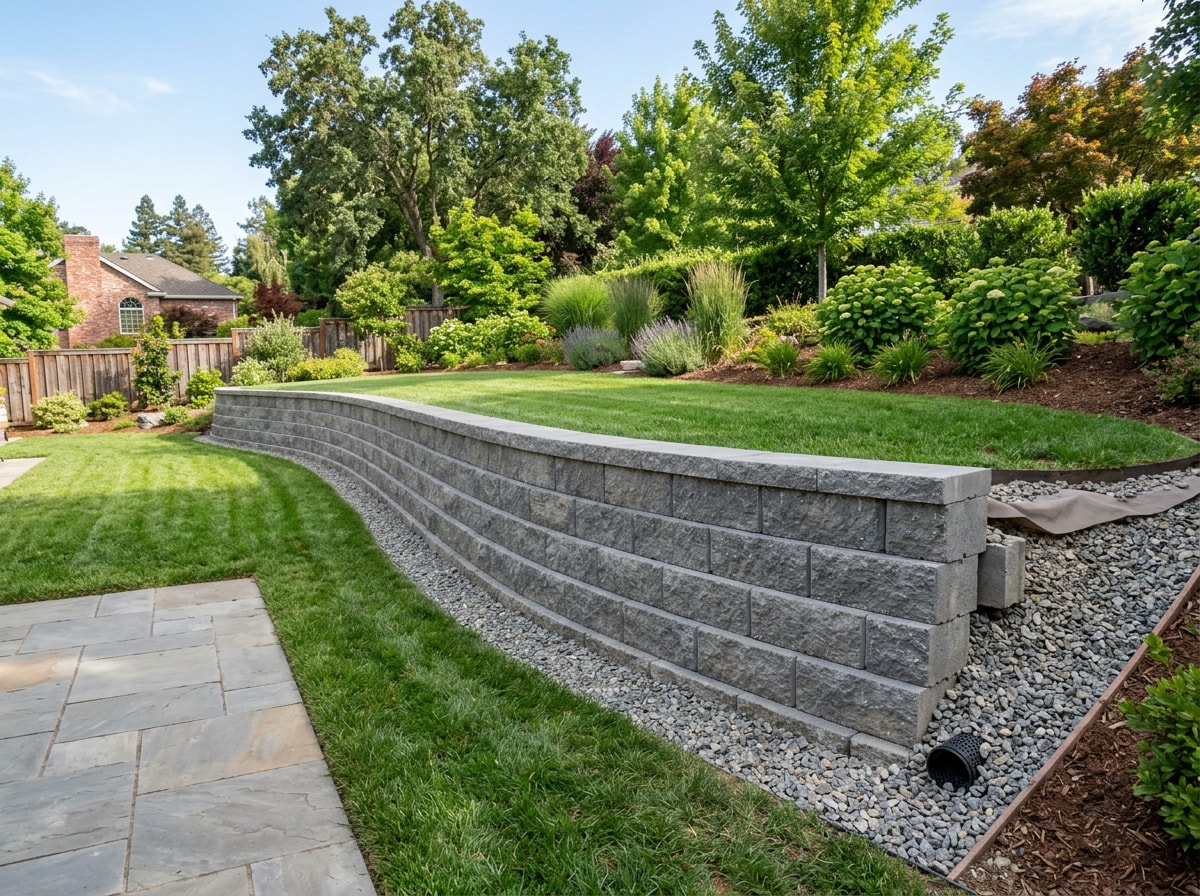
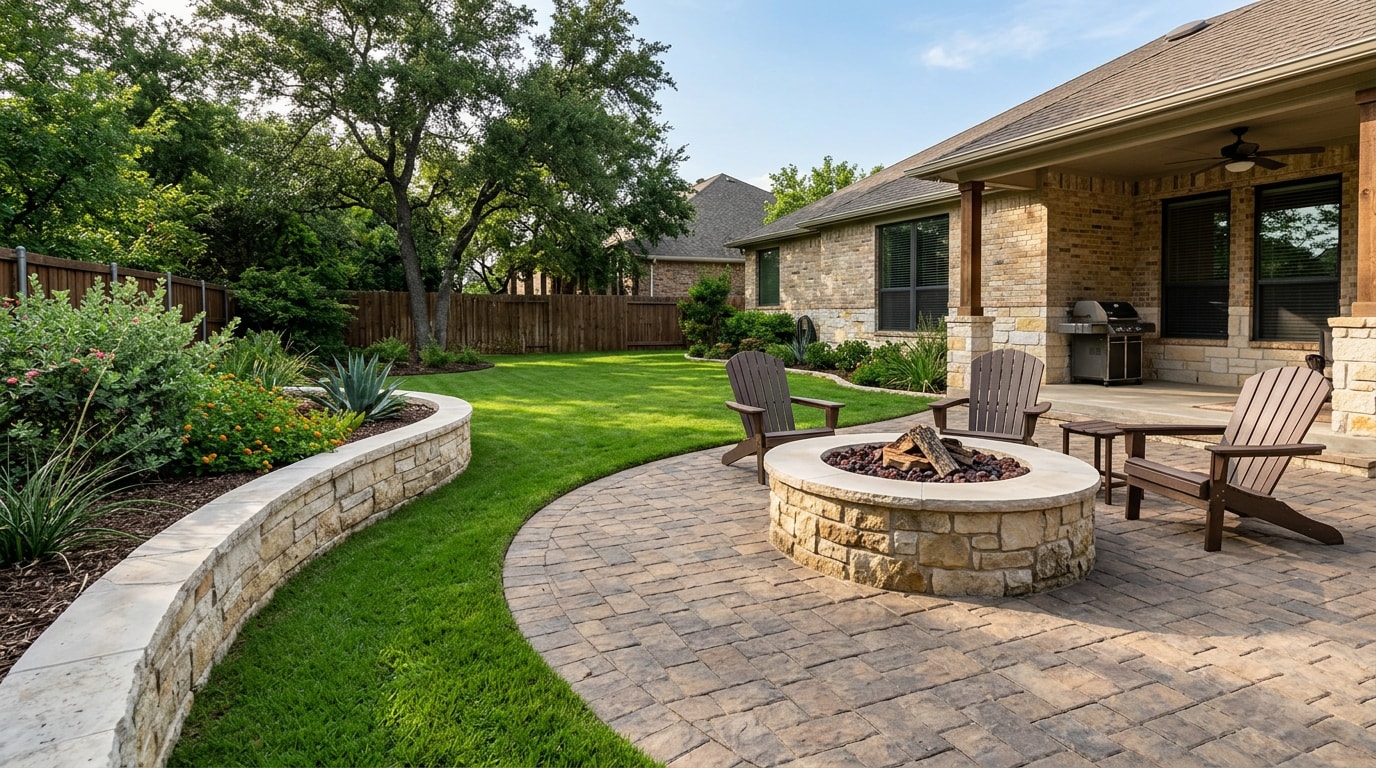
Retaining wall installation in this area typically uses block or chopped paver suited to the site conditions. Brazos County's clay swells and shrinks with moisture. That is why drainage behind the wall matters here more than in many other regions. Without a gravel backfill and a way for water to exit, hydrostatic pressure builds behind the wall. Over seasons, that pressure is what pushes panels out of alignment, not the weight of the soil itself.
Fire Pits & Outdoor Fireplaces
A built-in fire pit or outdoor fireplace gives a yard a gathering spot that works through the cooler months. Most are finished in the same stone or masonry used elsewhere on the property so the whole outdoor living space reads as one design instead of a patchwork of add-ons.
Pergolas
Pergola installation rounds out most hardscape scopes. A pergola adds shade and defines an outdoor room without the cost or footprint of a full roof structure, and it pairs well with a patio or fireplace already on the property.
Paver Driveways
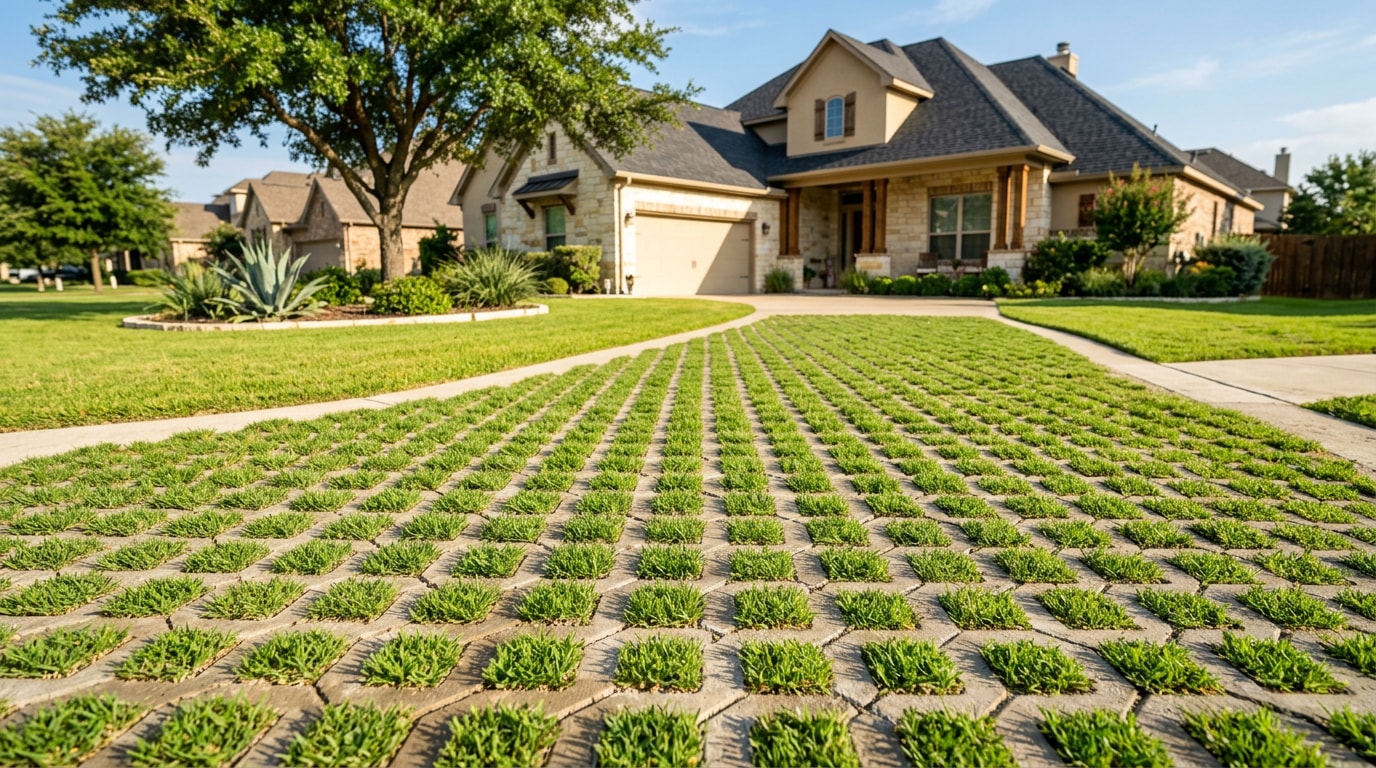
Paver and concrete driveways both see steady demand in Wixon Valley. Driveways carry vehicle loads, so they need a deeper compacted base than a walkway or patio. On expansive clay, skipping that extra base depth is one of the fastest ways to end up with cracking and rutting within a few seasons.
Why Clay Soil Changes How Hardscaping Gets Built Here
This is the part most hardscaping pages skip, and it's the part that determines whether a project lasts 5 years or 25. Brazos County sits on clay-heavy soils with real shrink-swell behavior, and the practical fix is base depth and drainage, not a thicker slab.
Industry base-depth guidance commonly used across the paver and hardscape trade breaks down like this:
| Application | Typical Compacted Base Depth | Why It Matters on Clay |
|---|---|---|
| Walkways | 4-6 inches | Foot traffic only, but still needs separation from the moving subgrade |
| Patios | 6-8 inches | Larger surface area means more exposure to differential movement |
| Driveways | 8-10 inches | Vehicle loads plus clay movement require a deeper, better-compacted base |
| Retaining walls | Engineered per wall height | Gravel backfill and a drain line are not optional on expansive clay |
Homeowners can get a free look at the soil classification on their own lot before a design conversation even starts. The <a href="{{SITE_URL}}">{{SITE_URL}}</a> team pulls this alongside a site walk, but the same data is public through the USDA NRCS Web Soil Survey, which maps shrink-swell ratings by property. Texas A&M AgriLife Extension also publishes practical guidance on amending and working with Texas clay, which is useful context even though its focus is garden beds rather than structural bases. For the compacted-base specifications contractors build to, the Concrete Masonry & Hardscapes Association maintains the technical standards that grew out of the old ICPI Tech Spec library.
On a recent wall rebuild in this service area, the original failure traced back to a missing drain line behind the block, not bad block or bad design. Re-digging the trench and adding 4 inches of gravel backfill with a perforated drain solved it. That is the kind of detail that separates a wall that lasts one wet season from one that lasts twenty.
Landscape Contractor Services That Support Hardscape Work
Hardscaping rarely works in isolation. A full-service landscape contractor ties the hard structure to the living landscape and the grading around it.
Landscape Design and Installation
Landscape design and installation starts with an honest site assessment before any patio, wall, or walkway is drawn. Soil profile, drainage patterns, and sun exposure all shape where hardscape features can go and how big they can be.
Landscape Maintenance
Ongoing landscape maintenance protects the hardscape investment after installation. Keeping joint sand topped off, paver bases clear of vegetation, and drainage channels unobstructed extends the life of a patio or wall by years. If drainage around an existing structure is already a problem, a drainage installation fix is usually cheaper than a wall repair later.
What Hardscaping Costs in Wixon Valley, TX (2026)
These are general planning ranges, not a formal quote. Every property's soil, access, and design complexity shift the number.
| Project | Typical Range | Unit |
|---|---|---|
| Paver or concrete patio | $14 – $32 | per sq ft |
| Retaining wall (block or paver) | $22 – $48 | per sq ft of wall face |
| Built-in fire pit | $1,800 – $5,500 | per unit |
| Pergola | $4,500 – $12,500 | per structure |
| Paver driveway | $16 – $32 | per sq ft |
Site conditions move these numbers more than the material choice does. A sloped lot needing grading or a wall needing engineered drainage will land toward the top of the range or above it. Get a free estimate for a number specific to your property.
For a deeper look at full-project pricing and material comparisons across the region, the hardscaping installation guide for Wixon Valley breaks down line-item costs in more detail.
FAQ
Do you serve my area in Wixon Valley?
Yes. Coverage includes College Station, Bryan, Navasota, Wixon Valley, and Kurten, with select projects taken on beyond that radius depending on scope. Check the Wixon Valley service area page or contact us to confirm.
What patio materials work best for hardscaping projects here?
Concrete, pavers, flagstone, and natural stone are the most common choices. The right one depends on budget, design goals, and how heavily the space gets used.
How does clay soil affect hardscape and patio installation?
Clay soil expands when wet and contracts when dry, which puts cyclical pressure on anything built on top of it. A properly compacted base, matched to the depth needed for the specific application, is what keeps a patio or driveway from cracking and settling over time.
What is the difference between hardscaping and landscaping?
Hardscaping covers non-living, constructed features like patios, walls, and walkways. Landscaping, or softscaping, covers living elements such as plants, grass, and trees. Most finished outdoor spaces combine both.
How much does hardscaping cost in Wixon Valley?
Patios typically run $14 to $32 per square foot, retaining walls fall between $22 and $48 per square foot of wall face, and paver driveways usually range from $16 to $32 per square foot. These are planning figures; site conditions change the final number.
Do I need a permit for a patio or retaining wall in Brazos County?
It depends on wall height, whether electrical or plumbing is involved, and local jurisdiction rules. A hardscape contractor familiar with the area should confirm permit requirements before work starts rather than after.
How long does a typical hardscape project take?
A standard patio or walkway usually takes a few days to a week once the design is finalized. Retaining walls and larger outdoor living projects with drainage work can take two to three weeks depending on scope and weather delays.
Written by a Local Hardscape Contractor
This guide was written by the Landscaping Ninjas team, based in College Station and serving Wixon Valley, Bryan, Navasota, and Kurten. We build patios, retaining walls, and drainage systems on Brazos County's clay soils and have seen firsthand which base and drainage details hold up and which ones fail within a season. Questions about a specific property? Call (979) 574-2314, email daniel@landscapingbcs.com, or request a free estimate. You can also browse recent completed projects or visit the homepage for the full list of services.