Native plant landscaping in Navasota, TX solves a problem almost every homeowner here already knows: the clay soil and summer heat make a lot of popular landscape plants a losing bet. Species that evolved in this exact climate skip the constant watering, fertilizing, and replacement cycle that non-natives demand. This guide covers which plants actually hold up here, what they cost to install, and how to design beds that look intentional instead of overgrown.
Why Navasota Homeowners Are Switching to Native Plants
The appeal isn't just aesthetic. Native species carry real, measurable advantages over turf and imported ornamentals once they're in the ground:
- Lower water bills. Established natives draw on deep root systems built for this region's rainfall pattern, so irrigation needs drop sharply after the first year.
- Less weekend maintenance. No weekly mowing, minimal fertilizing, and far fewer pest problems than a thirsty, high-input lawn.
- Wildlife value. Native flowers, shrubs, and grasses feed local pollinators and birds that non-native ornamentals often can't support.
- Year-round interest. Bloom times and textures shift across the seasons instead of peaking once and going flat.
If your goal is a yard that looks good without babying it through every heat wave, this is the starting point.
Navasota's Soil and Climate: What Native Plants Need to Thrive
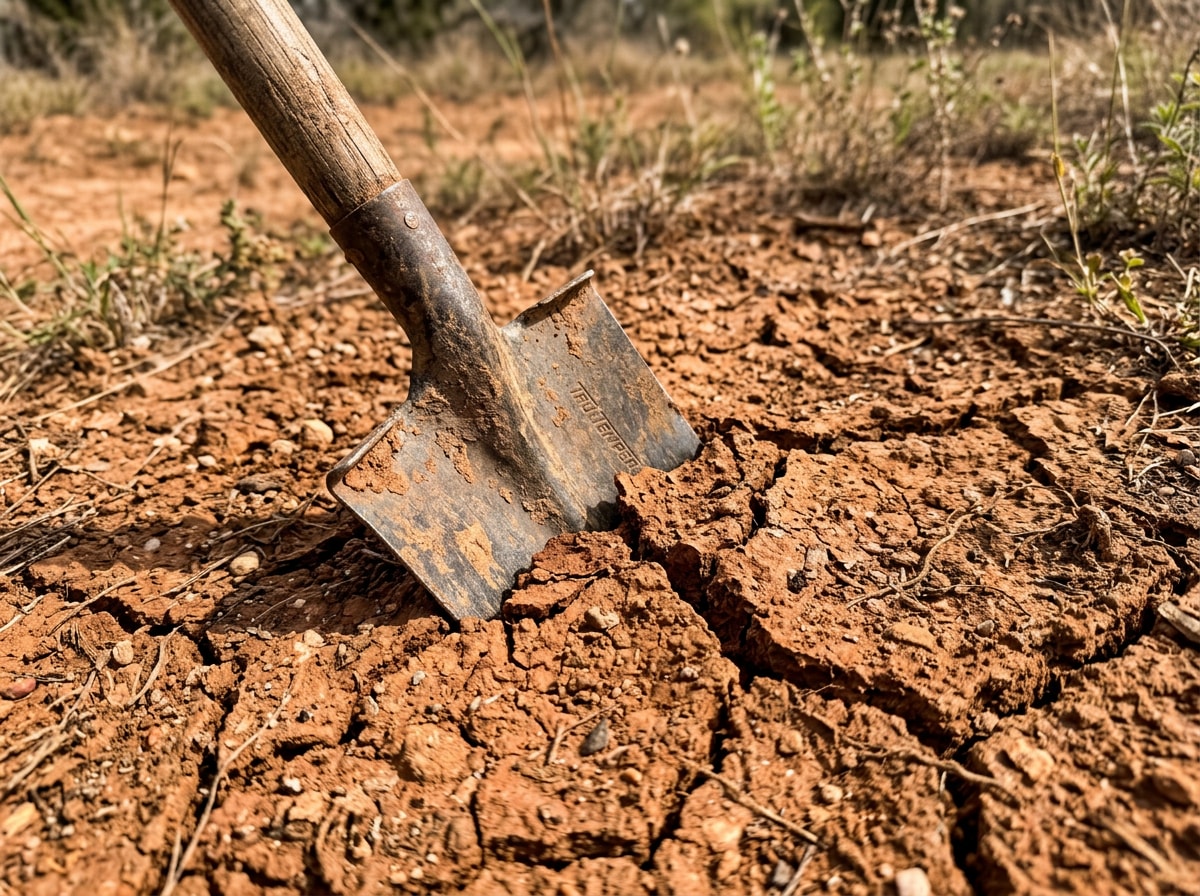
Navasota sits on heavy Blackland Prairie clay. It compacts easily, drains slowly after heavy spring rain, and can smother the roots of plants that weren't built for it. That's the main reason plant selection matters more here than in sandier parts of the state.
The area falls within USDA hardiness zone 8b to 9a, with annual rainfall that typically runs in the 40- to 45-inch range, though totals swing year to year. Before planting, it's worth checking your specific lot's soil classification rather than assuming every yard in Grimes County behaves the same way. The USDA's Web Soil Survey provides soil data and information produced by the National Cooperative Soil Survey, operated by the USDA Natural Resources Conservation Service , and it's free to search by address.
| Navasota Soil Challenge | Native Plant Response |
|---|---|
| Poor drainage after heavy rain | Inland sea oats, Gulf muhly, eastern gamagrass (tolerate wet-dry swings) |
| Compacted clay limiting root spread | Texas sage, little bluestem (shallow, adaptive root systems) |
| Summer heat and drought stress | Deep-rooted native perennials and bunchgrasses |
One thing worth saying plainly: not every yard needs raised beds full of trucked-in soil to work around clay. On a lot with real standing-water problems, correcting the grade or adding a drain often solves more than amending the top 12 inches ever will. If your beds hold water for more than a day after rain, it's worth a look at grading services or drainage installation before you plant anything.
Best Native Plants for Navasota Yards
Native Trees for Shade and Structure
Shade trees do the heavy lifting in a Navasota yard. Texas red oak, cedar elm, and Mexican plum handle clay soil and summer heat without constant babying.
- Texas red oak — large canopy tree; give it 20-plus feet of clearance from the house and utility lines
- Cedar elm — fast-growing, tolerant of poor drainage and compacted soil
- Mexican plum — smaller understory tree, good near patios; fragrant spring blooms
Native Flowers for Color and Pollinators
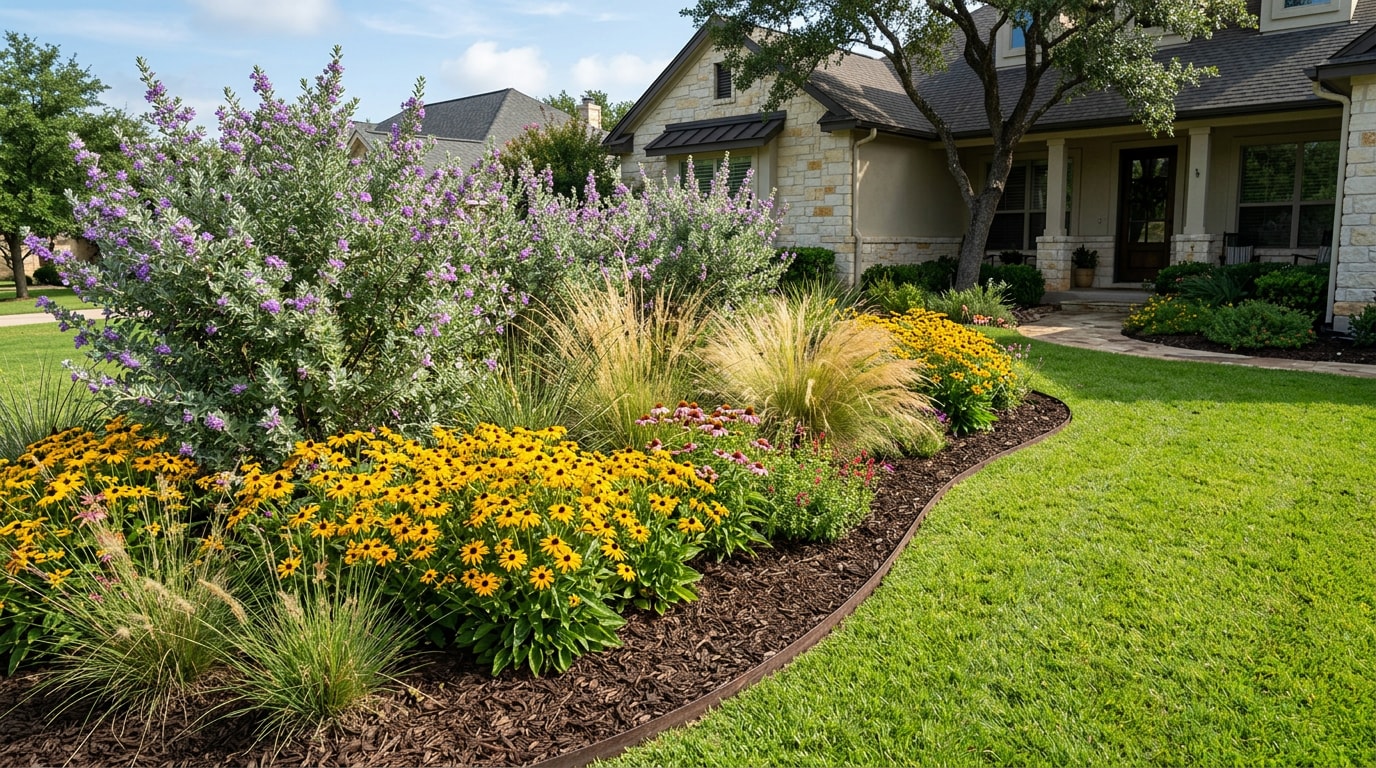
Flowering perennials bring continuous color and pull in pollinators without the fuss of annual replanting.
- Black-eyed Susan — reliable spring-through-fall bloom
- Texas lantana — heat-tolerant, draws butterflies and hummingbirds
- Winecup — low, spreading groundcover with purple blooms
Most of these die back in winter and return reliably each spring, which makes a pollinator bed one of the lower-effort ways to add lasting curb appeal.
Native Grasses for Texture and Erosion Control
Ornamental grasses add motion and structure that flowering plants alone can't deliver, and their root systems help hold soil on slopes.
- Little bluestem — turns red-orange in fall, stays upright through winter
- Switchgrass — tall, works well as a seasonal privacy screen
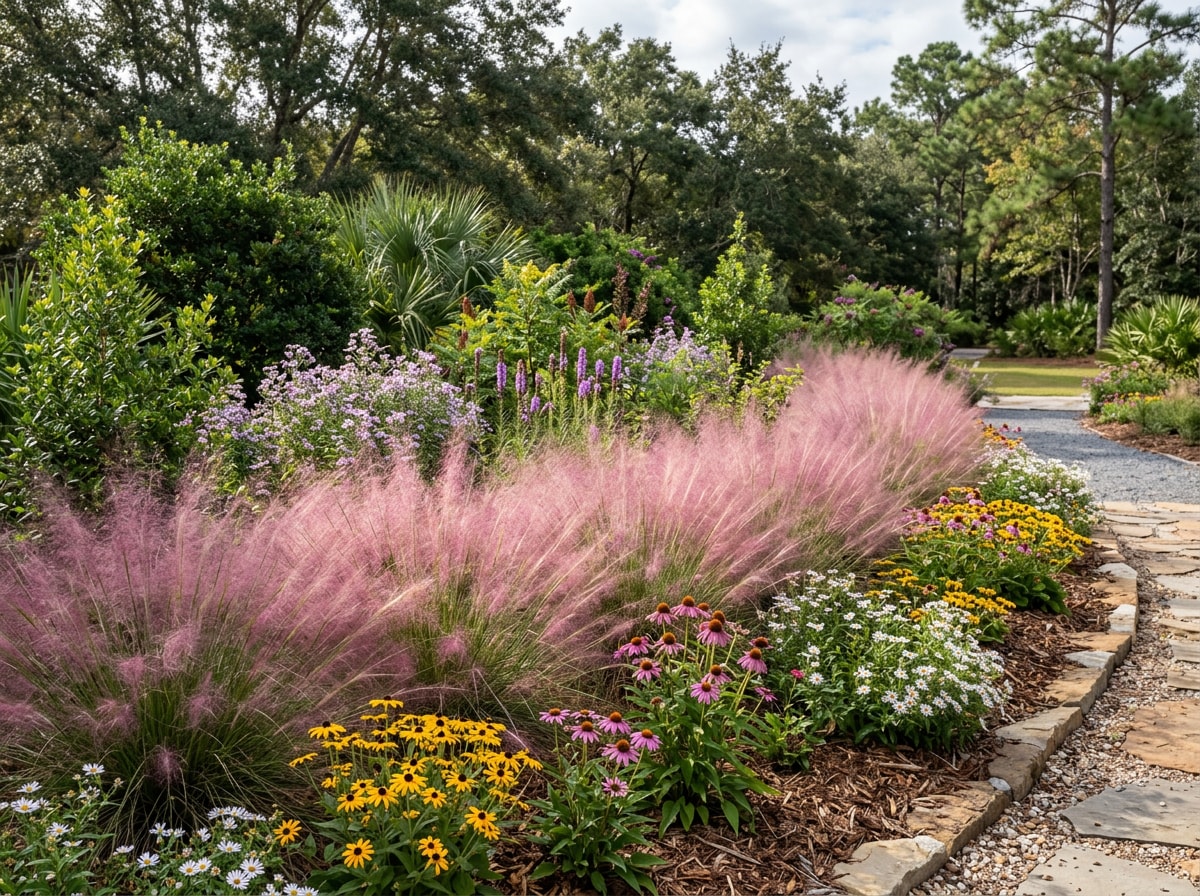
- Gulf muhly — pink seed-head display in late fall, tolerates both wet and dry spells
If you want to confirm a species is genuinely native to your specific area before buying, the Lady Bird Johnson Wildflower Center's database lets you search more than 25,000 native plants by scientific or common name , along with region and growing conditions.
Designing a Native Landscape That Looks Intentional, Not Wild
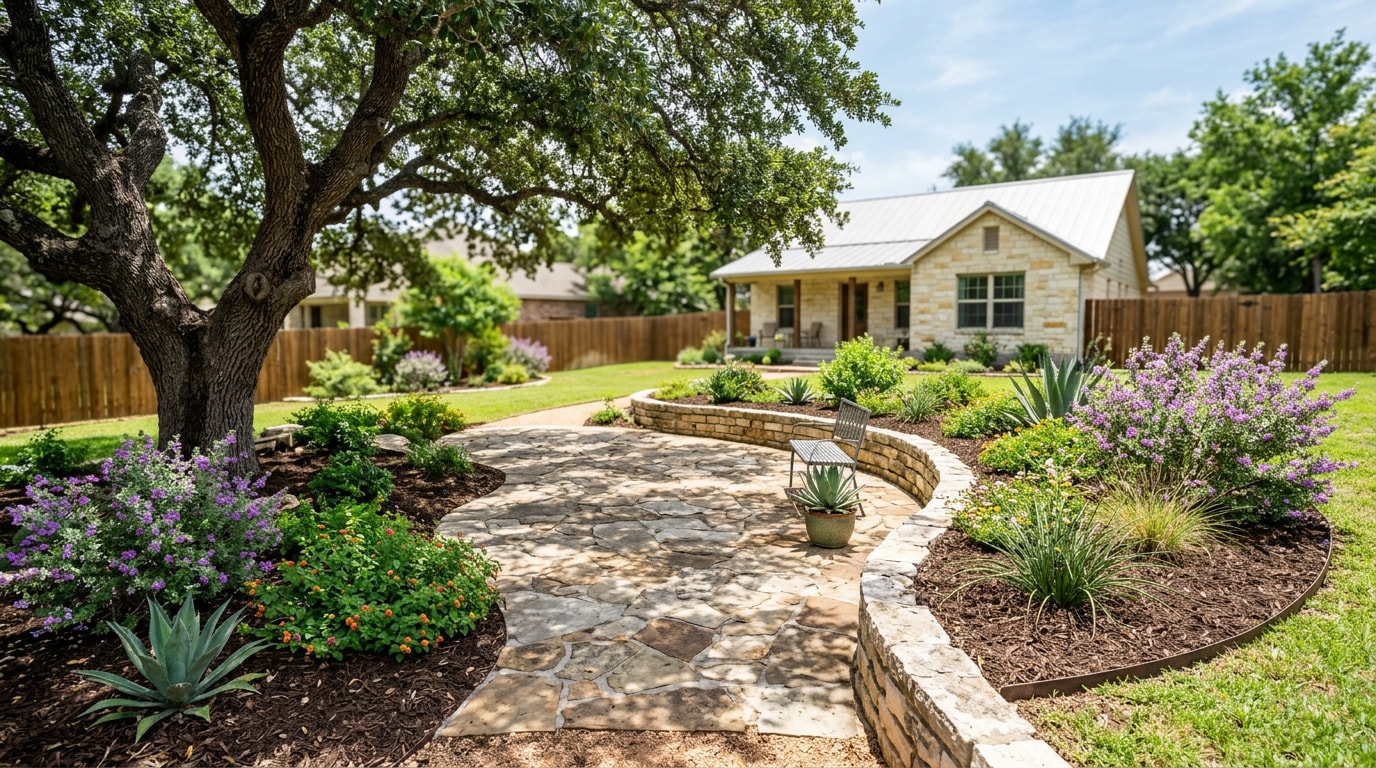
Picking the right plants is half the job. Design comes down to layering by height and bloom time so beds stay interesting in every season, not just one.
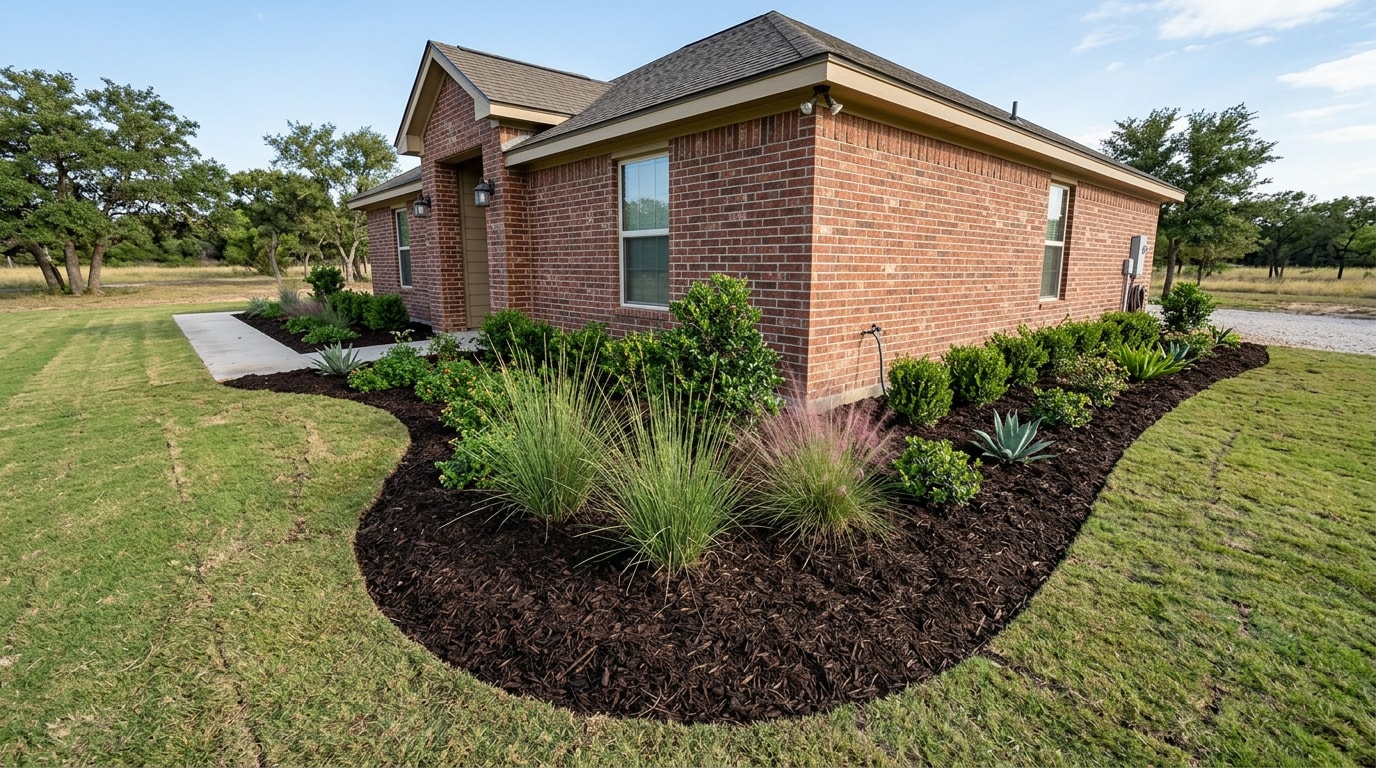
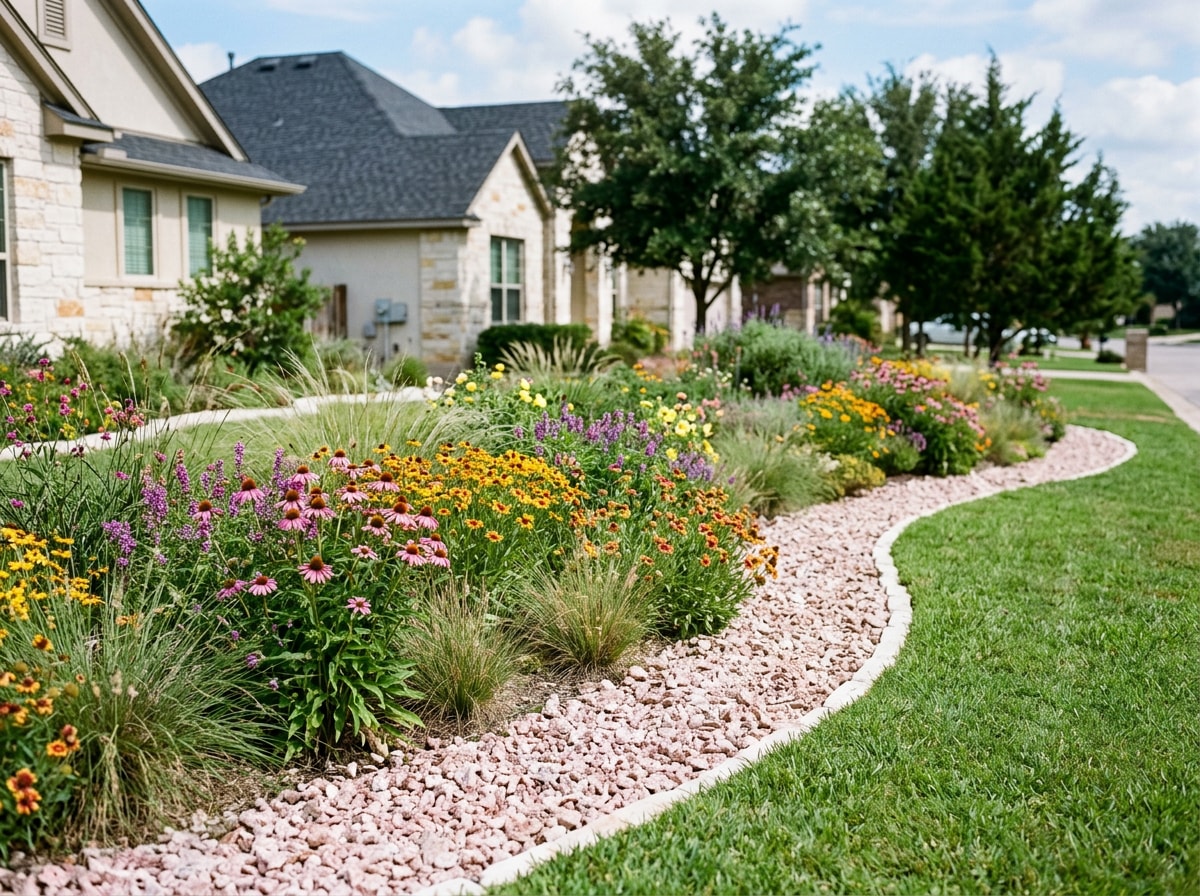
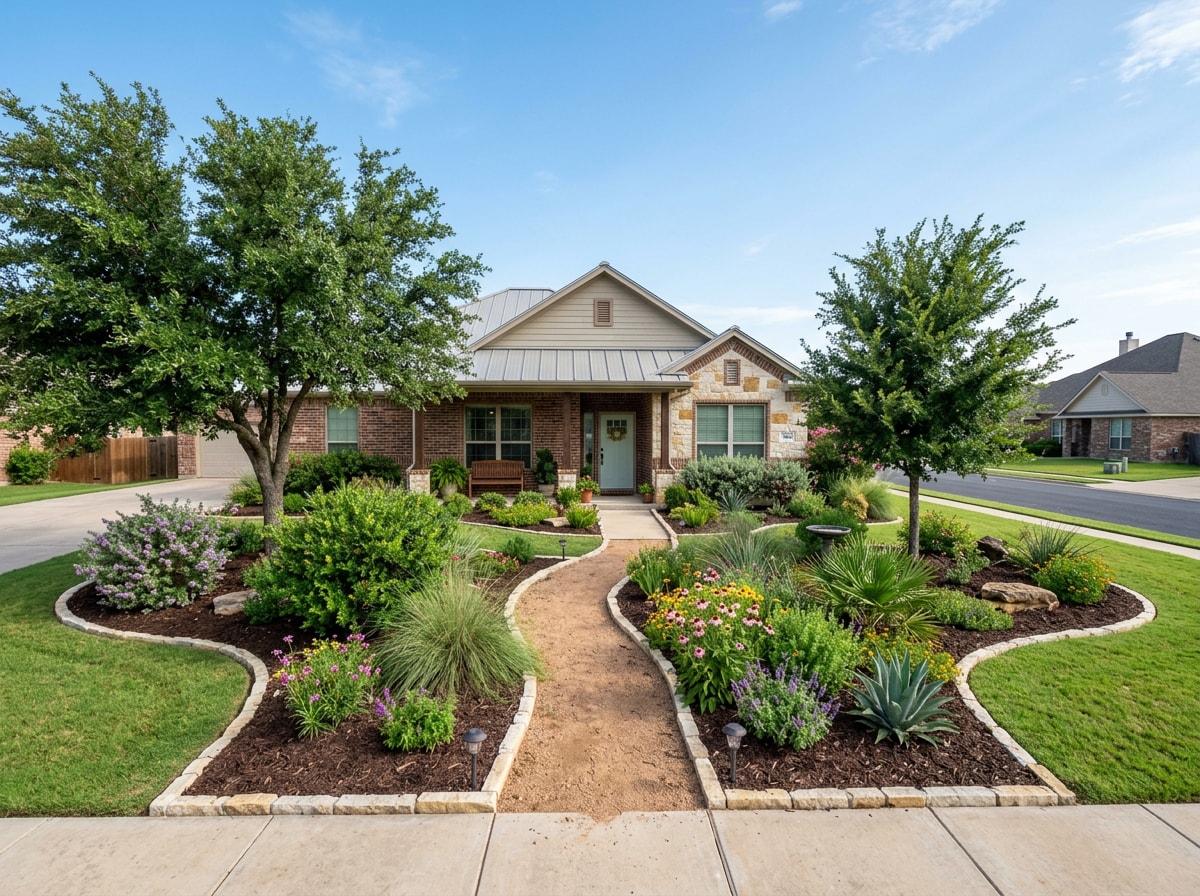
Front yards tend to work best with clean edging, rock borders, or a defined bed shape that signals intentional design rather than neglect. A strip along the driveway or curb is a good spot for a small pocket prairie of grasses and low perennials.
Backyards allow more freedom. Native gardens can range from loose, naturalistic wildscapes to manicured layouts with trimmed borders and mass plantings. Mixing both styles front-to-back is common, and there's no single correct look. If your main goal is screening a neighbor's yard or a busy road rather than color, our guide to landscaping for privacy in Navasota covers plant spacing and layering specifically for that. For yards built around minimal irrigation from the start, xeriscaping pairs naturally with native plant selection.
Planting and Establishing Native Plants: What the First Year Really Takes
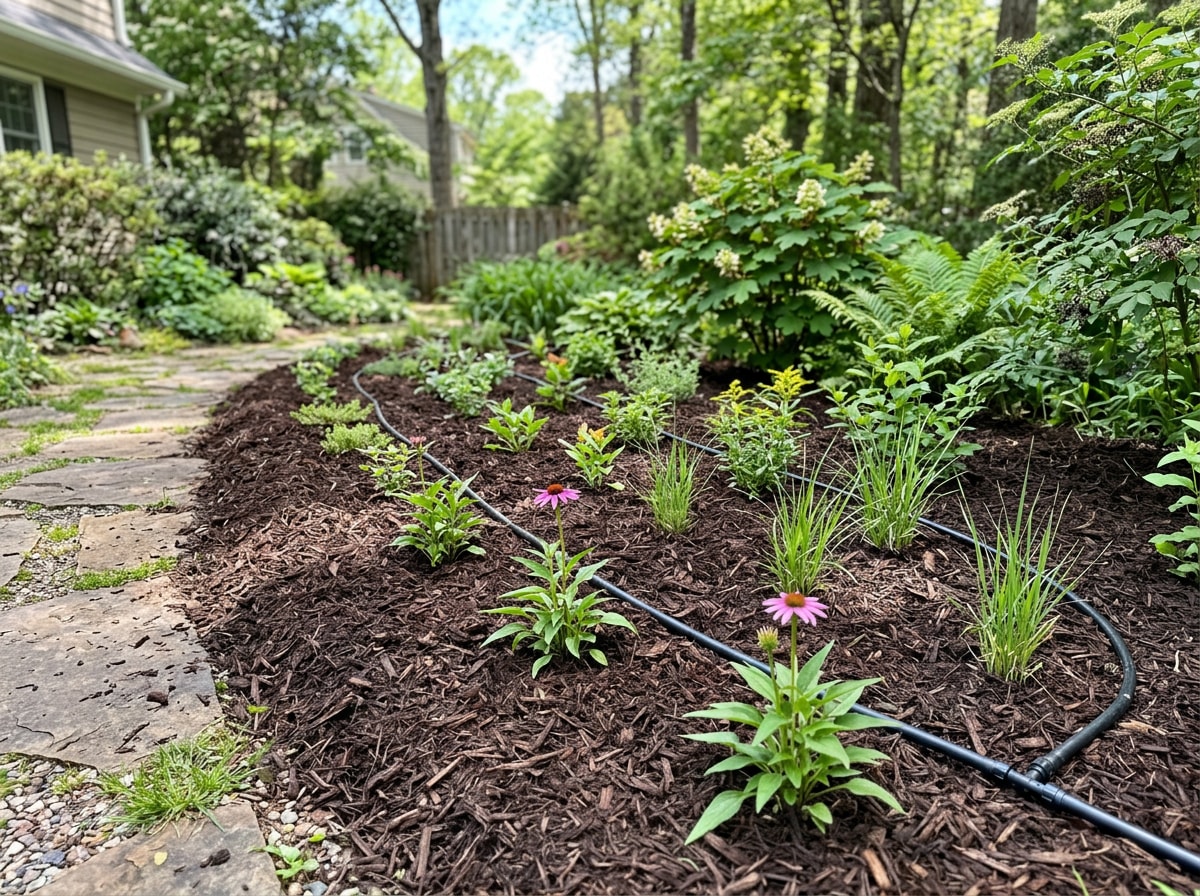
Low-maintenance doesn't mean zero-maintenance in year one. New natives still need consistent watering while roots establish, even though they'll need far less once mature. This is the step most homeowners underestimate, and it's where a lot of DIY native beds fail.
A Texas A&M AgriLife Extension planting guide recommends watering new plantings daily for the first two weeks, then gradually tapering to once a week, since trees take two to three years to fully establish; native and adapted species only need watering during drought once they reach that point. Perennials and grasses establish faster than trees, usually within a single growing season, but the same taper-down approach applies.
On our own installs around Navasota, we've noticed inland sea oats planted on a shaded north side of the house fill in noticeably faster through their first summer than Gulf muhly planted in full sun. Bed placement matters as much as plant choice. A properly zoned irrigation installation makes that first-year taper far easier to manage than hand-watering, especially if you're establishing more than one or two beds at once. Mulch also buys time and holds moisture. Our guide to landscaping wood and mulch in Navasota breaks down which mulch types work best around native beds.
What Native Plant Landscaping Costs in Navasota
Costs vary a lot based on bed size, plant maturity at install, and how much soil prep or drainage work the site needs. As a rough starting point:
| Project Scope | What Drives the Price |
|---|---|
| Small pollinator bed (one or two species) | Plant count, size at install |
| Full bed redesign with trees, shrubs, grasses | Plant mix, soil prep, edging |
| Whole-yard native conversion | Grading, drainage correction, irrigation changes |
Smaller starter plants cost less up front but take longer to fill in; larger container stock costs more but gives faster coverage. Sites with drainage problems or heavy clay compaction typically add cost for grading or amendment before planting even starts. A landscape design and installation consultation is the most reliable way to get a number specific to your lot rather than a statewide average.
Getting Started: A Simple First Project Plan
Starting a native landscaping project doesn't require overhauling the whole yard at once.
- Map sun and shade. Walk the yard at midday and late afternoon; most native flowers and grasses need six-plus hours of sun.
- Start with one or two beds. Prove out plant choices before committing to a full-yard conversion.
- Source from regional native growers, not generic big-box stock, for plants already adapted to local soil.
- Fix drainage first. Amending or grading compacted clay before planting matters more than anything you do after.
- Plan the watering taper. Know how you'll handle the first-year schedule before plants go in the ground.
A project sequenced this way tends to establish faster and need less correction down the line. If you'd rather hand off the planning, our landscape maintenance team can also keep a new native bed on track through its first year.
Ready to talk through your own project? Get a free estimate and we'll walk through what fits your property, your soil, and your budget.
About the Author
This guide was written by the landscape design team at Landscaping BCS, a landscape contractor serving Navasota, TX and the greater Brazos Valley, including College Station and Bryan. Our crews install and maintain native plant beds on local clay-soil lots regularly, which is where the first-year watering notes above come from. Questions about a specific property? Contact us or visit our homepage to see recent projects.
FAQ
Will native plants look too wild or unkempt?
Native beds stay tidy with intentional design choices like clean edging, mass planting, and clear borders between beds and lawn. The "wild" look only happens when plants are left completely unmanaged, which isn't necessary for a polished native garden.
Are native plants deer-resistant?
Many native options hold up well against deer pressure, which matters on rural Navasota and Grimes County properties. Texas sage, lantana, and most ornamental grasses are generally avoided by deer, though no plant is fully deer-proof in a hungry season.
How long until native plants are established?
Perennials and grasses typically need one full growing season to develop deep roots. Trees take longer: Texas A&M AgriLife Extension guidance puts tree establishment at two to three years, with a watering taper from daily in the first two weeks down to weekly, then monthly in winter.
Where can I buy native Texas plants near Navasota?
Regional nurseries throughout the Brazos Valley typically stock native perennials, grasses, and trees suited to this climate. Native Plant Society of Texas chapter sales and specialty growers are also worth checking for less common species.
What's the difference between native plant landscaping and xeriscaping?
Native plant landscaping focuses specifically on species that occur naturally in the region. Xeriscaping is broader and focuses on reducing water use overall, which can include non-native drought-tolerant plants alongside natives. The two overlap heavily and are often combined in the same design.
Do native plants need fertilizer or pesticides?
Rarely, once established. Native species evolved alongside local soil and pest pressure, so they generally need far less chemical input than non-native ornamentals. New plantings may benefit from a light, slow-release fertilizer during their first season.