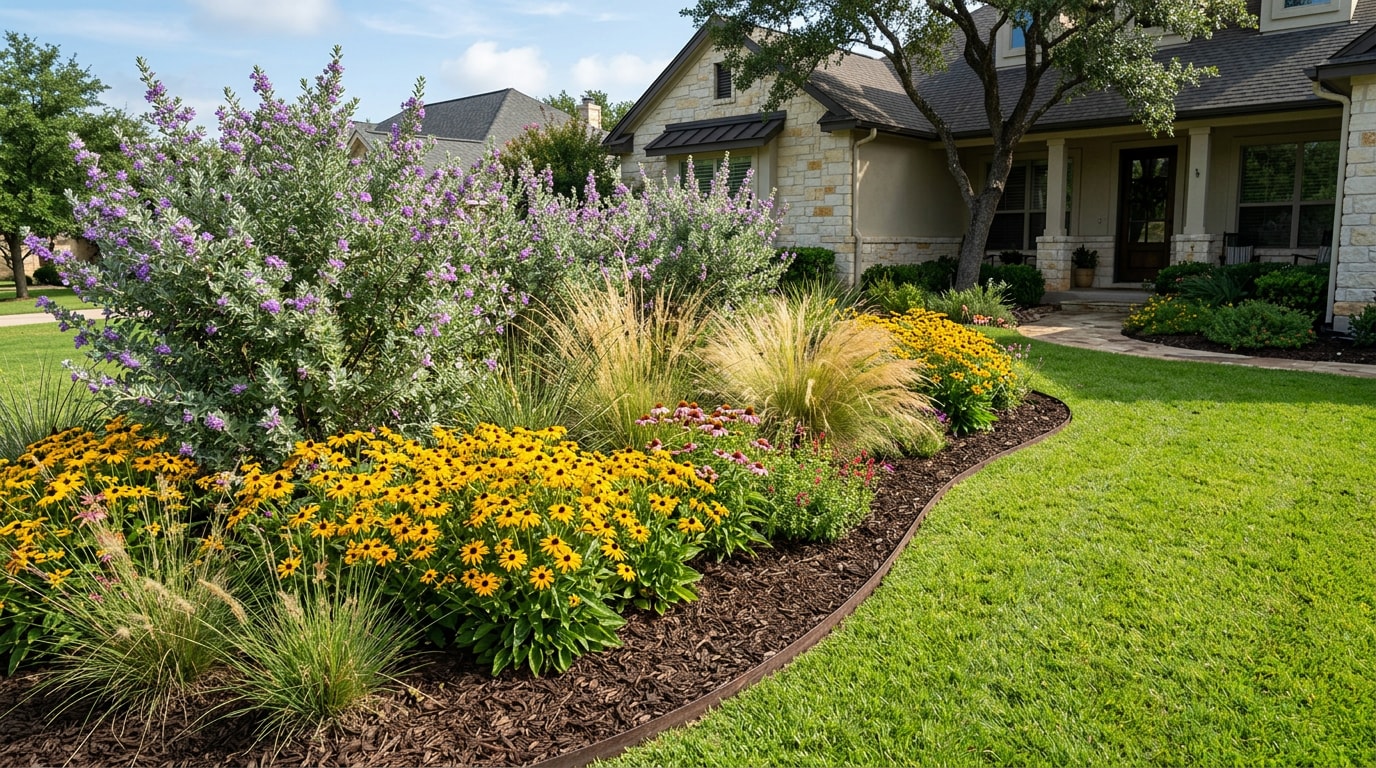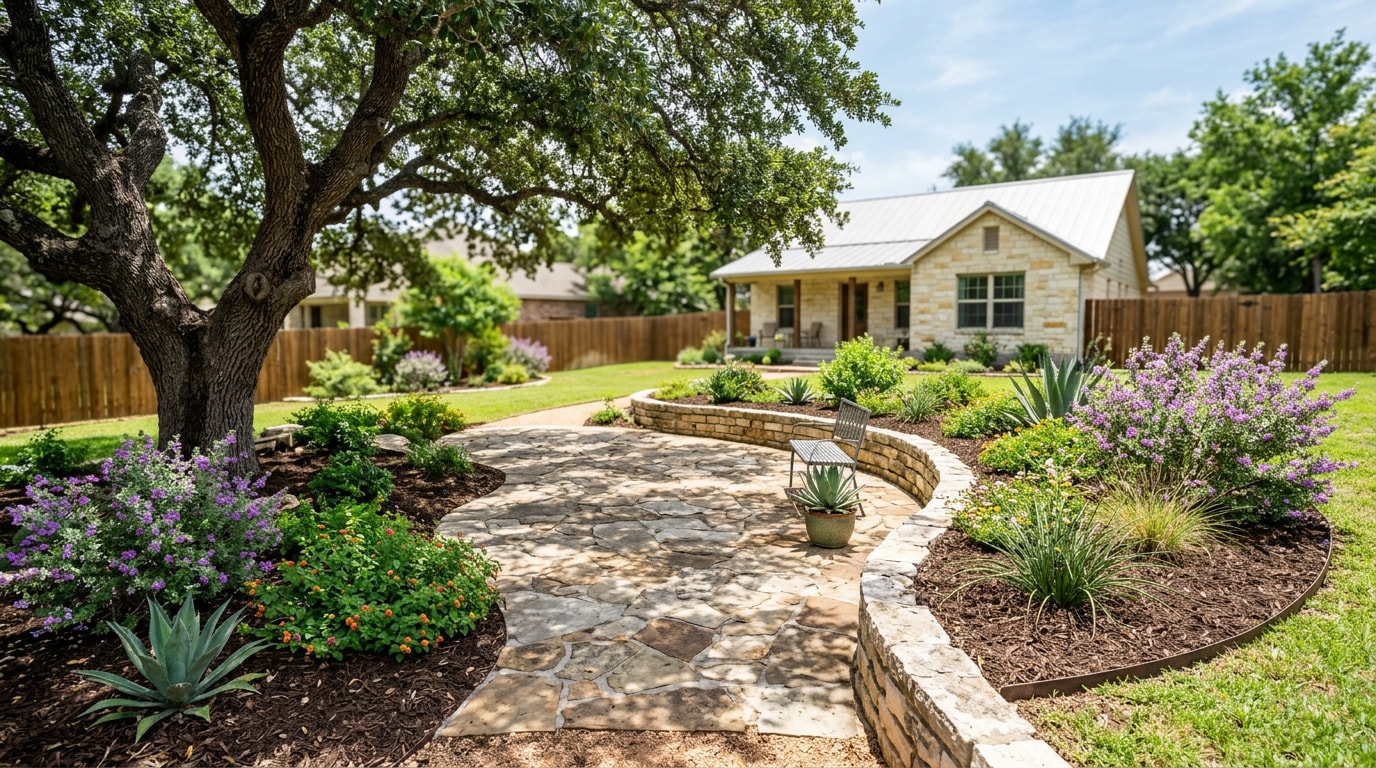
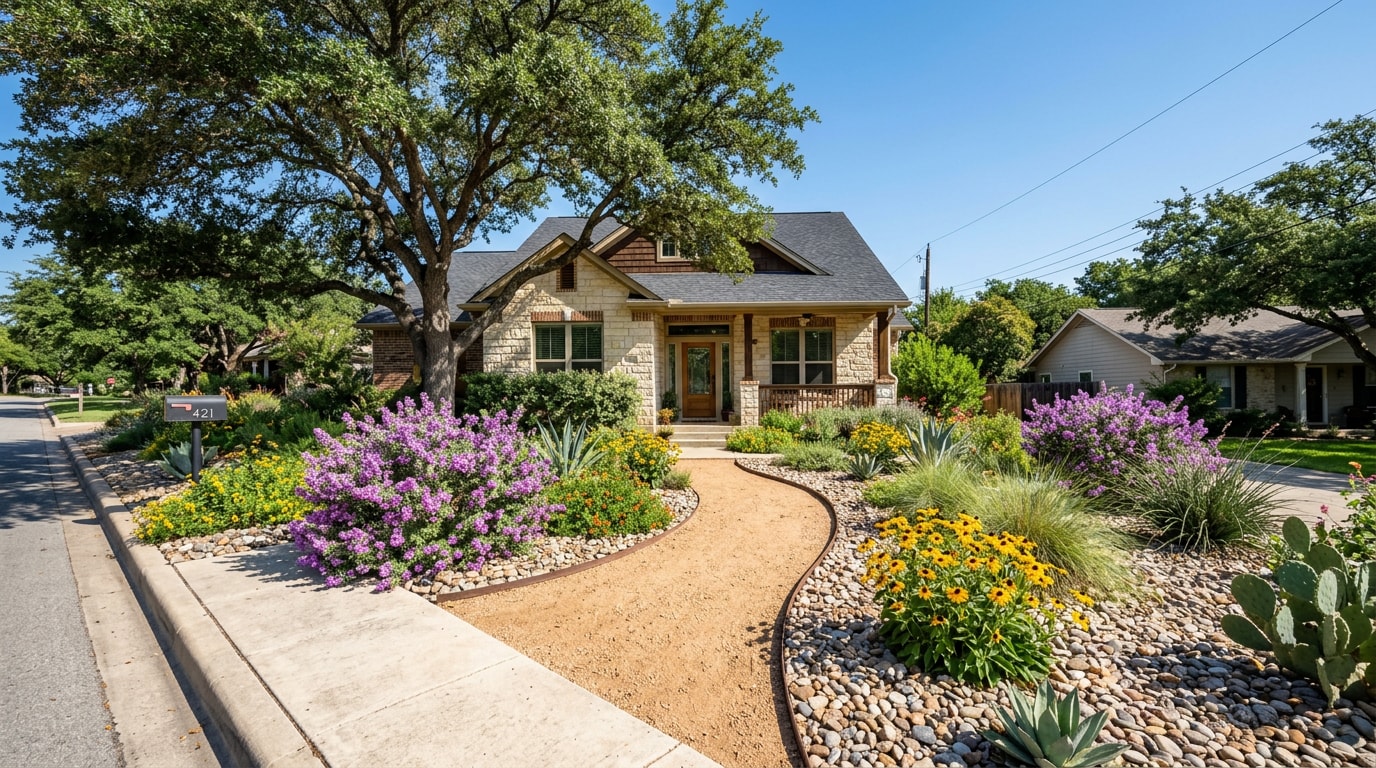
Natural landscaping in College Station, TX replaces thirsty, high-maintenance lawns with native plants, stone groundcover, and water-wise design built for Brazos Valley clay and heat. Our crews see the same pattern on property after property: a yard planted for a different climate struggles by July, while a native-first design barely needs attention. Here's how the process actually works, what it costs, and which plants hold up.
What "Natural Landscaping" Actually Means Here
Natural landscaping is not a single product you buy. It's a design approach that works with Brazos Valley conditions instead of against them.
A typical project combines four elements:
- Native and adapted plant selection chosen for clay soil, heat, and local rainfall patterns
- Stone, gravel, or mulch groundcover in place of water-hungry turf
- Right-sized irrigation that targets root zones instead of soaking a whole yard
- A smaller, purposeful turf footprint reserved for areas people actually use
This overlaps heavily with xeriscaping, and most College Station homeowners asking about one are really asking about both. If reducing water use is the main goal, our xeriscaping services page breaks down design options in more detail. According to the EPA's WaterSense program, regionally appropriate, low water-using and native plants require little water beyond normal rainfall once established , which is exactly the outcome a well-planned natural landscape delivers.
Native Plants That Hold Up in Brazos County Soil
Plant selection has to start with the soil, not the catalog. Brazos County's mix of alkaline, loamy topsoil over dense clay subsoil punishes plants that need fast drainage, while rewarding species built for heavy ground.
Species we rely on most often for College Station yards:
- Black-eyed Susan – full sun, tolerates clay
- Texas Sage (Cenizo) – full sun, needs sharp drainage
- Turk's Cap – part shade, handles humidity
- Gulf Muhly grass – full sun, drought-hardy once established
- Flame Acanthus – full sun, attracts pollinators
- Texas Redbud – a small native tree suited to home landscapes
These selections track closely with regional guidance from the Texas A&M AgriLife Extension's Brazos County Master Gardeners, who maintain an updated reference list of native small trees like Redbud, which can reach 30 feet and produce heart-shaped leaves well suited to home landscapes here. Their full plant and tree lists are worth bookmarking before you finalize a design; see the Brazos County native tree guide for species-specific details.
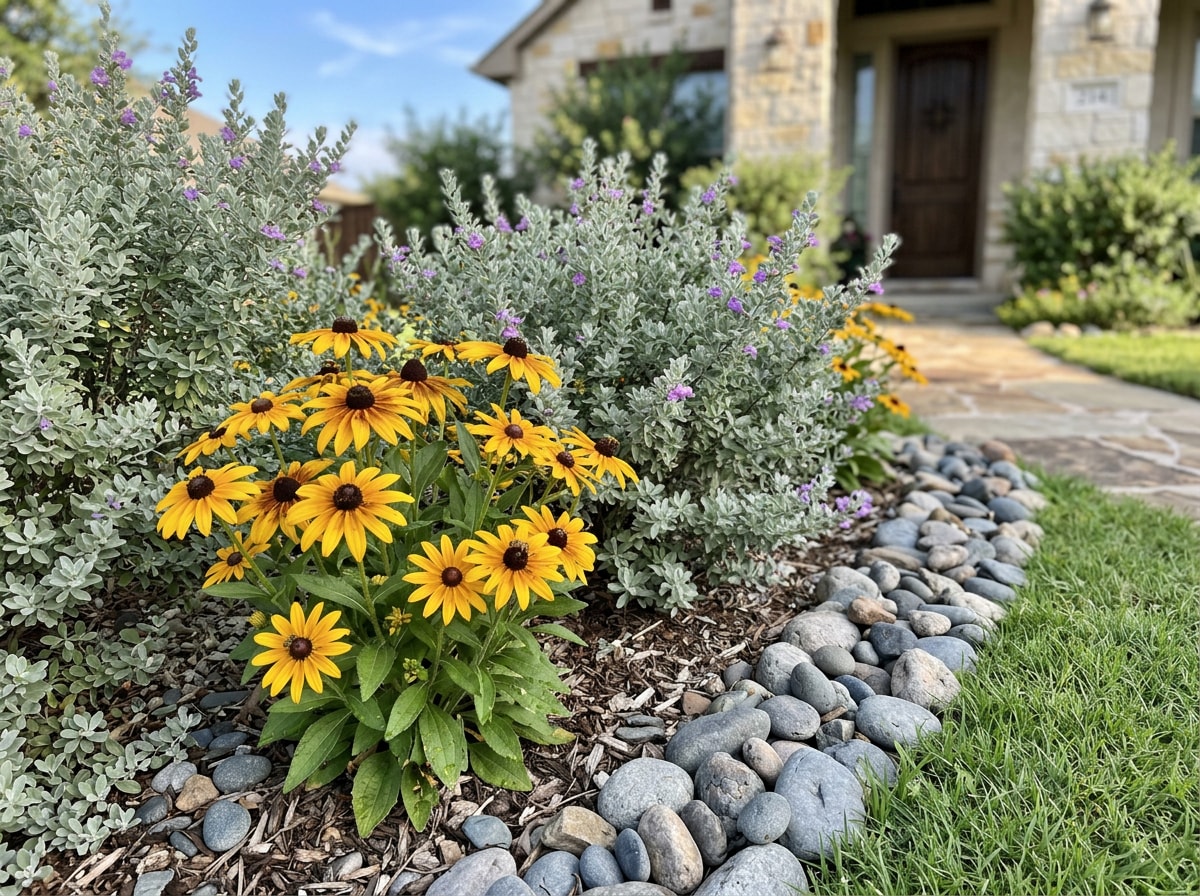
For a deeper look at building a full low-water yard around these species, see our guide to native plant landscaping for low-water yards, which applies to College Station properties with the same soil and climate profile.
Stone and Gravel as Natural Hardscape
Rock and stone groundcover function like a permanent mulch. They cut evaporation, block most weeds, and never need mowing. Varying the size, color, and shape of stone also gives a bed depth that a single mulch color can't match.
Because Brazos Valley clay expands when wet and cracks when dry, materials with open drainage generally outlast solid poured surfaces in beds and pathways.
| Material | Cost per sq. ft. | Best use in clay soil |
|---|---|---|
| Decomposed granite | $3–$6 | Pathways, permeable beds |
| River rock | $4–$8 | Drainage zones, dry creek beds |
| Flagstone | $8–$15 | Patios, stepping paths |
| Crushed limestone | $2–$5 | Base layers, driveways |
These are general planning ranges, not a quote. Material cost, site grading, and access all move the final number, which is why we walk every property before pricing it.
Soil-First Design, Grading, and Installation
A natural landscape that fails usually fails below the surface, not above it. Standing water, poor grading, and compacted clay undo even the right plant choices.
Our process starts with reading the site:
- Grading and drainage review to confirm water moves away from the house and beds
- Soil prep to break up compaction before anything goes in the ground
- Plant and material placement based on sun exposure and microclimate, not a generic plan
- Irrigation design, sized to zones instead of blanket-watering the whole yard
If your lot has slope, low spots, or a history of pooling water, that gets solved before planting, not after. Our grading services and drainage installation teams handle that groundwork, and our landscape design and installation crew carries it through to the finished bed. Once beds are established, a properly zoned system from our irrigation installation team keeps water use low without letting new plants stress out in their first summer.
Want to see finished examples before committing to a design? Browse our recent projects around College Station and Bryan.
Hardscaping That Fits a Natural Design
Patios, walkways, and fire features cut down on the lawn you have to water and mow, while giving the yard a finished, intentional look. Done well, hardscape and native planting read as one design instead of two competing projects.
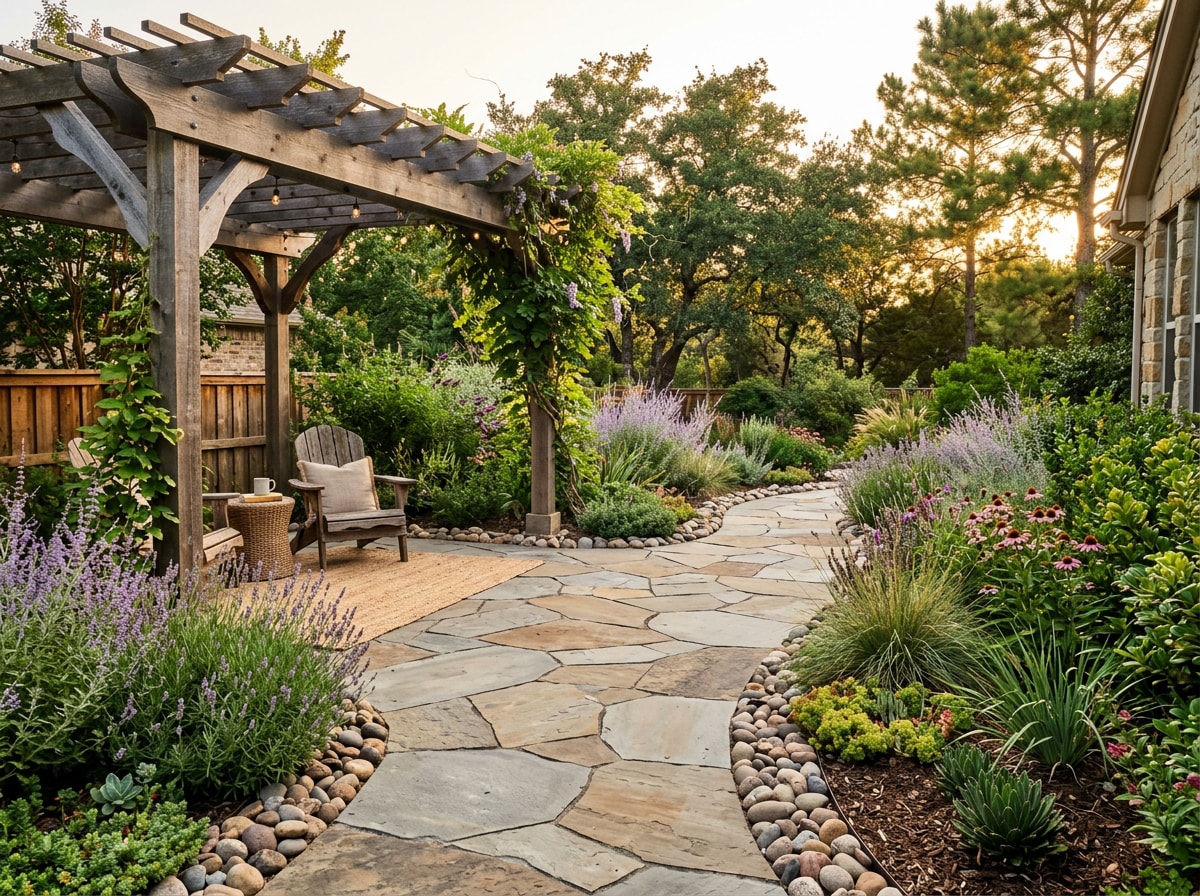
For material and layout options that hold up through Texas heat and clay movement, see our hardscape contractor services. Our related guide on hardscape installation in College Station covers patios, walls, and outdoor living layouts in more depth if you're planning a bigger renovation.
What Natural Landscaping Costs in College Station
Pricing depends on lot size, how much turf you're removing, and whether grading or drainage work is needed. As a rough planning range:
- Small bed conversions (front yard accent beds, 200–400 sq. ft.): often a few thousand dollars
- Partial yard conversions with new irrigation zones and stone groundcover: a mid-four-figure range is common
- Full-property natural landscapes with hardscape, grading, and plant installation: can run well into five figures
These ranges move based on site access, existing soil condition, and material choices, so they're a starting point for budgeting, not a quote. The fastest way to get an accurate number for your property is a walkthrough. Get a free estimate and we'll scope the project based on your actual lot.
FAQ
What is natural landscaping?
Natural landscaping is a design approach that uses native or adapted plants, stone or mulch groundcover, and water-efficient irrigation instead of a traditional turf-heavy lawn. It's built to match local soil and climate rather than fight it.
How do you xeriscape in Texas?
Xeriscaping in Texas means selecting native, drought-resistant plants, using rock or mulch groundcover to cut evaporation, and installing zoned irrigation that matches each plant's actual water needs. It reduces both water use and ongoing maintenance.
What are the best trees for natural landscaping in College Station, TX?
Native and drought-tolerant trees such as Texas Redbud, Cedar Elm, and Live Oak perform well in Brazos County soil. These species handle local heat and clay without heavy irrigation once established, consistent with Texas A&M AgriLife Extension's regional tree guidance.
Can an HOA stop me from xeriscaping in Texas?
No. Texas Property Code Section 202.007 prohibits a property owners' association from including or enforcing a provision that prohibits or restricts a property owner from using drought-resistant landscaping or water-conserving natural turf . An HOA can still require a design plan for approval and set maintenance standards, but it cannot ban drought-resistant landscaping outright.
How do I choose plants suited to this climate?
Prioritize native and drought-resistant species that already handle College Station heat, humidity, and clay soil. They typically need less water, less fertilizer, and less ongoing care than non-native alternatives.
How much does natural landscaping cost in College Station?
Most projects range from a few thousand dollars for a small bed conversion to well into five figures for a full-property redesign with hardscape and grading. Lot size, soil condition, and material choice all affect the final price, so a site walkthrough gives the most accurate number.
How do I maintain a natural landscape through the year?
Check soil moisture during dry stretches, prune dead growth, and refresh mulch or groundcover as it breaks down. Established native beds need far less attention than turf, but they aren't maintenance-free.
For more on keeping an established yard healthy through Texas summers, see our guide to turf and landscape maintenance in College Station, or visit our homepage to see the full range of services we offer across the Brazos Valley.
About the Author: This guide was written by the design team at Landscaping BCS, a landscape and hardscape contractor serving College Station, Bryan, Navasota, Wixon Valley, and Kurten, TX. Questions about a specific property? Contact us and we'll walk the site with you.