Steel edging for landscaping in Bryan, TX gives heavy clay-soil beds a crisp, lasting line that plastic strips can't hold through a Brazos Valley summer. This guide breaks down real cost ranges, the safety question every parent and dog owner asks, and how steel stacks up against aluminum and plastic before you commit. By the end, you'll know which steel profile fits your yard and what it actually costs to get it installed right.
Steel vs. Aluminum vs. Plastic: Which Edging Wins in Bryan, TX?
Most homeowners narrow the choice down to three materials before calling anyone. Here's how they compare for a typical Bryan or College Station yard.
| Material | Rigidity | Curve flexibility | Typical lifespan | Best for |
|---|---|---|---|---|
| Steel | Highest | Good, bends on-site | 15–20+ years (galvanized) | Driveways, long straight runs, heavy clay soil |
| Aluminum | Moderate | Excellent for tight curves | 20–25+ years | Curved beds, pool decks, light-traffic borders |
| Plastic | Lowest | Easiest to bend | 3–7 years in Texas heat/UV | Budget refreshes, temporary beds |
Steel wins on long-term value and resistance to the soil pressure that heavy clay puts on a border. Aluminum flexes more readily into tight curves and won't rust, but it can dent under mower wheels or foot traffic. Plastic costs the least to buy but tends to crack, fade, and heave out of the ground within a few Texas summers. If you're also planning the design and install around the edging itself, our landscape design and installation crew can walk the site with you before you buy material.
How Much Does Steel Edging Cost in Bryan, TX?
Steel edging price depends on gauge thickness, coating type (plain galvanized vs. Corten vs. powder-coated), and total linear footage. Corners, curves, and old-edging removal add labor time on top of material cost.
| Edging type | Materials only (per ft) | Installed (per ft) |
|---|---|---|
| Plastic | $0.50 – $3 | $4 – $9 |
| Standard galvanized steel | $2 – $6 | $5 – $12 |
| Corten / powder-coated steel | $5 – $9 | $9 – $18 |
A typical 100-to-150-foot front yard run usually lands between $700 and $2,200 installed, with Corten and heavier-gauge steel pushing toward the top of that range. Soil removal, bed reshaping, and working around irrigation lines can add more. Because every yard's linear footage and soil condition is different, the fastest way to get an exact number is to request a free estimate for your property.
Types of Steel Landscape Edging
Steel itself isn't one product. Two main options come up again and again in the Brazos Valley.
Standard Galvanized Steel Edging
Galvanized steel edging is rigid, straight-running material built for beds that need a firm, long-lasting boundary. It resists the soil pressure that pushes lighter materials out of alignment over a season or two, which makes it a solid choice for driveways, walkways, and large planting beds.
Compared to aluminum, galvanized steel holds a straight line with less flexing, though it takes more effort to bend into tight curves. It outperforms plastic on rigidity across the board, and it's often the go-to choice for homeowners who want a border that won't wobble after a few mowing seasons.
Corten Steel Edging
Corten steel, also called weathering steel, develops a rust-colored patina over its first few months outdoors instead of corroding away. That patina protects the metal underneath from further breakdown, the opposite of what happens with untreated steel left exposed to moisture.
For homeowners chasing a modern or industrial look, Corten has become a popular upsell around Bryan and College Station. It pairs well with native grasses, gravel beds, and the kind of minimalist designs covered in our hardscaping guide for Wixon Valley, where warm, earthy tones are a running theme.
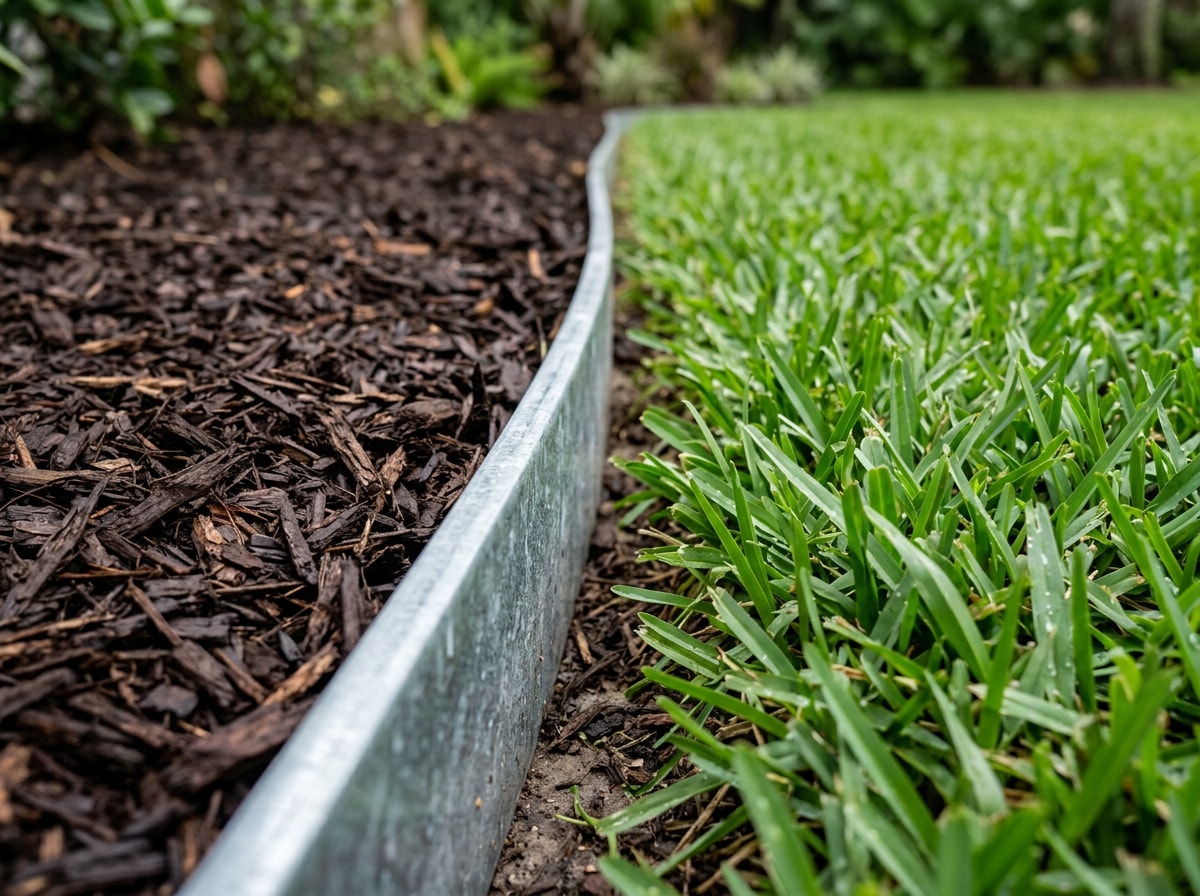
Benefits of Steel Edging for Bryan, TX Yards
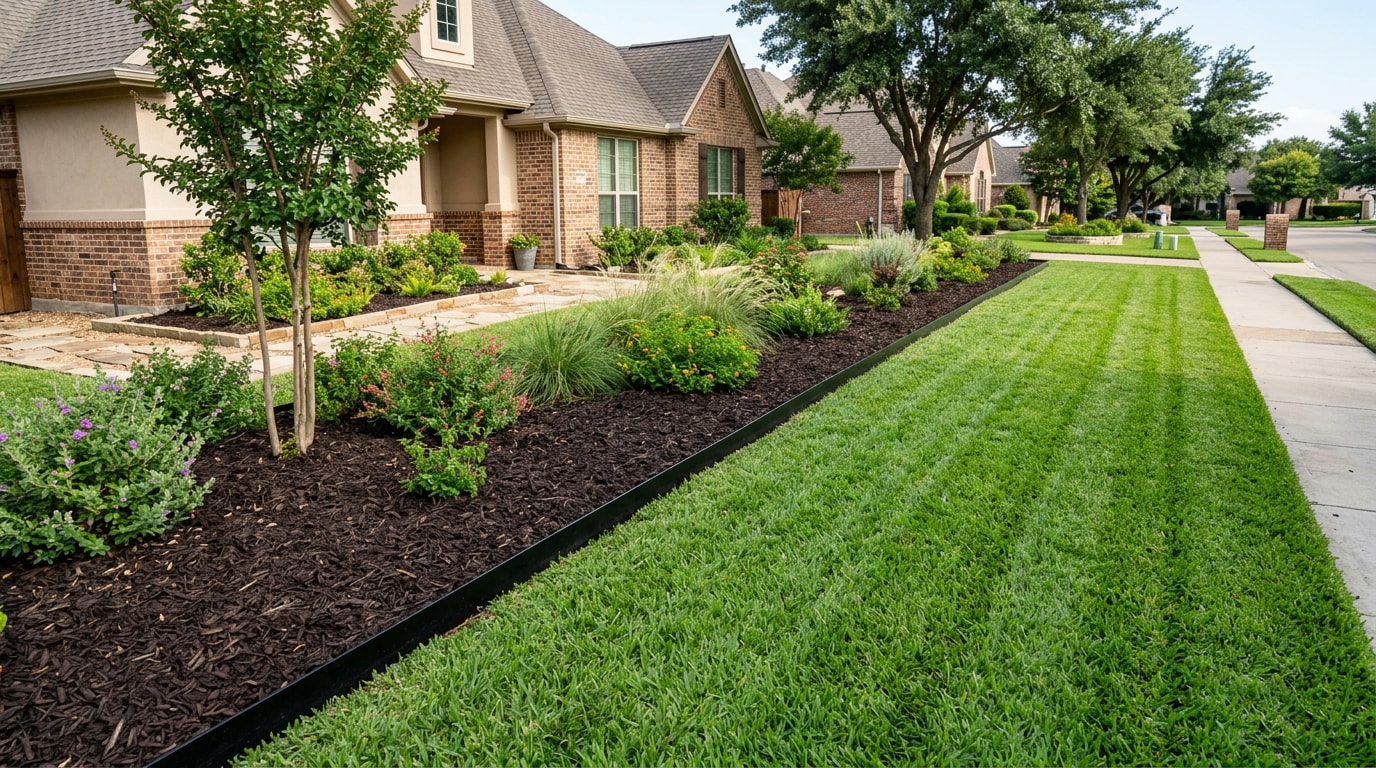
Cleaner mowing lines, clearer bed definition, and better mulch or gravel containment matter a lot on Bryan's dense clay-soil lawns, where loose borders shift and blur over a single growing season.
Durable through heat and clay. Steel doesn't crack, warp, or turn brittle under sustained Texas heat and UV exposure the way plastic does. Fewer replacement cycles means a cleaner bed line year after year, even through repeated summer-to-winter swings.
Flexible enough for real design. Despite being more rigid than aluminum, steel can still be curved on-site to form gentle bed shapes. That lets you mix straight walkway borders with curved garden beds around trees, all using one material for a consistent look.
Is Steel Edging Safe? What the Research Actually Shows
Opinions on steel edging safety swing wildly across landscaping blogs. Some treat sharp edges as a minor detail; others tell you to avoid steel entirely. The real answer sits in the middle, and it's backed by actual clinical data rather than anecdote.
A retrospective review published in Pediatric Emergency Care enrolled 126 pediatric patients with a median age of 9, finding the foot was the most frequent laceration site (40%), followed by the knee (26%), with a median laceration length of 3 cm . The authors concluded that metal lawn and garden edging presents a previously undescribed laceration danger to children, with some lacerations extensive enough to need multi-layer closure or a specialist consult .
Pets face a similar risk. A Colorado State University veterinary study reviewed 60 dogs admitted to a hospital for traumatic limb injuries caused by metal landscape edging over a 10-year period , and all 60 dogs suffered traumatic pedal lacerations from contact with the edging, with 85% requiring surgical repair .
Both studies point to the same root cause: edging installed above grade with an exposed, unrolled top edge, especially in yards where kids or pets play. The fix is straightforward:
- Choose rolled-top or roll-top profiles instead of raw flat stock.
- Finish every exposed end with manufacturer end caps.
- Install the edging flush to grade, not proud of the lawn surface.
- Re-check the line each spring, since soil settling can expose a buried edge over time.
Done this way, steel is a reasonably safe choice for families and pets. Homeowners who aren't sure which profile to pick can talk through options with a hardscape contractor before ordering material.
Frost heave, the other common edging complaint in colder states, is a minor concern here. College Station's growing season sits in Hardiness Zone 9a, with roughly 10 to 20 frost days per year , far short of the deep freeze-thaw cycles that push edging out of the ground up north. Proper trench depth and firm soil compaction during install still matter, but Bryan winters rarely undo a correctly set border.
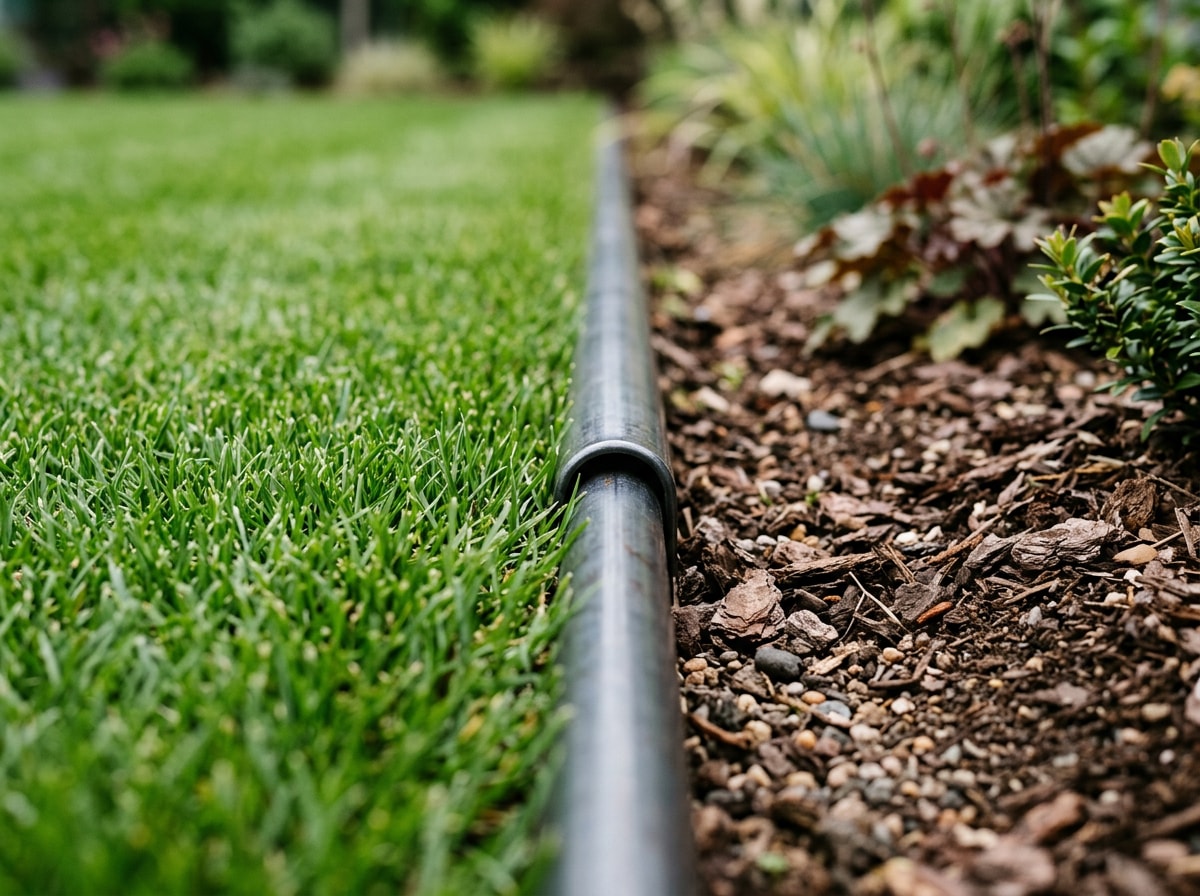
How Is Steel Edging Installed in Bryan's Clay Soil?
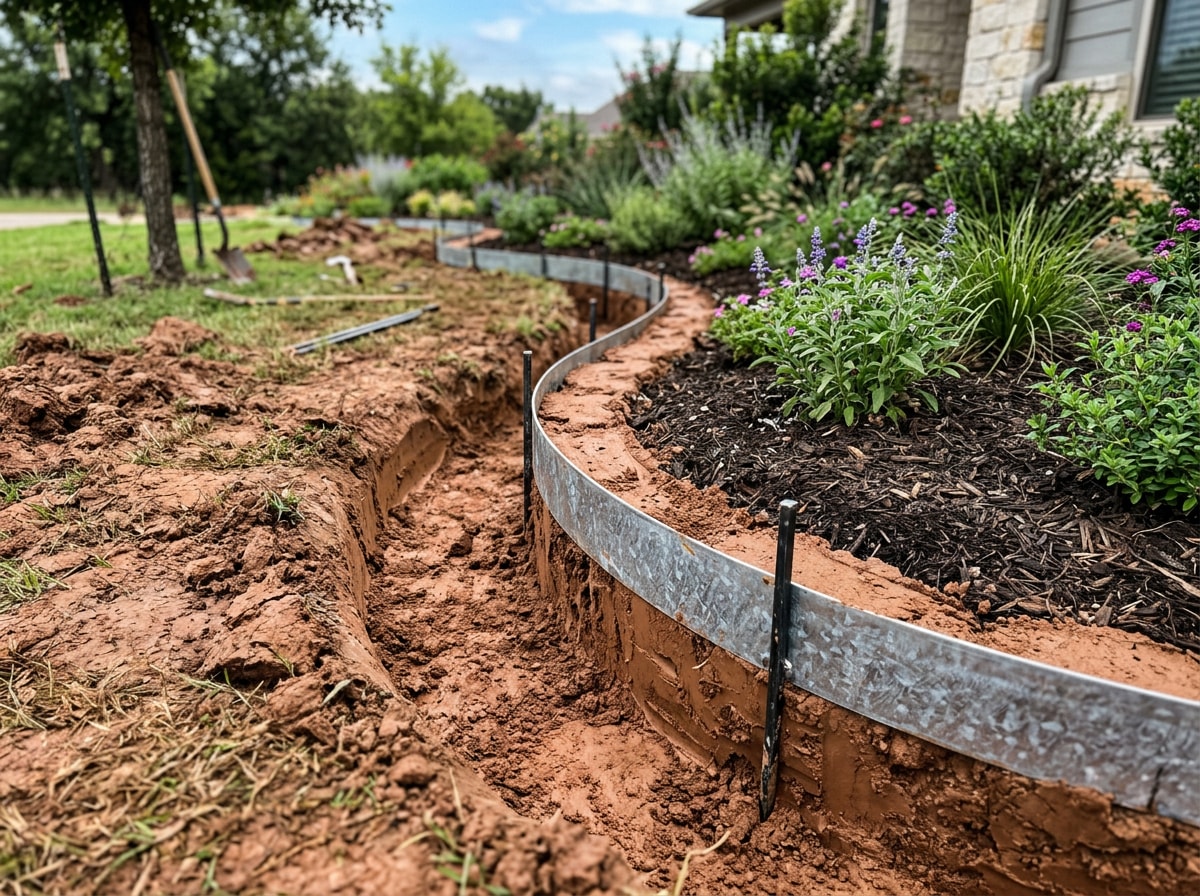
Installation starts with marking the bed layout, then trenching to the correct depth, usually a few inches below grade so the top of the edging sits flush with or just above the lawn. Stakes are driven along the inside of the trench to anchor the material before backfilling and compacting soil on both sides.
In the clay-heavy yards our crews grade across Bryan and College Station, we've seen edging set at proper depth hold a crisp line through multiple summer-to-winter cycles, while edging rushed in too shallow starts to lift within a season as the clay expands and contracts with moisture swings. That's not a steel problem, it's a trenching and compaction problem, and it's the single biggest factor in whether an install lasts.
Clay also affects how long galvanized coating itself holds up. The American Galvanizers Association's research on buried steel notes that hot-dip galvanizing performs well in brown, sandy soils but not as well in gray, clay-like soils , which is worth knowing before you pick the thinnest gauge available. Texas A&M AgriLife Extension's guidance on garden soil adds that heavy clay needs added organic matter, sand, or gypsum to improve drainage and workability around a bed , and that same prep work helps an edging trench stay seated.
If your project also involves regrading a slope or correcting standing water before the edging goes in, pair the edging install with site preparation so the two aren't fighting each other later.
Decorative & Ornate Steel Edging Options
Plain low-profile strips aren't the only option. Decorative steel edging with laser-cut patterns, scalloped tops, or taller garden-fence-style profiles gives homeowners a more ornate look while keeping steel's durability. These styles cost more than standard strip edging but suit front-yard beds meant to stand out, and they pair naturally with the kind of gravel and stone accents covered in our landscaping gravel guide for Bryan, TX.
Whatever profile you land on, the homepage has our full project gallery if you want to see finished borders before deciding.
FAQ
Does steel landscape edging rust?
Plain steel rusts quickly when exposed to moisture, but galvanized steel resists rust for years thanks to its zinc coating, and Corten steel develops a stable, protective patina instead of ongoing corrosion. How long that coating lasts depends heavily on soil type, with clay-heavy ground wearing it faster than sandy soil.
How long does steel landscape edging last in Bryan, TX?
Galvanized steel typically lasts 15 to 20+ years with correct installation and depth. Corten can last even longer once its patina stabilizes. Thin, uncoated steel lasts the least, since it has no protective layer against Bryan's humidity and rainfall.
Is steel edging safe for kids and pets?
It can be, when installed flush to grade with a rolled or capped top edge. The documented injury risk comes from exposed, sharp-topped edging sitting above the lawn surface, not from steel edging as a category.
How much does steel edging cost per linear foot?
Expect roughly $5 to $12 per linear foot installed for standard galvanized steel, and $9 to $18 for Corten or powder-coated profiles, depending on gauge, curves, and site prep. Get a project-specific number with a free estimate.
Can I install steel landscape edging myself?
Short, straight runs are DIY-friendly with a spade, hammer, and stakes. Long runs, tight curves, old-edging removal, or heavy clay that needs amending are where hiring a crew saves time and prevents a shallow install that heaves within a year.