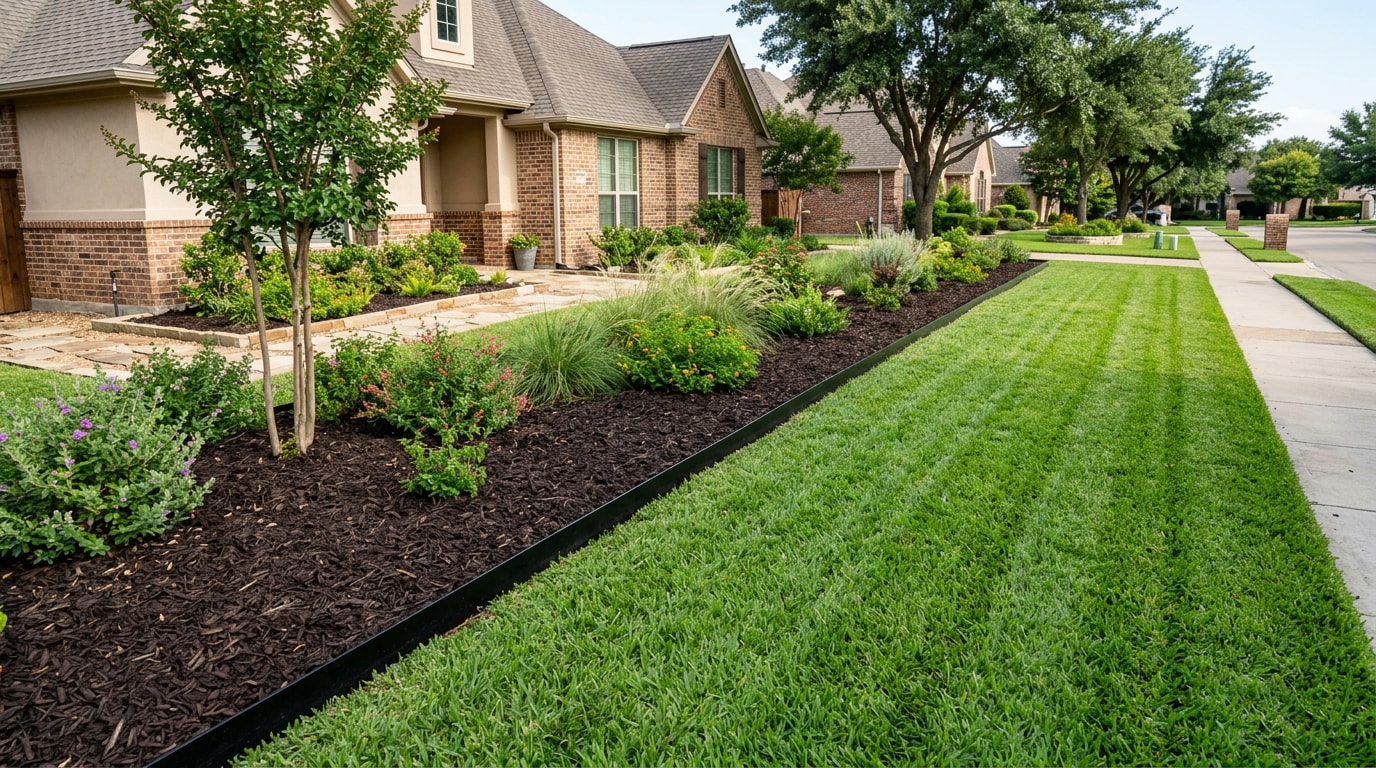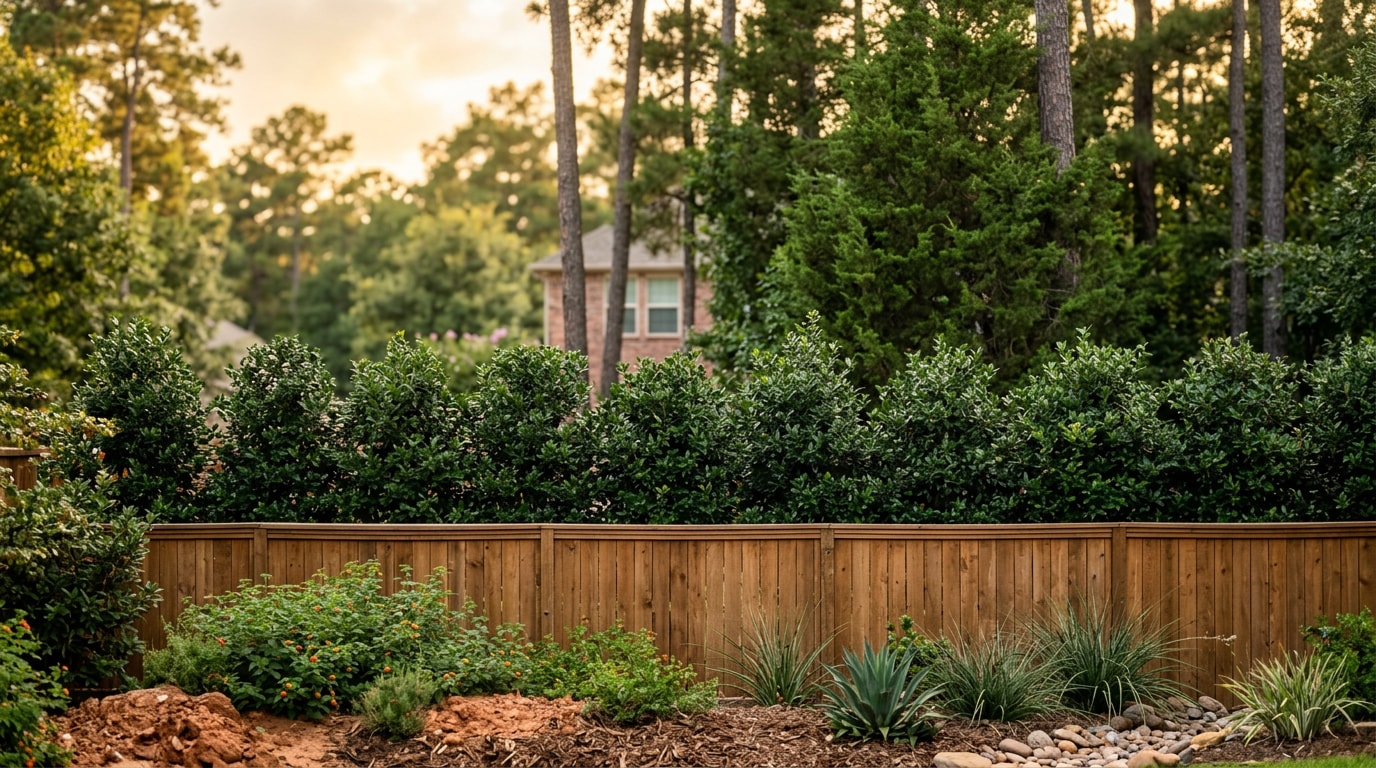
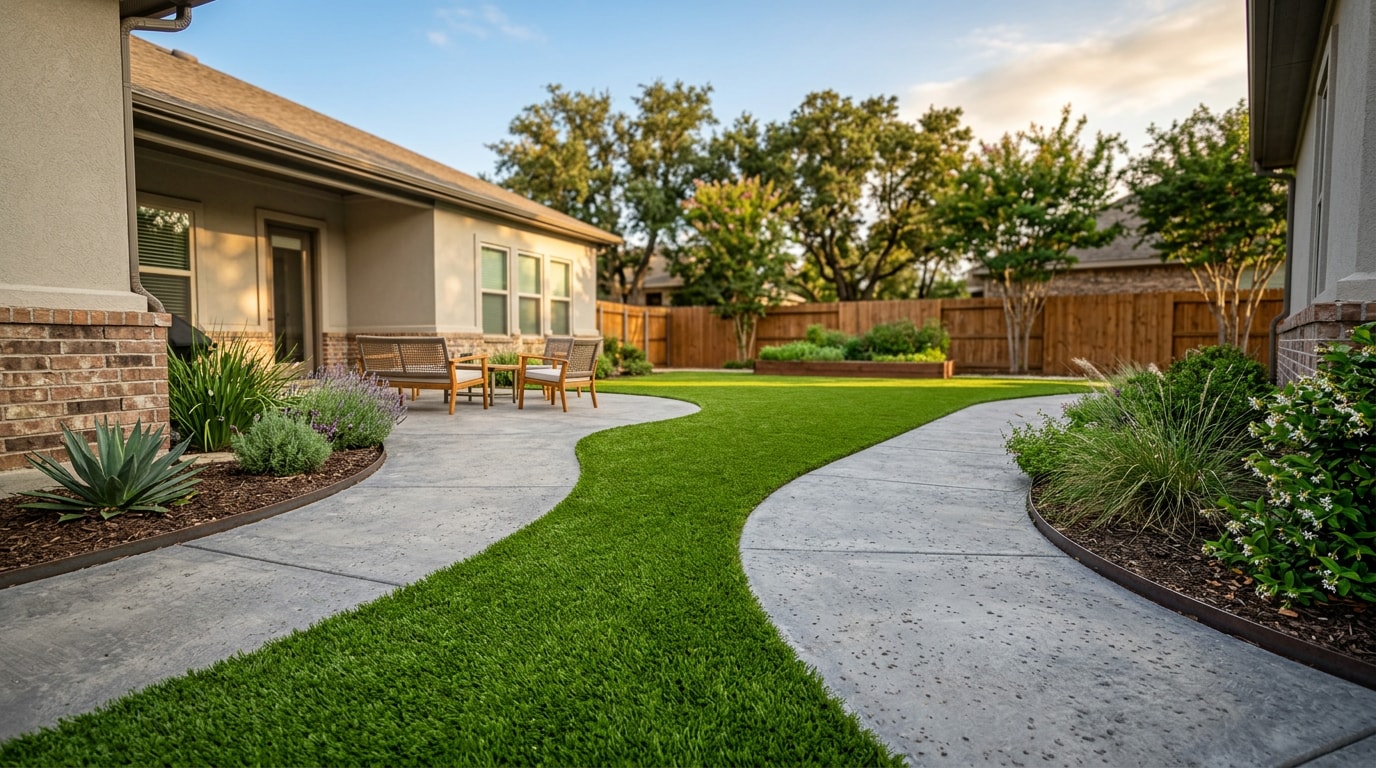
Landscape turf in Bryan, TX solves a problem natural grass can't: staying green through a 95-degree August without a drop of extra water. Our crews see the same pattern every summer across Bryan and College Station yards built on heavy clay, patchy fence lines, and shaded lots where grass just won't take. Here's what turf actually costs installed in 2026, how it holds up against our soil and heat, and what the process looks like from excavation to finished lawn.
Is Landscape Turf a Good Fit for Bryan, TX Yards?
Natural grass in Bryan works hard against long, scorching summers, heavy clay soil, and daily wear from kids and dogs. By midsummer, many lawns show brown patches, standing water after storms, or bare spots near fence lines and dog runs.
Landscape turf solves these problems directly once it's installed correctly: no mowing, no watering, no fertilizing, and no dead patches. Artificial turf installers working in the Brazos Valley today use products that hold up through heat waves and heavy rain, and the synthetic grass available now looks far more natural than the plastic-looking turf from a decade ago. If you're weighing turf against other low-water options, our xeriscaping services and landscape design and installation team can walk through which approach fits your yard and budget.
How Much Does Landscape Turf Cost in Bryan, TX?
Installed landscape turf in the Bryan area typically runs $8 to $16 per square foot, depending on the application, turf grade, and how much excavation your yard needs. A standard 500-square-foot backyard project generally lands between $4,000 and $8,000 installed. Clay soil pushes costs toward the higher end because it demands deeper excavation and a thicker compacted base than sandier soils need.
| Application | Typical Installed Cost (per sq ft) |
|---|---|
| Residential lawn turf | $8 – $14 |
| Pet-friendly turf (drainage backing + infill) | $10 – $16 |
| Putting green turf | $14 – $22 |
Here's how that upfront cost stacks up against ongoing natural grass upkeep over time:
| Timeframe | Natural Grass Upkeep* | Turf Install + Minimal Maintenance |
|---|---|---|
| 5 years | $3,750 | $6,250 |
| 10 years | $7,500 | $6,500 |
| 20 years | $15,000 | $7,000 |
*Estimated from average Bryan-area water, mowing, and fertilization costs; actual figures vary by lawn size, irrigation habits, and provider.
Outdoor irrigation is a major driver of that natural-grass number. Nationally, outdoor water use accounts for 30 percent of household use yet can be much higher in drier parts of the country and in more water-intensive landscapes, with the arid West seeing some of the highest per capita residential water use because of landscape irrigation , and Bryan's long watering season puts a similar strain on local water bills every summer.
Why Landscape Turf Makes Sense in Bryan's Climate and Soil
Bryan has a humid subtropical climate with no dry season (Köppen classification Cfa) , and summer temperatures peak in August, with average highs around 97.2°F . That heat, paired with high humidity, keeps evaporation rates high well into the evening and pushes many lawns toward drought stress by July.
Rainfall timing matters here as much as heat does. Bryan's annual precipitation runs around 45 inches, with much of it falling between May and September , meaning heavy, concentrated storms rather than steady year-round moisture. On top of clay soil that doesn't drain well, that pattern is exactly why a landscape turf installation here calls for deeper excavation and proper grading, not just a thin layer of base rock.
Clay is the other half of the equation. Expansive soils, or shrink-swell soils, heave when moisture levels are high and collapse or settle when moisture levels drop . That movement is what causes bumps, low spots, and pooling water under a poorly built turf system. Drought-tolerant landscaping choices, turf included, sidestep both the heat stress and the soil movement that make high-maintenance grasses a constant project in this region. If drainage is already a trouble spot in your yard, it's worth pairing turf with proper drainage installation or site preparation before the lawn ever goes in.
Types of Landscape Turf for Bryan Yards
Landscape turf is a mid-pile synthetic lawn with varied blade shapes and mixed green tones, built to mimic a healthy natural lawn rather than a sports field or putting green. For most Bryan yards, this category delivers the best balance of appearance, durability, and cost among the available artificial grass types.
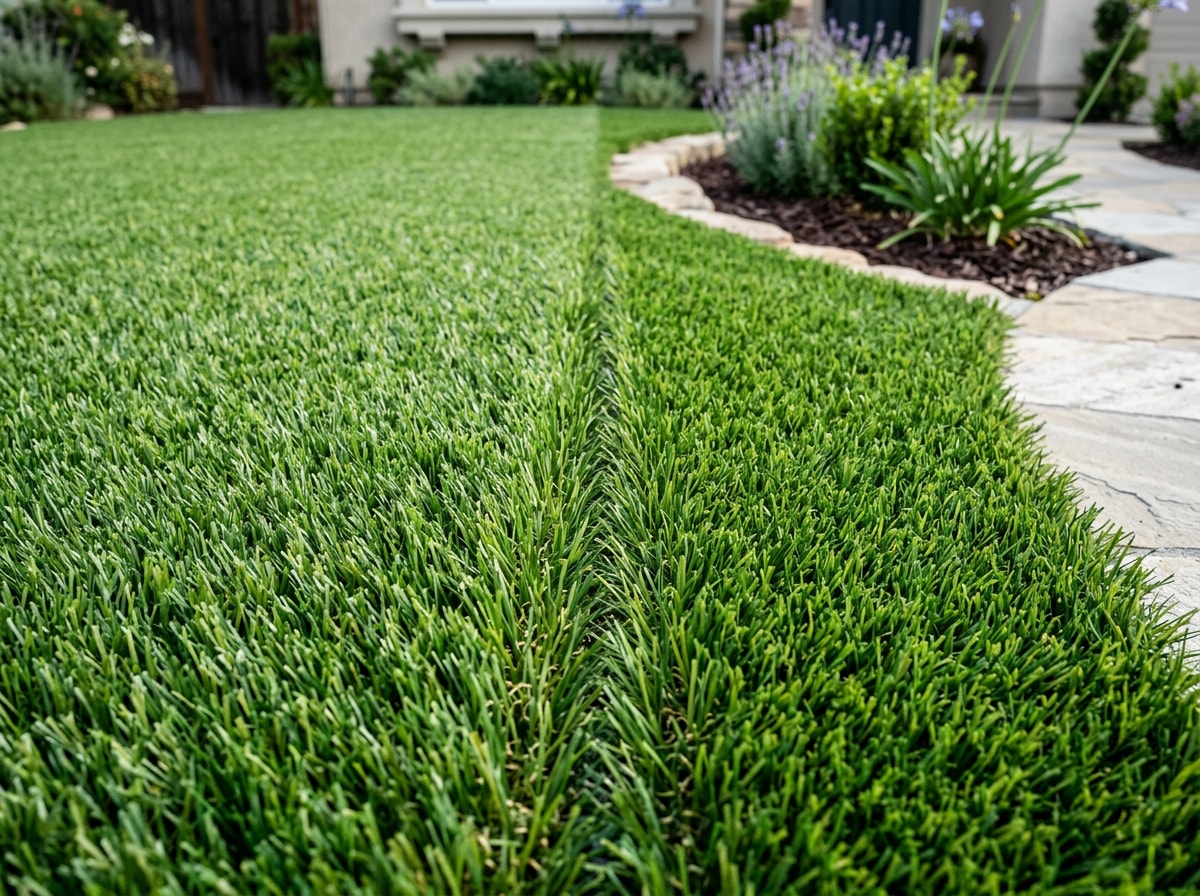
Residential landscape turf covers front lawns, backyards, and patios, anywhere homeowners want a lawn look without the upkeep. Most products include UV-resistant fibers built to handle direct Texas sun for years without fading, which matters given how intense local UV exposure gets from May through September. For homeowners who want a low-maintenance lawn that stays green through drought restrictions, residential-grade turf is usually the right starting point before considering specialty products for pets or play areas.
Pet-friendly turf uses a more open backing and antimicrobial infill so urine drains through instead of pooling on the surface, which matters a lot in a climate this humid.
Putting green turf is a short, dense pile designed for ball roll rather than comfort or looks, and it's the most expensive category per square foot.
Where Landscape Turf Works Around Your Bryan Home
Landscape turf solves different problems depending on where it goes. Front yard turf keeps curb appeal consistent without weekly mowing, while side yard turf fills in narrow spaces natural grass struggles to establish in. Shaded lawn areas under mature oaks, common throughout older Bryan neighborhoods, stay green instead of going bare since turf doesn't need sunlight to survive. It also handles slopes, pool surrounds, and patio borders where regular grass either erodes or won't root at all. Browse recent completed landscaping projects around Bryan and College Station to see how these applications look once finished.
Landscape Turf Installation Process in Bryan, TX
A proper synthetic grass installation starts with removing existing grass and a few inches of soil, then grading for drainage. Crews compact an aggregate base in layers, add a weed barrier, roll out the turf, trim it to fit, and seam sections so edges don't show. Infill gets brushed in last to hold blades upright.
The steps, in order:
- Remove existing grass and 2–4 inches of topsoil.
- Grade the subgrade for positive drainage away from structures.
- Compact a crushed aggregate base in layers.
- Lay a weed barrier over the compacted base.
- Roll out, trim, and seam the turf sections.
- Brush in infill to hold blades upright.
This base prep stage is where quality installs and years-later problems usually get decided.
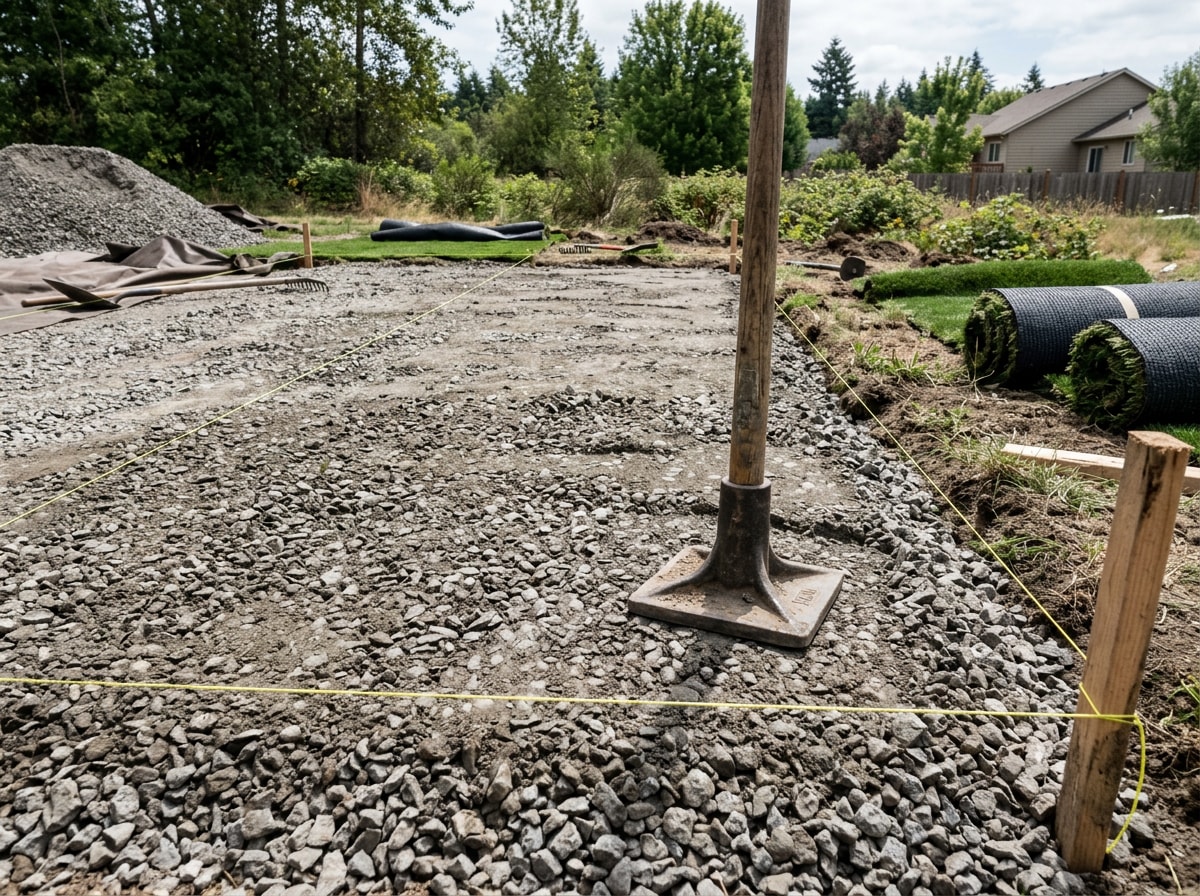
Clay Soil Base Prep, Done Right
Skipping proper base prep in Bryan's clay soil shows up fast. Within a couple of years, bumps, pooling water, or lifting seams tend to appear, because the clay underneath keeps moving with the weather. The sub-grade should provide a stabilized foundation for the drainage base system and the pitched surface needed to direct stormwater toward an active drainage path , according to the Synthetic Turf Council's guidelines for synthetic turf systems. A clay soil base prep done to that standard keeps turf flat and draining well for well over a decade instead of needing repairs after a couple of wet summers.
Looking for ways to keep hardscape and turf areas from pooling after storms? Our guide on turf maintenance in College Station covers drainage and upkeep patterns that apply across the Brazos Valley, not just one city.
FAQ
How Much Does Landscape Turf Cost in Bryan, TX?
Installed landscape turf in Bryan, TX typically runs $8 to $16 per square foot, with a standard 500-square-foot backyard project landing between $4,000 and $8,000. Clay soil often pushes costs toward the higher end because it requires deeper excavation and a thicker base than sandier soils need.
Does Bryan, TX Require a Permit to Install Artificial Turf?
Most residential landscape turf installs don't involve structural work, so they typically don't trigger a building permit. The City of Bryan issues permits for a variety of projects, and which department reviews a project depends on the specific area or field of work involved . Projects that change site grading or drainage patterns should be confirmed with the City of Bryan's Development Services Department before work begins.
What Are the Best Applications for Artificial Turf in Bryan?
Residential lawns, play areas, and pet runs are the top applications for artificial turf in Bryan. These uses see the most natural-grass struggles locally: pets wear bare patches, play areas need durable groundcover, and lawns generally fight heat and clay soil year-round.
Is There Turf Made Specifically for Yards with Pets?
Yes. Pet-friendly turf typically includes antimicrobial infill and a more open backing that lets urine drain through instead of pooling. Dog-friendly landscape turf like this resists odor buildup far better than standard landscape-grade products.
How Long Does Landscape Turf Last in Bryan's Heat and Humidity?
Quality residential turf, installed with proper base prep, generally lasts 15 to 20 years in this climate. UV-resistant fibers handle direct sun without excessive fading, but a shallow or poorly compacted base is the most common reason turf fails early here, not the turf material itself.
How Much Maintenance Does Landscape Turf Need in Bryan, TX?
Turf maintenance is minimal: an occasional grooming rake or leaf blower keeps blades upright and clears debris. For spot cleaning, mild soap and water handles most messes, while a vinegar-water mix treats pet odors effectively. If you still have planting beds or borders around the turf, our landscape maintenance team can keep those areas on a seasonal schedule.
---
Ready to see what landscape turf would cost for your specific yard? Get a free estimate from our team, or visit our homepage to see the full range of landscape and hardscape services we offer across Bryan, College Station, and the surrounding Bryan, TX area.